Caffeine attenuates spermatogenic disorders in mice with induced chronic scrotal hyperthermia
- PMID: 38433013
- PMCID: PMC10914498
- DOI: 10.5653/cerm.2023.06142
Caffeine attenuates spermatogenic disorders in mice with induced chronic scrotal hyperthermia
Abstract
Objective: Chronic scrotal hyperthermia (SHT) can lead to serious disorders of the male reproductive system, with oxidative stress playing a key role in the onset of these dysfunctions. Thus, we evaluated the impact of caffeine, a potent antioxidant, on cellular and tissue disorders in mice with chronic SHT.
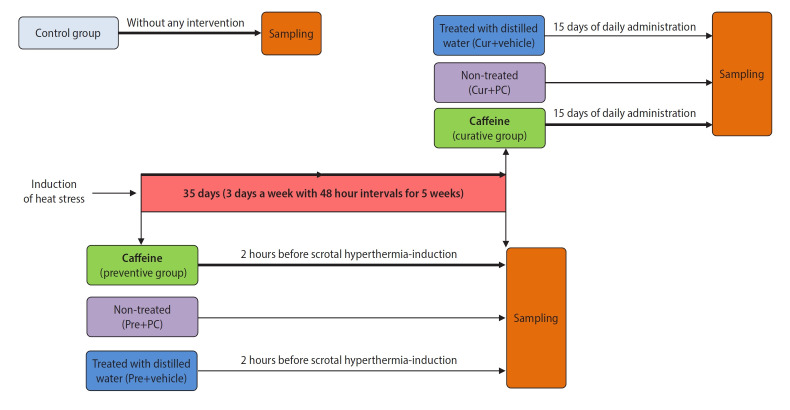
Methods: In this experimental study, 56 adult male NMRI mice were allocated into seven equal groups. Apart from the non-treated control group, all were exposed to heat stress. Two groups, termed "preventive" and "curative," were orally administered caffeine. The preventive mice began receiving caffeine immediately prior to heat exposure, while for the curative group, a caffeine regimen was initiated 15 consecutive days following cessation of heat exposure. Each treated group was subdivided based on pairing with a positive control (Pre/curative [Cur]+PC) or a vehicle (Pre/Cur+vehicle). Upon conclusion of the study, we assessed sperm characteristics, testosterone levels, stereological parameters, apoptosis, antioxidant and oxidant levels, and molecular markers.
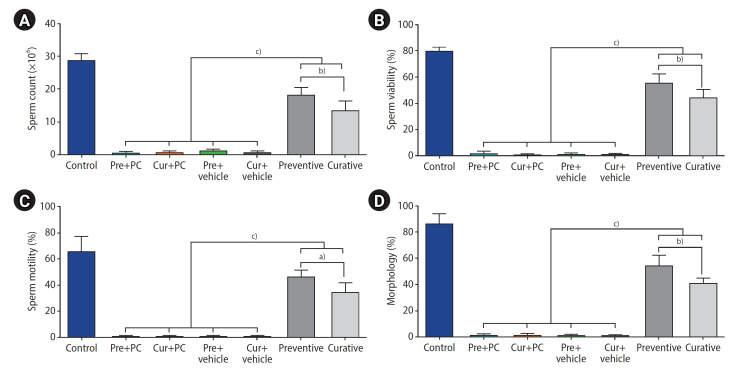
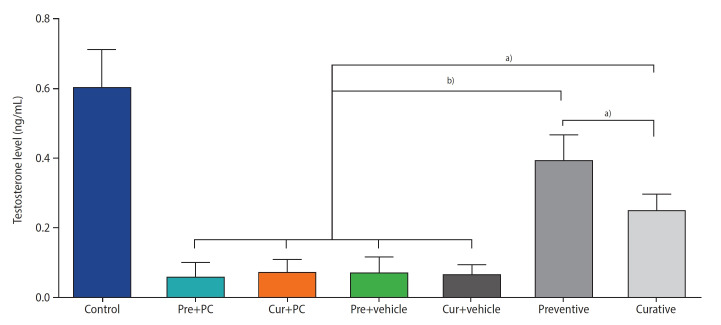
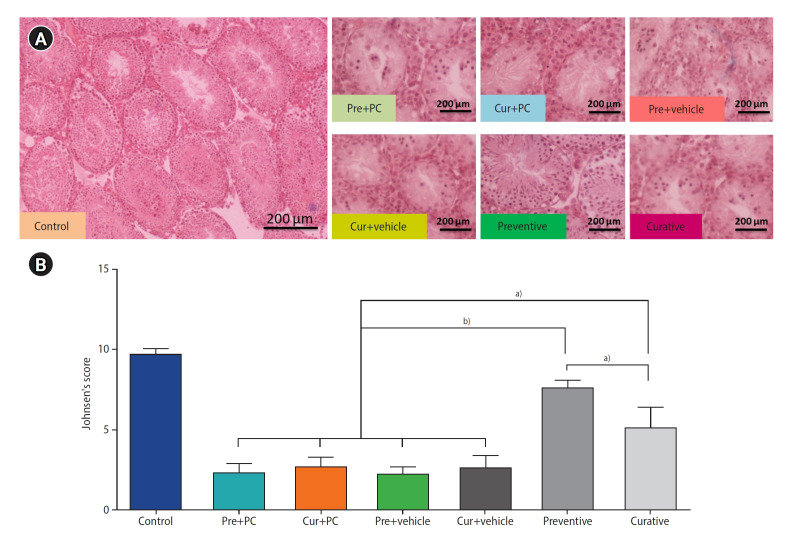
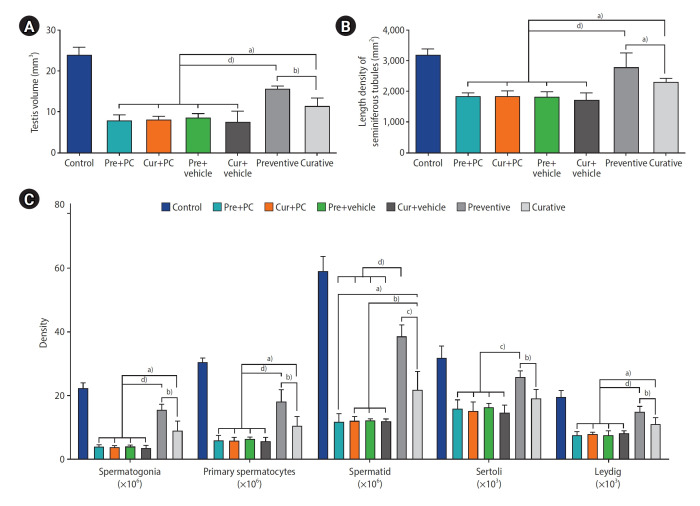
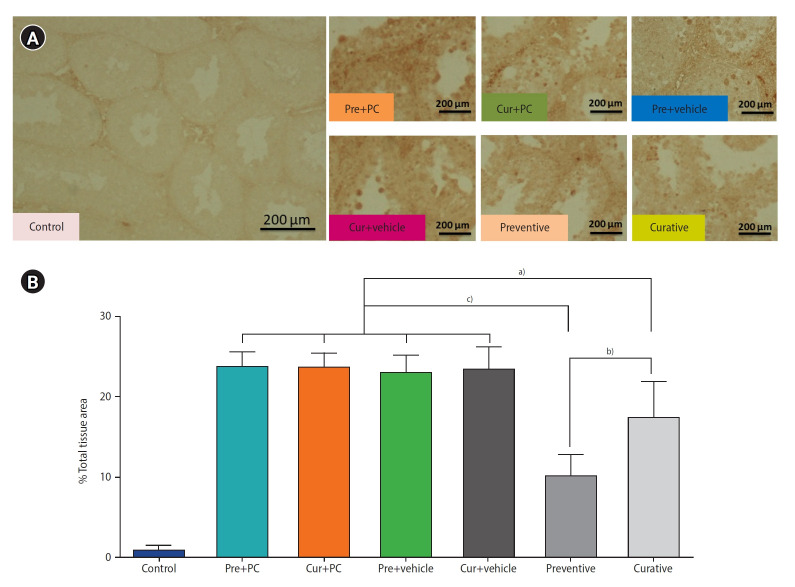
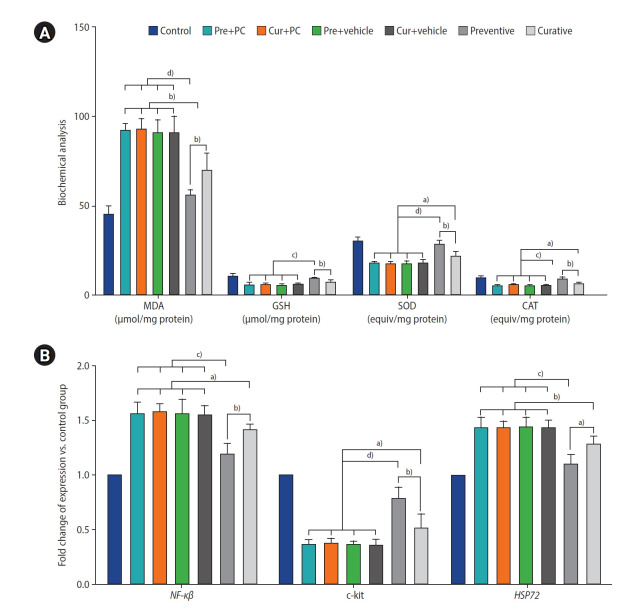
Results: Sperm parameters, testosterone levels, stereological parameters, biochemical factors (excluding malondialdehyde [MDA]), and c-kit gene expression were significantly elevated in the preventive and curative groups, especially the former, relative to the other groups. Conversely, expression levels of the heat shock protein 72 (HSP72) and nuclear factor kappa beta (NF-κβ) genes, MDA levels, and apoptotic cell density were markedly lower in both caffeine-treated groups relative to the other groups, with more pronounced differences observed in the preventive group.
Conclusion: Overall, caffeine attenuated cellular and molecular abnormalities induced by heat stress in the testis, particularly in the mice treated under the preventive condition.
Keywords: Apoptosis; Caffeine; Chronic scrotal hyperthermia; Inflammation; Oxidative stress.
Conflict of interest statement
No potential conflict of interest relevant to this article was reported.
Figures
References
-
- Sharma A. Male infertility; evidences, risk factors, causes, diagnosis and management in human. Ann Clin Lab Res. 2017;5:188.
-
- Chavoshi Nezhad N, Vahabzadeh Z, Allahveisie A, Rahmani K, Raoofi A, Rezaie MJ, et al. The effect of L-carnitine and coenzyme Q10 on the sperm motility, DNA fragmentation, chromatin structure and oxygen free radicals during, before and after freezing in oligospermia men. Urol J. 2021;18:330–6. - PubMed
-
- Banks S, King SA, Irvine DS, Saunders PT. Impact of a mild scrotal heat stress on DNA integrity in murine spermatozoa. Reproduction. 2005;129:505–14. - PubMed
-
- Durairajanayagam D, Agarwal A, Ong C. Causes, effects and molecular mechanisms of testicular heat stress. Reprod Biomed Online. 2015;30:14–27. - PubMed
Grants and funding
LinkOut - more resources
Full Text Sources