


Serum sodium level fluctuations following the resection of childhood-onset craniopharyngioma
- PMID: 38433103
- PMCID: PMC10909694
- DOI: 10.1002/brb3.3430
Serum sodium level fluctuations following the resection of childhood-onset craniopharyngioma
Abstract
Background: Craniopharyngiomas are low-grade malignancies (WHO I) in the sellar region. Most cases of childhood-onset craniopharyngioma are adamantinomatous craniopharyngioma, and neurosurgery is the treatment of choice. Affected patients have postoperative complications, including water and electrolyte disturbances, because these malignancies develop near the hypothalamus and pituitary gland. Determining postoperative serum sodium fluctuation patterns in these patients can reduce postoperative mortality and improve prognosis.
Objective: To measure changes in serum sodium levels in pediatric patients who underwent craniopharyngioma surgery and identify influencing factors.
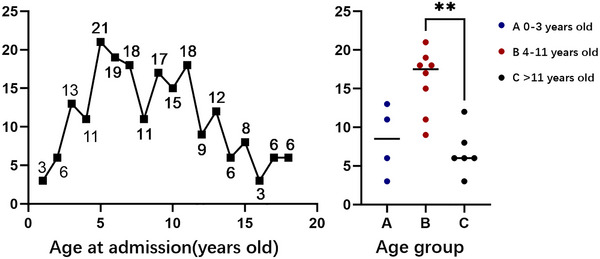
Methods: This retrospective study measured the serum sodium levels of 202 patients aged 0-18 years who underwent craniopharyngioma resection in Beijing Tiantan Hospital and Beijing Children's Hospital and identified predictors of severe hyponatremia and hypernatremia.
Results: The mean age of the cohort was 8.35 ± 4.35 years. The prevalence of hypernatremia, hyponatremia, and their severe forms (serum Na+ > 150 mmol/L and serum Na+ < 130 mmol/L) within 14 days after surgery was 66.3%, 72.8%, 37.1%, and 40.6%, respectively. The mean postoperative serum sodium level showed a triphasic pattern, characterized by two peaks separated by a nadir. Sodium levels peaked on days 2 (143.6 ± 7.6 mmol/L) and 14 (143.2 ± 6.7 mmol/L) and reached their lowest on day 6 (135.5 ± 7.5 mmol/L). A total of 31 (15.3%) patients met the diagnostic threshold for hyponatremia and hypernatremia of the triphase response, whereas 116 (57.4%) patients presented this pattern, regardless of met the diagnostic criteria or not. The prevalence of severe hyponatremia varied depending on preoperative endocrine hormone deficiency, tumor status (primary or recurrent), and surgical approach.
Conclusions: Serum sodium levels after craniopharyngioma resection in children showed a triphasic pattern in most cases. The risk of postoperative hyponatremia varied depending on preoperative endocrine hormone deficiency, tumor status (primary or recurrent), and surgical approach.
Keywords: craniopharyngioma; hypernatremia; hyponatremia; serum sodium level; triphase response.
© 2024 The Authors. Brain and Behavior published by Wiley Periodicals LLC.
Conflict of interest statement
The authors have no conflicts of interest to declare.
Figures

References
-
- Andereggen, L. , Hess, B. , Andres, R. , El‐Koussy, M. , Mariani, L. , Raabe, A. , Seiler, R. , & Christ, E. (2018). A ten‐year follow‐up study of treatment outcome of craniopharyngiomas. Swiss Medical Weekly: Official Journal of the Swiss Society of Infectious Diseases, the Swiss Society of Internal Medicine, the Swiss Society of Pneumology, 148, w14521. - PubMed
-
- Caldarelli, M. , Massimi, L. , Tamburrini, G. , Cappa, M. , & Di Rocco, C. (2005). Long‐term results of the surgical treatment of craniopharyngioma: The experience at the Policlinico Gemelli, Catholic University, Rome. Childs Nervous System, 21(8–9), 747–757. - PubMed
-
- Capatina, C. , Vintila, M. , Gherlan, I. , Dumitraşcu, A. , Caragheorgheopol, A. , Procopiuc, C. , Ciubotaru, V. , & Poiana, C. (2018). Craniopharyngioma—Clinical and therapeutic outcome data in a mixed cohort of adult and paediatric cases. Acta Endocrinologica (Bucharest, Romania: 2005), 14(4), 549–555. - PMC - PubMed
-
- Crowley, R. K. , Sherlock, M. , Agha, A. , Smith, D. , & Thompson, C. J. (2007). Clinical insights into adipsic diabetes insipidus: A large case series. Clinical Endocrinology, 66(4), 475–482. - PubMed
-
- Edate, S. , & Albanese, A. (2015). Management of electrolyte and fluid disorders after brain surgery for pituitary/suprasellar tumours. Hormone Research in Paediatrics, 83(5), 293–301. - PubMed
Publication types
MeSH terms
Substances
LinkOut - more resources
Full Text Sources
Medical
Miscellaneous
