


D-dimer diagnostics: can I use any D-dimer assay? Bridging the knowledge-to-action gap
- PMID: 38433976
- PMCID: PMC10905040
- DOI: 10.1016/j.rpth.2024.102335
D-dimer diagnostics: can I use any D-dimer assay? Bridging the knowledge-to-action gap
Abstract
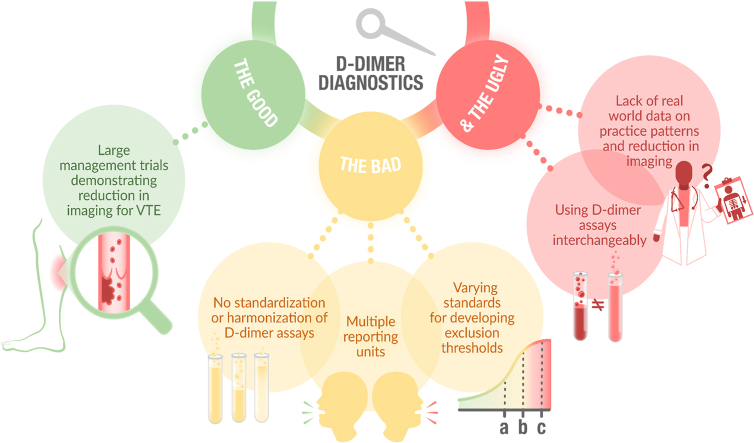
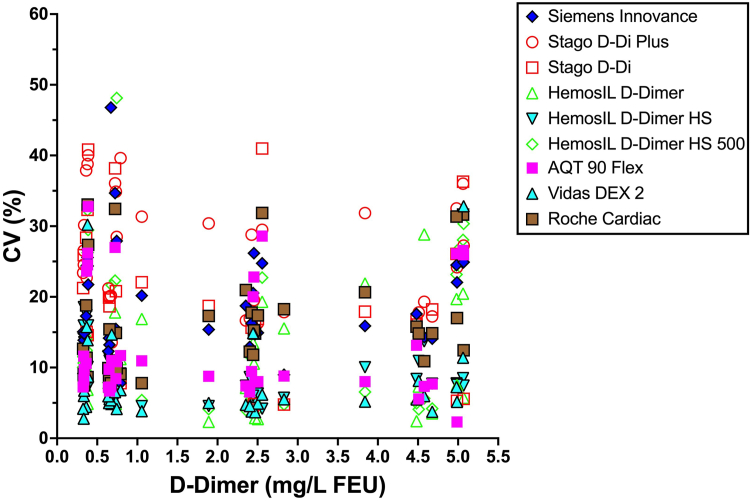
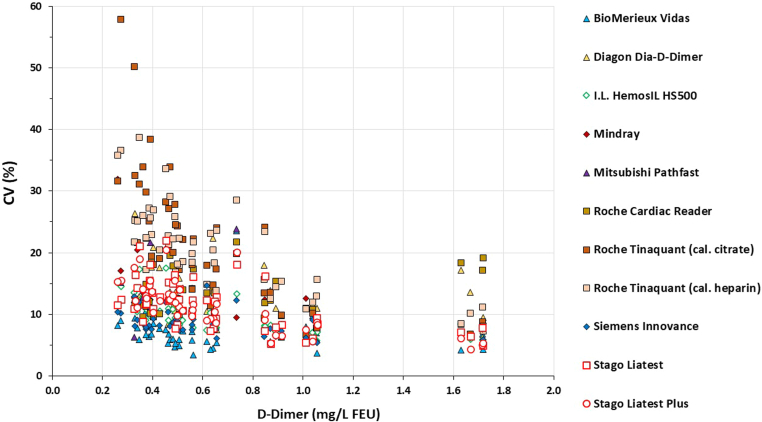
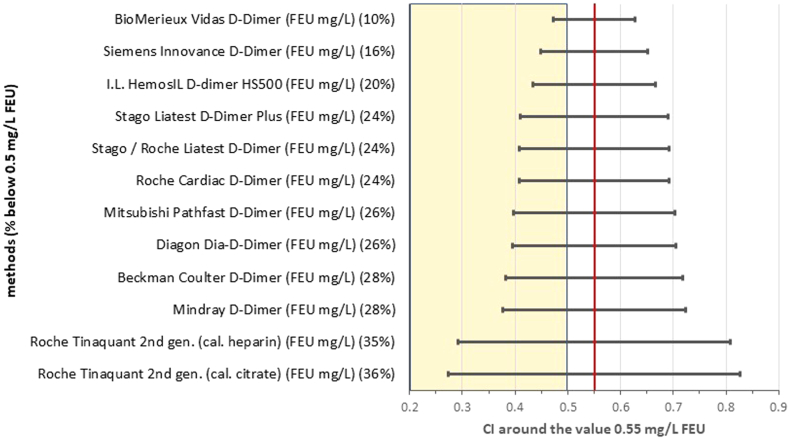
A State of the Art lecture titled "D-dimer Diagnostics: Can I use any D-dimer assay? Bridging the Knowledge-to-Action gap" was presented at the International Society on Thrombosis and Haemostasis Congress in 2023, included in the session on the clinical impact of variability in commonly used coagulation assays. Here, we review the role of D-dimer, primarily in the outpatient diagnosis of patients with venous thromboembolism (VTE) when combined with clinical decision rules. We focus on the recent large management trials that have studied adjustments of VTE exclusion thresholds for D-dimer based on either prior clinical probability of VTE or patient age, and the resultant benefit of reduced imaging for VTE and improved diagnostic efficiency. In this context, we report on the significant variability between D-dimer results and the multiple D-dimer assays in use worldwide using data from international external quality assurance programs. This variability is particularly high at typical VTE exclusion thresholds. We discuss the potential clinical impact of D-dimer assay substitution on accuracy of diagnosis and risk stratification of patients with VTE. Finally, we summarize relevant new data on this topic presented during the 2023 International Society on Thrombosis and Haemostasis Congress and outline future priorities urgently needed to harmonize D-dimer results and reporting that will require international collaboration among multiple stakeholders with an overall goal to close this knowledge-to-action gap.
Keywords: D-dimer; diagnosis; external proficiency; quality assurance; venous thromboembolism.
© 2024 The Authors.
Figures
References
-
- Weitz J.I., Fredenburgh J.C., Eikelboom J.W. A test in context: D-dimer. J Am Coll Cardiol. 2017;70:2411–2420. - PubMed
-
- Thachil J., Favaloro E.J., Lippi G. D-dimers-“Normal” levels versus elevated levels due to a range of conditions, including “D-dimeritis,” inflammation, thromboembolism, disseminated intravascular coagulation, and COVID-19. Semin Thromb Hemost. 2022;48:672–679. - PubMed
-
- Wells P.S. Integrated strategies for the diagnosis of venous thromboembolism. J Thromb Haemost. 2007;5(Suppl 1):41–50. - PubMed
-
- Douketis J., Tosetto A., Marcucci M., Baglin T., Cushman M., Eichinger S., et al. Patient-level meta-analysis: effect of measurement timing, threshold, and patient age on ability of D-dimer testing to assess recurrence risk after unprovoked venous thromboembolism. Ann Intern Med. 2010;153:523–531. - PubMed
LinkOut - more resources
Full Text Sources
Miscellaneous
