


To Determine the Quality of Life in Indian Women After Peripartum Hysterectomy Using a Hindi Version of the SF-36 Questionnaire
- PMID: 38434120
- PMCID: PMC10902220
- DOI: 10.1007/s13224-023-01812-5
To Determine the Quality of Life in Indian Women After Peripartum Hysterectomy Using a Hindi Version of the SF-36 Questionnaire
Abstract
Objective: The objective of the study was to determine the quality of life in women after peripartum hysterectomy using a Hindi version of the SF-36 questionnaire.
Background: There are long-term effects on quality of life in women after peripartum hysterectomy. The effects on physical, mental, and social functioning have a prolonged recovery. No studies have been done in Indian women after peripartum hysterectomy to evaluate quality of life.
Methods: Patients who underwent peripartum hysterectomy from January 2017 to May 2021 were contacted to participate in the study. To determine the quality of life post-surgery, a Hindi version of the 36-item Short-Form Health Survey (SF-36) was used for a face-to-face personal interview-based assessment. The participants were divided into two groups based on the duration between surgery and the interview. The aggregate scores for the eight components of SF-36 were calculated, and responses were analyzed.
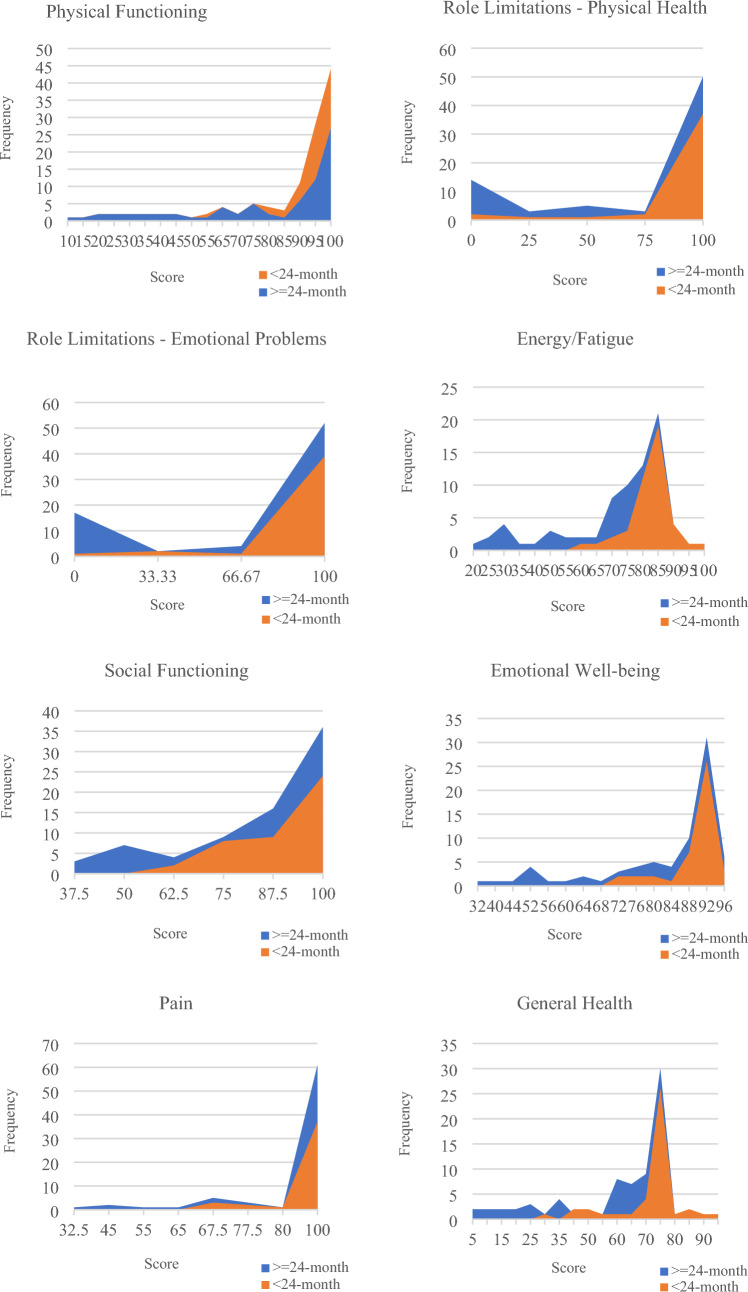
Results: Out of the 138 post-hysterectomy women, 118 were enrolled in the study. Women who could not be contacted [14 (10.14%)] and those who died post-procedure [6 (4.35%)] were excluded. Out of the total, 43 assessed participants were within 2 years of surgery, and 75 were after 2 years of surgery. The group that was assessed after 2 years of surgery had a significantly lower quality of life in six, out of the eight aspects of SF-36 domains.
Conclusion: Women after peripartum hysterectomy undergo a prolonged recovery phase with effects on physical, mental, and social functioning. A multi-disciplinary long-term follow-up including physiotherapy and psychotherapy is required and that should be guided by a dedicated clinical team.
Keywords: Life; Peripartum hysterectomy; Quality; SF-36.
© Federation of Obstetric & Gynecological Societies of India 2023. Springer Nature or its licensor (e.g. a society or other partner) holds exclusive rights to this article under a publishing agreement with the author(s) or other rightsholder(s); author self-archiving of the accepted manuscript version of this article is solely governed by the terms of such publishing agreement and applicable law.
Conflict of interest statement
Conflict of InterestThere is no conflict of interest.
Figures
References
-
- Castaneda S, Karrison T, Cibils LA. Peripartum hysterectomy. J Perinat Med [Internet]. 2000 [cited 2023 Feb 6];28(6). https://www.degruyter.com/document/doi/10.1515/JPM.2000.064/html - PubMed
-
- Ye J, Zhang J, Mikolajczyk R, et al. Association between rates of caesarean section and maternal and neonatal mortality in the 21st century: a worldwide population-based ecological study with longitudinal data. BJOG Int J Obstet Gynaecol. 2016;123(5):745–753. doi: 10.1111/1471-0528.13592. - DOI - PMC - PubMed
LinkOut - more resources
Full Text Sources