


Construction of a broad-host-range Anderson promoter series and particulate methane monooxygenase promoter variants expand the methanotroph genetic toolbox
- PMID: 38435708
- PMCID: PMC10909576
- DOI: 10.1016/j.synbio.2024.02.003
Construction of a broad-host-range Anderson promoter series and particulate methane monooxygenase promoter variants expand the methanotroph genetic toolbox
Abstract
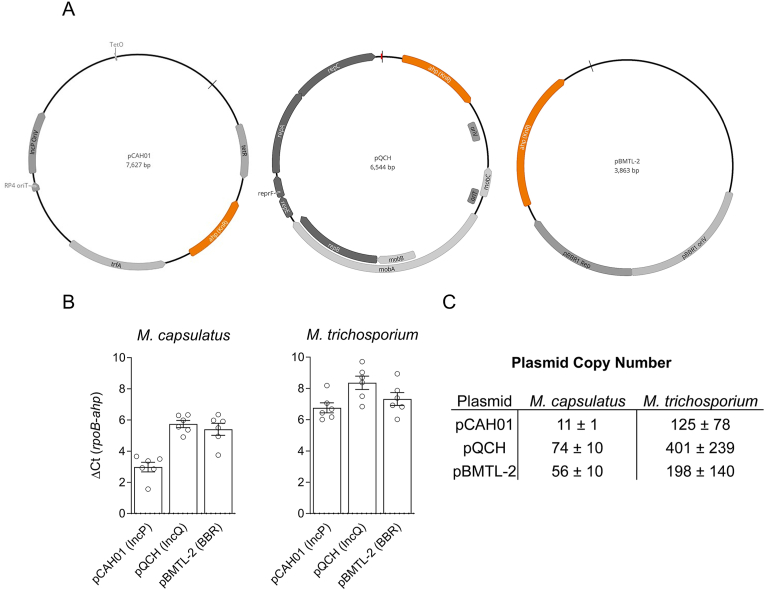
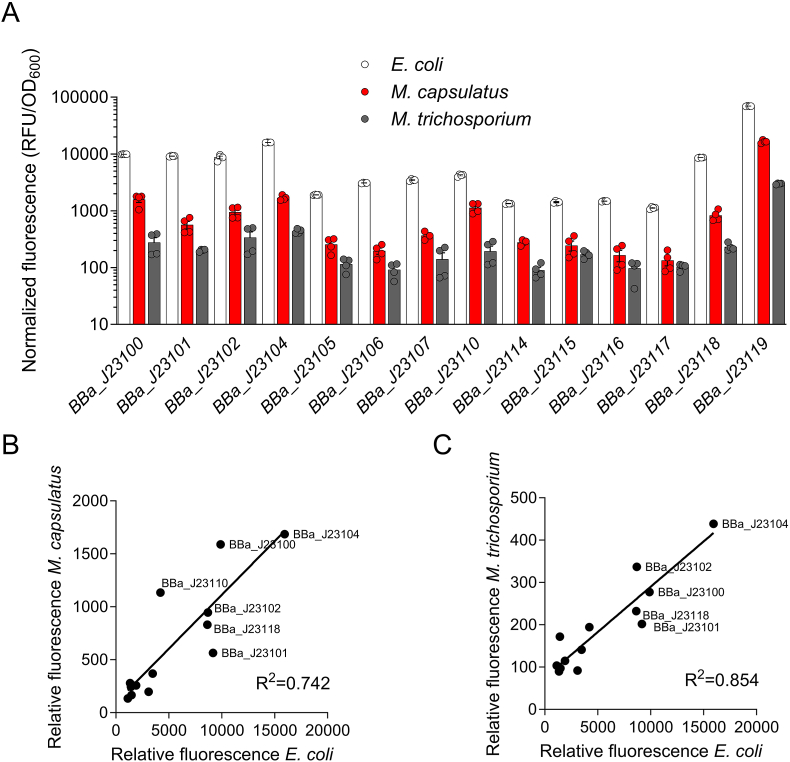
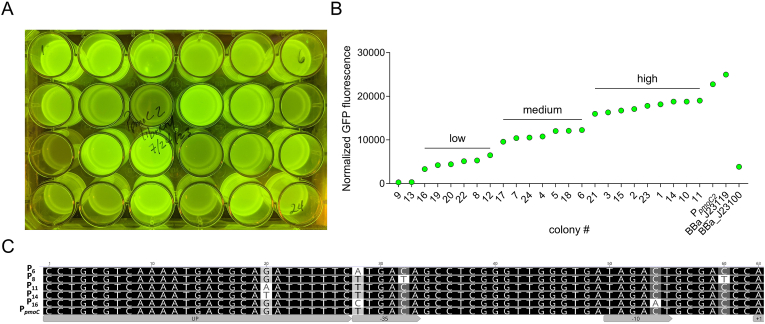
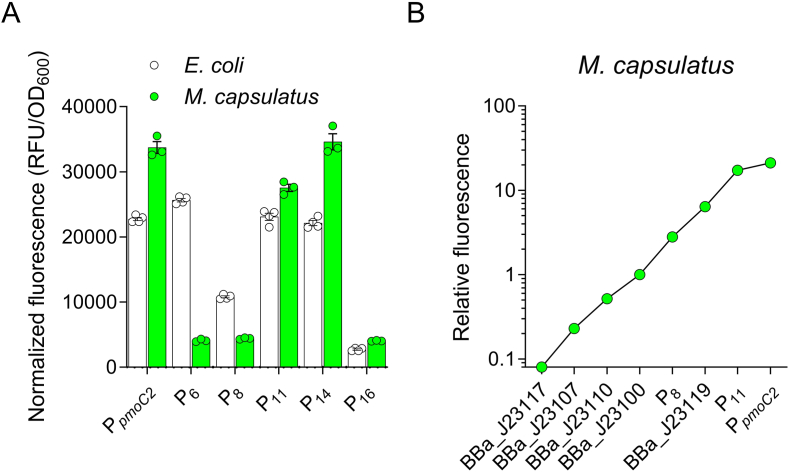
Methanotrophic bacteria are currently used industrially for the bioconversion of methane-rich natural gas and anaerobic digestion-derived biogas to valuable products. These bacteria may also serve to mitigate the negative effects of climate change by capturing atmospheric greenhouse gases. Several genetic tools have previously been developed for genetic and metabolic engineering of methanotrophs. However, the available tools for use in methanotrophs are significantly underdeveloped compared to many other industrially relevant bacteria, which hinders genetic and metabolic engineering of these biocatalysts. As such, expansion of the methanotroph genetic toolbox is needed to further our understanding of methanotrophy and develop biotechnologies that leverage these unique microbes for mitigation and conversion of methane to valuable products. Here, we determined the copy number of three broad-host-range plasmids in Methylococcus capsulatus Bath and Methylosinus trichosporium OB3b, representing phylogenetically diverse Gammaproteobacterial and Alphaproteobacterial methanotrophs, respectively. Further, we show that the commonly used synthetic Anderson series promoters are functional and exhibit similar relative activity in M. capsulatus and M. trichosporium OB3b, but the synthetic series had limited range. Thus, we mutagenized the native M. capsulatus particulate methane monooxygenase promoter and identified variants with activity that expand the activity range of synthetic, constitutive promoters functional not only in M. capsulatus, but also in Escherichia coli. Collectively, the tools developed here advance the methanotroph genetic engineering toolbox and represent additional synthetic genetic parts that may have broad applicability in Pseudomonadota bacteria.
Keywords: Metabolic engineering; Methane monooxygenase; Methanotroph; Promoter; Synthetic biology.
© 2024 The Authors.
Conflict of interest statement
The authors declare that they have no known competing financial interests or personal relationships that could have appeared to influence the work reported in this paper.
Figures
References
-
- Nariya S., Kalyuzhnaya M.G. Hemerythrins enhance aerobic respiration in Methylomicrobium alcaliphilum 20ZR, a methane-consuming bacterium. FEMS Microbiol Lett. 2020;367 - PubMed
LinkOut - more resources
Full Text Sources
Research Materials
