


The number of previous implantation failures is a critical determinant of intrauterine autologous platelet-rich plasma infusion success in women with recurrent implantation failure
- PMID: 38435746
- PMCID: PMC10904764
- DOI: 10.1002/rmb2.12565
The number of previous implantation failures is a critical determinant of intrauterine autologous platelet-rich plasma infusion success in women with recurrent implantation failure
Abstract
Purpose: We aimed to identify factors influencing the reproductive outcomes of frozen-thawed embryo transfer (FET) with intrauterine autologous platelet-rich plasma (PRP) infusion in patients with either a thin endometrium or recurrent implantation failure (RIF) despite a normal endometrial appearance.
Methods: In this retrospective study of women who underwent PRP-FET, factors influencing PRP-FET outcomes were identified using multivariate logistic regression analysis.
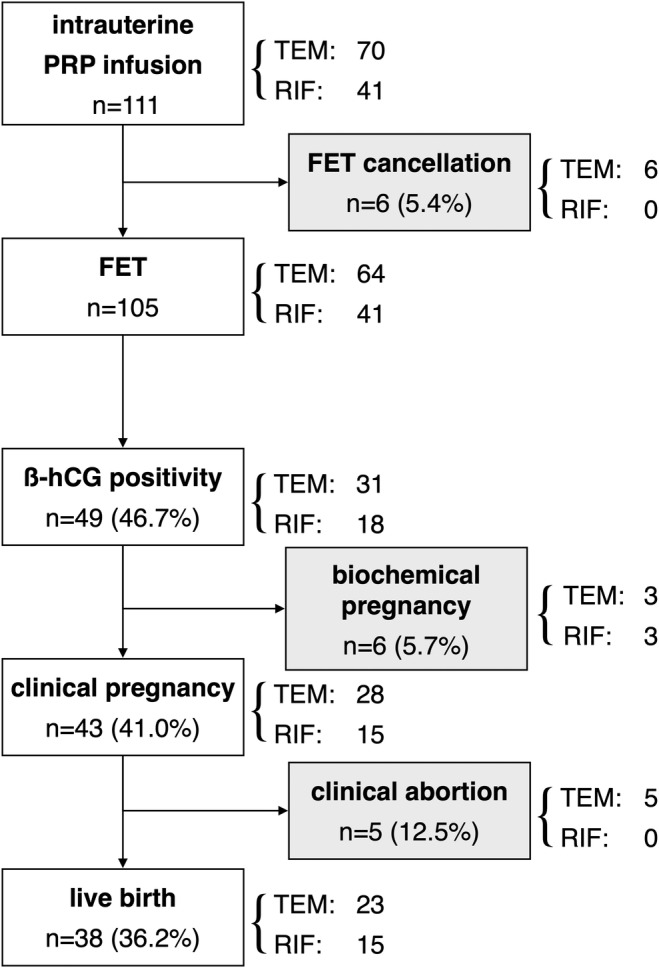
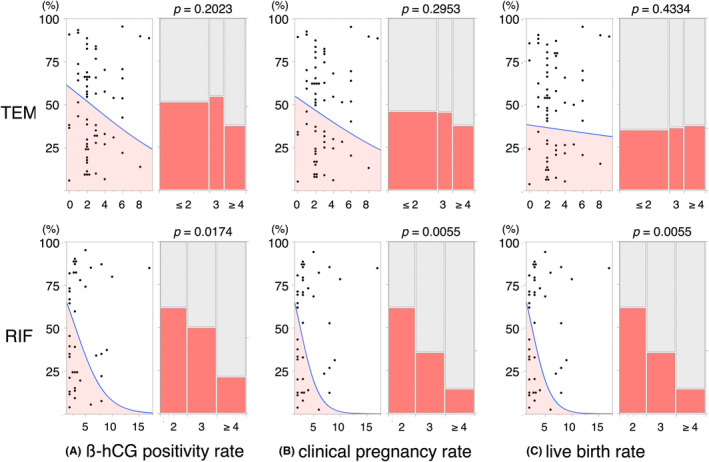
Results: We enrolled 111 patients (70 with refractory thin endometrium and 41 with RIF but no thin endometrium). For 99 completed FET cycles, the β-hCG positivity rate was 46.7%, clinical pregnancy rate (CPR) was 41.0%, and live birth rate (LBR) was 36.2%. PRP treatment was associated with significant improvements over previous cycles, and participants with thin endometria demonstrated thickening. Multivariate logistic regression analysis showed that the number of previous implantation failures in women with RIF was a significant factor affecting the PRP-FET outcomes. The CPR and LBR of women with RIF were lower when there had been ≥3 previous implantation failures occurred.
Conclusions: Intrauterine PRP infusion improves the pregnancy outcomes of patients with RIF or a thin endometrium. The number of previous implantation failures is a critical determinant of successful intrauterine PRP infusions in women with RIF.
Keywords: embryo implantation; embryo transfer; endometrium; infertility; platelet‐rich plasma.
© 2024 The Authors. Reproductive Medicine and Biology published by John Wiley & Sons Australia, Ltd on behalf of Japan Society for Reproductive Medicine.
Conflict of interest statement
The authors declare no conflict of interest.
Figures
References
-
- Kasius A, Smit JG, Torrance HL, Eijkemans MJ, Mol BW, Opmeer BC, et al. Endometrial thickness and pregnancy rates after IVF: a systematic review and meta‐analysis. Hum Reprod Update. 2014;20(4):530–541. - PubMed
LinkOut - more resources
Full Text Sources
Research Materials