


Automatic measurement of fetal anterior neck lower jaw angle in nuchal translucency scans
- PMID: 38438512
- PMCID: PMC10912614
- DOI: 10.1038/s41598-024-55974-x
Automatic measurement of fetal anterior neck lower jaw angle in nuchal translucency scans
Abstract
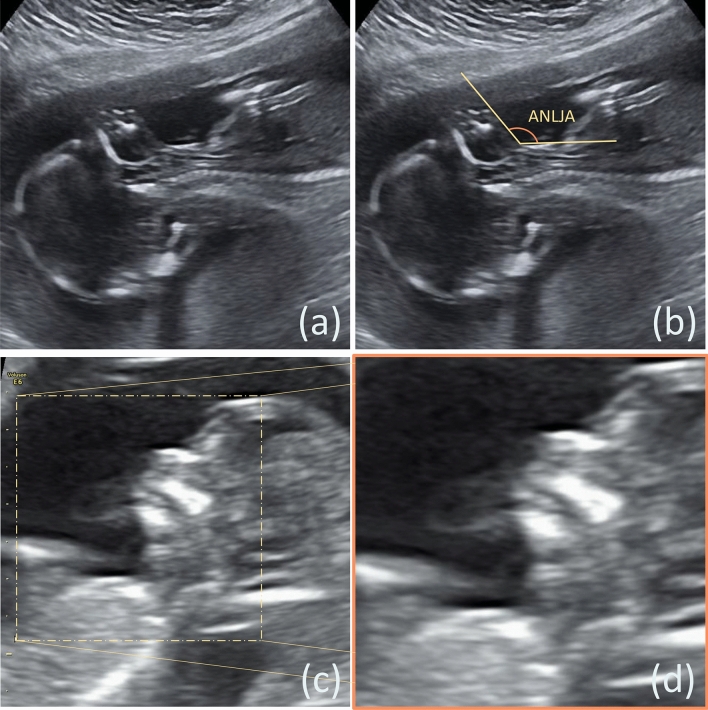
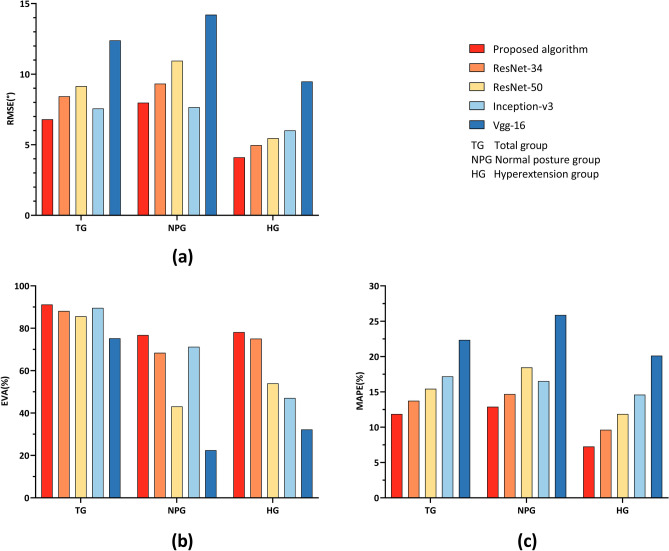
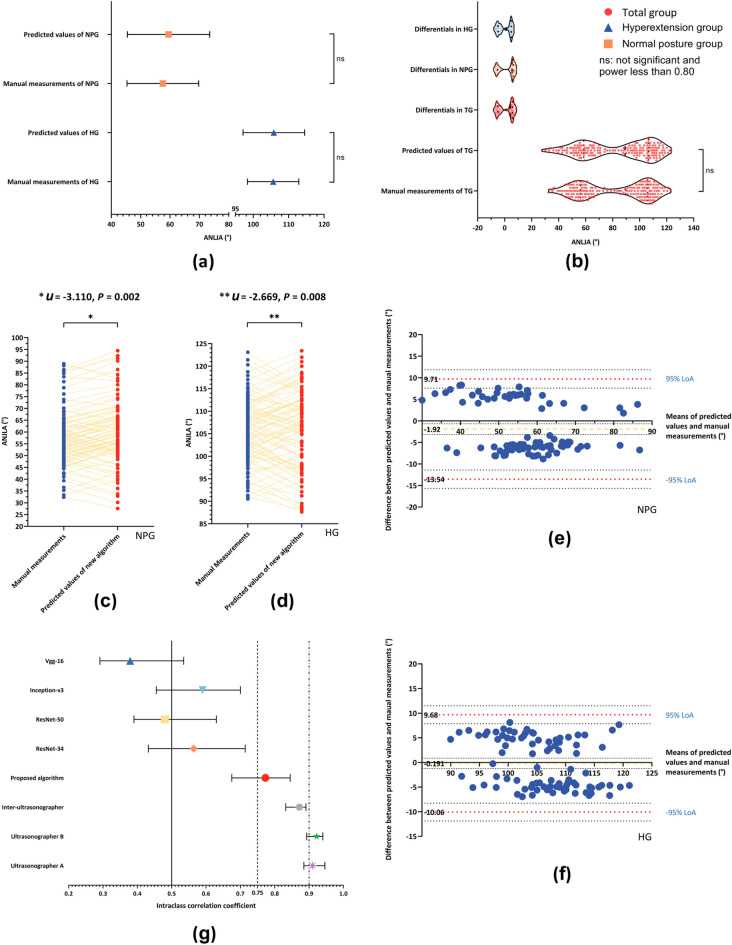
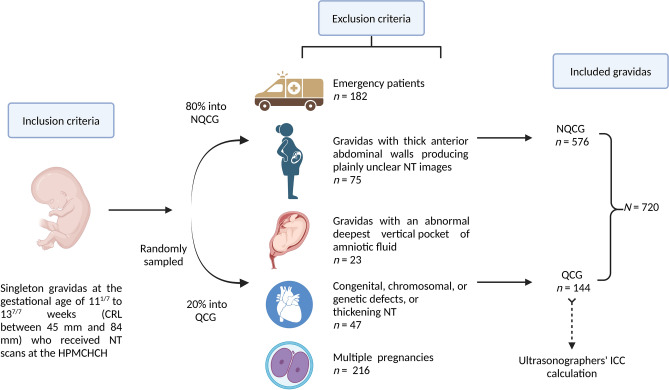
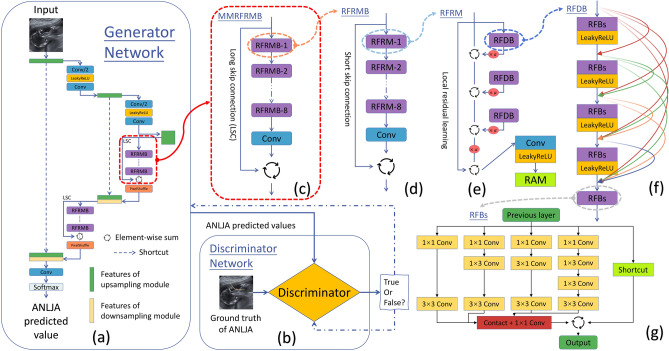
This study aims at suggesting an end-to-end algorithm based on a U-net-optimized generative adversarial network to predict anterior neck lower jaw angles (ANLJA), which are employed to define fetal head posture (FHP) during nuchal translucency (NT) measurement. We prospectively collected 720 FHP images (half hyperextension and half normal posture) and regarded manual measurement as the gold standard. Seventy percent of the FHP images (half hyperextension and half normal posture) were used to fit models, and the rest to evaluate them in the hyperextension group, normal posture group (NPG), and total group. The root mean square error, explained variation, and mean absolute percentage error (MAPE) were utilized for the validity assessment; the two-sample t test, Mann-Whitney U test, Wilcoxon signed-rank test, Bland-Altman plot, and intraclass correlation coefficient (ICC) for the reliability evaluation. Our suggested algorithm outperformed all the competitors in all groups and indices regarding validity, except for the MAPE, where the Inception-v3 surpassed ours in the NPG. The two-sample t test and Mann-Whitney U test indicated no significant difference between the suggested method and the gold standard in group-level comparison. The Wilcoxon signed-rank test revealed significant differences between our new approach and the gold standard in personal-level comparison. All points in Bland-Altman plots fell between the upper and lower limits of agreement. The inter-ICCs of ultrasonographers, our proposed algorithm, and its opponents were graded good reliability, good or moderate reliability, and moderate or poor reliability, respectively. Our proposed approach surpasses the competition and is as reliable as manual measurement.
© 2024. The Author(s).
Conflict of interest statement
The authors declare no competing interests.
Figures
References
-
- Spencer K, Souter V, Tul N, Snijders R, Nicolaides KH. A screening program for trisomy 21 at 10–14 weeks using fetal nuchal translucency, maternal serum free beta-human chorionic gonadotropin and pregnancy-associated plasma protein-A. Ultrasound Obstet. Gynecol. 1999;13:231–237. doi: 10.1046/j.1469-0705.1999.13040231.x. - DOI - PubMed
-
- Lee Y-B, Kim M-H. Automated ultrasonic measurement of fetal nuchal translucency using dynamic programming. In: Martínez-Trinidad JF, Carrasco Ochoa JA, Kittler J, editors. Progress in Pattern Recognition, Image Analysis and Applications. Springer; 2006. pp. 157–167.
MeSH terms
Grants and funding
- B202309026062/Health Research Project of Hunan Provincial Health Commission
- 20200951/Health Research Project of Hunan Provincial Health Commission
- B2019030/Health Research Project of Hunan Provincial Health Commission
- 2023RX21/Ruixin project of Hunan Provincial Maternal and Child Health Care Hospital
- 2019SK1010/Major Scientific and Technological Projects for collaborative prevention and control of birth defects in Hunan Province, China
LinkOut - more resources
Full Text Sources
Research Materials
