


Effect of the ROCK inhibitor fasudil on the brain proteomic profile in the tau transgenic mouse model of Alzheimer's disease
- PMID: 38440100
- PMCID: PMC10911083
- DOI: 10.3389/fnagi.2024.1323563
Effect of the ROCK inhibitor fasudil on the brain proteomic profile in the tau transgenic mouse model of Alzheimer's disease
Erratum in
-
Erratum: Effect of the ROCK inhibitor fasudil on the brain proteomic profile in the tau transgenic mouse model of Alzheimer's disease.Front Aging Neurosci. 2024 Apr 10;16:1409164. doi: 10.3389/fnagi.2024.1409164. eCollection 2024. Front Aging Neurosci. 2024. PMID: 38659705 Free PMC article.
Abstract
Introduction: The goal of this study is to explore the pharmacological potential of the amyloid-reducing vasodilator fasudil, a selective Ras homolog (Rho)-associated kinases (ROCK) inhibitor, in the P301S tau transgenic mouse model (Line PS19) of neurodegenerative tauopathy and Alzheimer's disease (AD).
Methods: We used LC-MS/MS, ELISA and bioinformatic approaches to investigate the effect of treatment with fasudil on the brain proteomic profile in PS19 tau transgenic mice. We also explored the efficacy of fasudil in reducing tau phosphorylation, and the potential beneficial and/or toxic effects of its administration in mice.
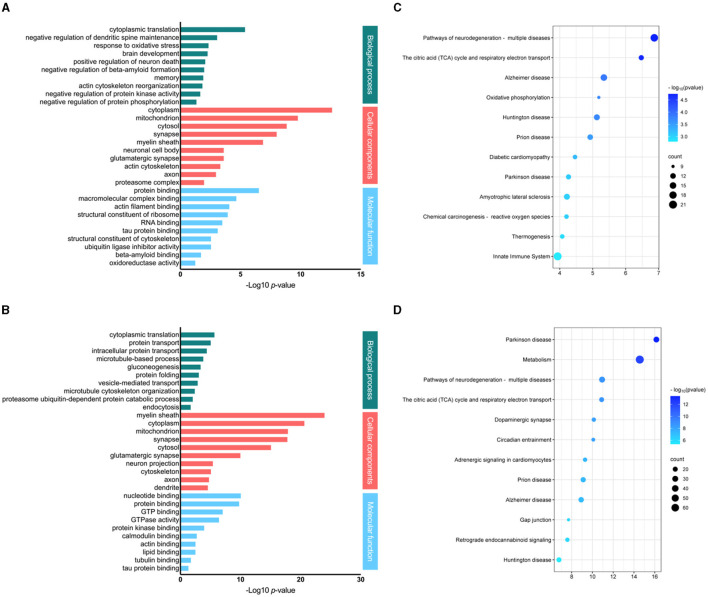
Results: Proteomic profiling of mice brains exposed to fasudil revealed the activation of the mitochondrial tricarboxylic acid (TCA) cycle and blood-brain barrier (BBB) gap junction metabolic pathways. We also observed a significant negative correlation between the brain levels of phosphorylated tau (pTau) at residue 396 and both fasudil and its metabolite hydroxyfasudil.
Conclusions: Our results provide evidence on the activation of proteins and pathways related to mitochondria and BBB functions by fasudil treatment and support its further development and therapeutic potential for AD.
Keywords: Alzheimer's disease; P301S; PS19; fasudil; proteomic; tau.
Copyright © 2024 Collu, Yin, Giunti, Daley, Chen, Morin, Killick, Wong and Xia.
Conflict of interest statement
WX received funding (2020-2023) from Eisai, Inc. The remaining authors declare that the research was conducted in the absence of any commercial or financial relationships that could be construed as a potential conflict of interest.
Figures




References
-
- Ahmed L. A., Darwish H. A., Abdelsalam R. M., Amin H. A. (2016). Role of rho kinase inhibition in the protective effect of fasudil and simvastatin against 3-nitropropionic acid-induced striatal neurodegeneration and mitochondrial dysfunction in rats. Mol. Neurobiol. 53, 3927–3938. 10.1007/s12035-015-9303-2 - DOI - PubMed
Grants and funding
LinkOut - more resources
Full Text Sources
Molecular Biology Databases
Miscellaneous
