


Preoperative anxiety management in pediatric patients: a systemic review and meta-analysis of randomized controlled trials on the efficacy of distraction techniques
- PMID: 38440185
- PMCID: PMC10909818
- DOI: 10.3389/fped.2024.1353508
Preoperative anxiety management in pediatric patients: a systemic review and meta-analysis of randomized controlled trials on the efficacy of distraction techniques
Abstract
Background: This study addresses the pervasive issue of heightened preoperative anxiety in healthcare, particularly among pediatric patients. Recognizing the various sources of anxiety, we explored both pharmacological and nonpharmacological interventions. Focusing on distraction techniques, including active and passive forms, our meta-analysis aimed to provide comprehensive insights into their impact on preoperative anxiety in pediatric patients.
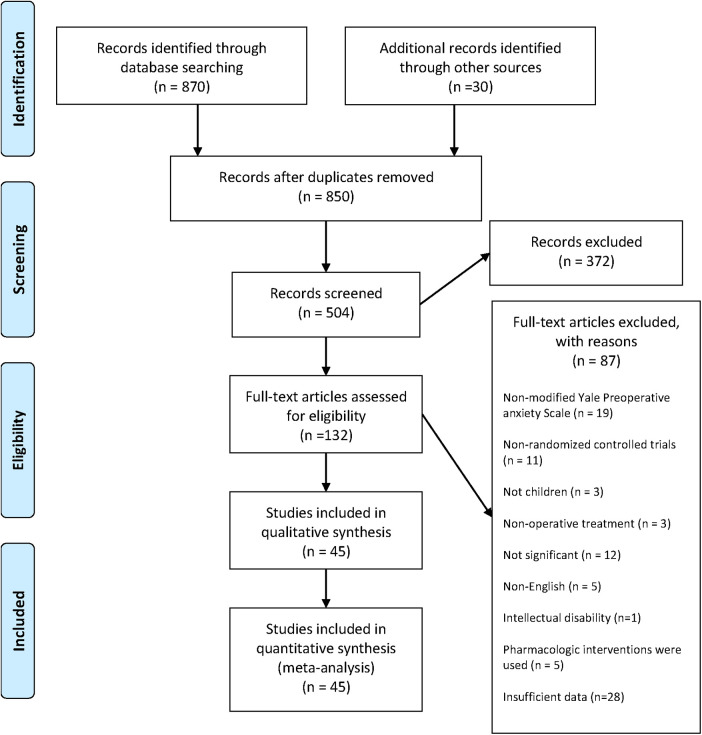
Methods: Following the PRISMA and Cochrane guidelines, this meta-analysis and systematic review assessed the efficacy of pharmaceutical and distraction interventions in reducing pain and anxiety in pediatric surgery. This study was registered on PROSPERO (CRD42023449979).
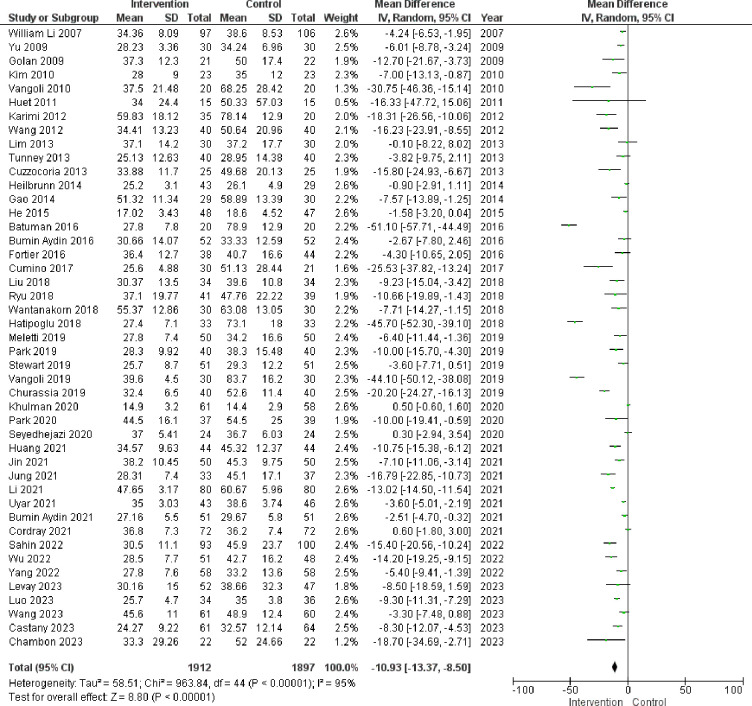
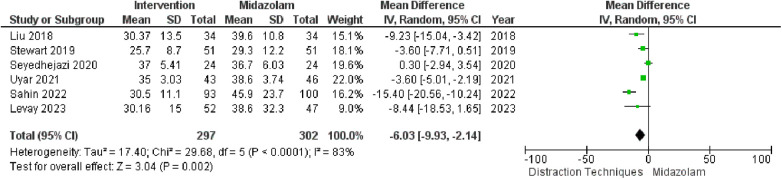
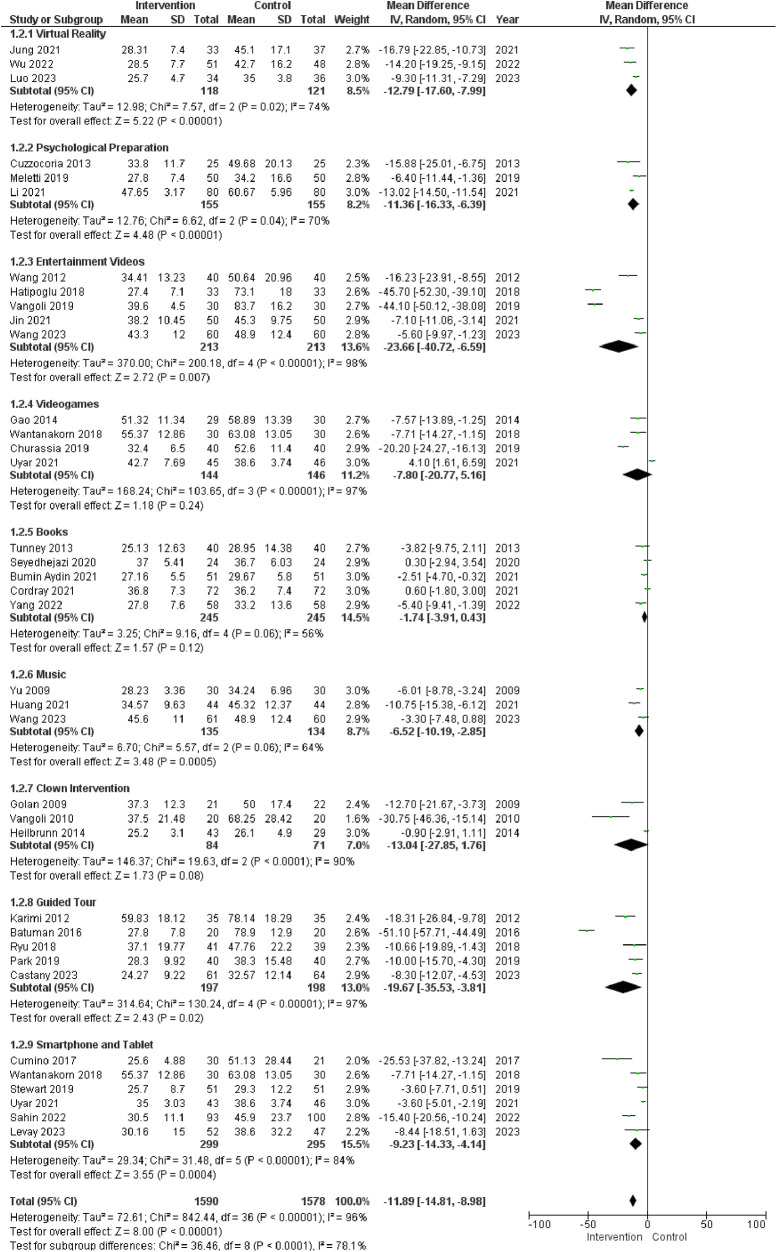
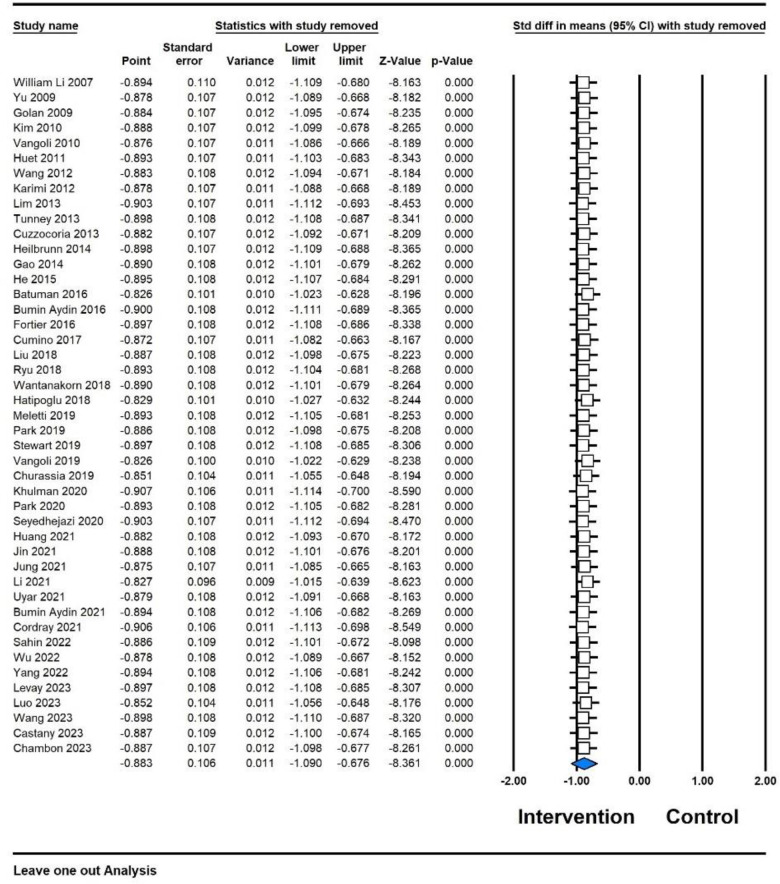
Results: This meta-analysis, comprising 45 studies, investigated pharmaceutical interventions and distraction tactics in pediatric surgery. Risk of bias assessment revealed undisclosed risks in performance and detection bias. Distraction interventions significantly reduced preoperative anxiety compared to control groups, with notable heterogeneity. Comparison with Midazolam favored distraction techniques. Subgroup analysis highlighted varied efficacies among distraction methods, with a notable reduction in anxiety levels. Sensitivity analysis indicated stable results. However, publication bias was observed, suggesting a potential reporting bias.
Conclusion: Our study confirms distraction techniques as safe and effective for reducing pediatric preoperative anxiety, offering a valuable alternative to pharmacological interventions.
Systematic review registration: https://www.crd.york.ac.uk/prospero/display_record.php?RecordID=449979, PROSPERO [CRD42023449979].
Keywords: distraction techniques; nonpharmacological interventions; pediatric preoperative anxiety; pediatric surgery; systemic review and meta-analysis.
© 2024 Mustafa, Shafique, Zaidi, Qamber, Rangwala, Ahmed, Zaidi, Rangwala, Uddin, Ali, Siddiq and Haseeb.
Conflict of interest statement
The authors declare that the research was conducted in the absence of any commercial or financial relationships that could be construed as a potential conflict of interest.
Figures
Similar articles
-
Efficacy, Safety, and Evaluation Criteria of mHealth Interventions for Depression: Systematic Review.JMIR Ment Health. 2023 Sep 27;10:e46877. doi: 10.2196/46877. JMIR Ment Health. 2023. PMID: 37756042 Free PMC article. Review.
-
Non-pharmacological Interventions for Preoperative Anxiety in Children: A Systematic Review and Network Meta-Analysis.J Clin Nurs. 2025 Apr;34(4):1493-1507. doi: 10.1111/jocn.17582. Epub 2025 Jan 6. J Clin Nurs. 2025. PMID: 39763216
-
A Systematic Review of Tablet-Based Interactive Distraction as a Preoperative Anxiolytic in Pediatric Patients Undergoing Same-Day Procedures.Cureus. 2024 May 14;16(5):e60274. doi: 10.7759/cureus.60274. eCollection 2024 May. Cureus. 2024. PMID: 38872640 Free PMC article. Review.
-
Psychological interventions for needle-related procedural pain and distress in children and adolescents.Cochrane Database Syst Rev. 2018 Oct 4;10(10):CD005179. doi: 10.1002/14651858.CD005179.pub4. Cochrane Database Syst Rev. 2018. PMID: 30284240 Free PMC article.
-
Effects of music therapy on degree of cooperation with anesthesia induction and preoperative anxiety in children with simple congenital heart disease: A protocol of systematic review and meta-analysis.PLoS One. 2023 Dec 27;18(12):e0296287. doi: 10.1371/journal.pone.0296287. eCollection 2023. PLoS One. 2023. PMID: 38150450 Free PMC article.
Cited by
-
Observational Study on Progressive Muscle Relaxation and Breathing Control for Reducing Dental Anxiety in Children.Medicina (Kaunas). 2025 May 10;61(5):876. doi: 10.3390/medicina61050876. Medicina (Kaunas). 2025. PMID: 40428834 Free PMC article.
-
Prediction of correlation between preoperative parents' anxiety and their child's anxiety before elective surgery under anaesthesia: An observational study.Indian J Anaesth. 2024 Sep;68(9):809-814. doi: 10.4103/ija.ija_1269_23. Epub 2024 Aug 16. Indian J Anaesth. 2024. PMID: 39386406 Free PMC article.
-
Utility of interactive videogame in allaying preoperative anxiety in pediatric surgical patients - A randomized controlled study.J Postgrad Med. 2024 Oct 1;70(4):198-203. doi: 10.4103/jpgm.jpgm_465_24. Epub 2024 Nov 29. J Postgrad Med. 2024. PMID: 39611402 Free PMC article. Clinical Trial.
-
Virtual reality on perioperative anxiety in pediatric patients: A narrative review.Digit Health. 2025 Mar 28;11:20552076251331304. doi: 10.1177/20552076251331304. eCollection 2025 Jan-Dec. Digit Health. 2025. PMID: 40162171 Free PMC article. Review.
References
-
- Aldakhil SK, Salam M, Albelali AA, Alkanhal RM, Alnemer MJ, Alatassi A. The prevalence of emergence delirium and its associated factors among children at a postoperative unit: a retrospective cohort at a middle eastern hospital. Saudi J Anaesth. (2020) 14(2):169–76. 10.4103/sja.SJA_573_19 - DOI - PMC - PubMed
Publication types
LinkOut - more resources
Full Text Sources
Medical
