


A Survey on Screening and Diagnostic Criteria of Auditory Processing Disorders in India
- PMID: 38440523
- PMCID: PMC10909056
- DOI: 10.1007/s12070-023-04146-w
A Survey on Screening and Diagnostic Criteria of Auditory Processing Disorders in India
Abstract
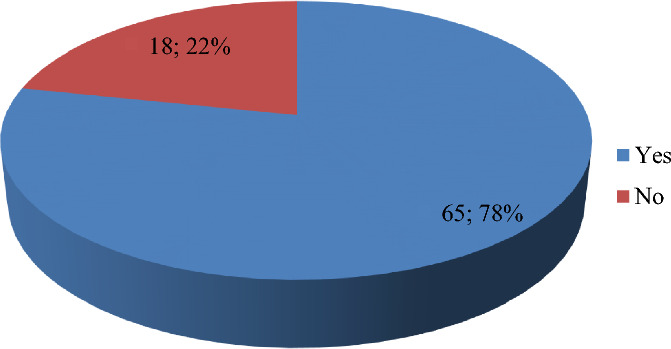
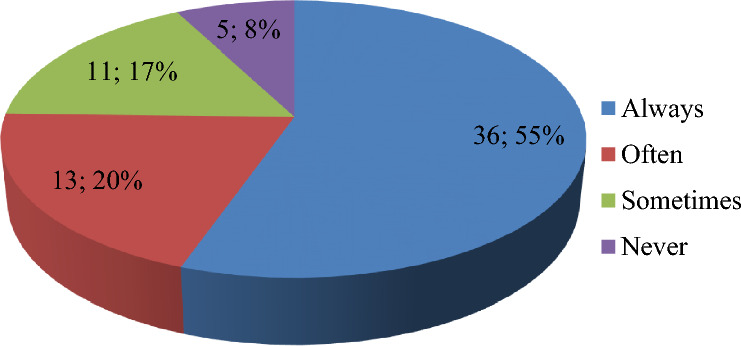
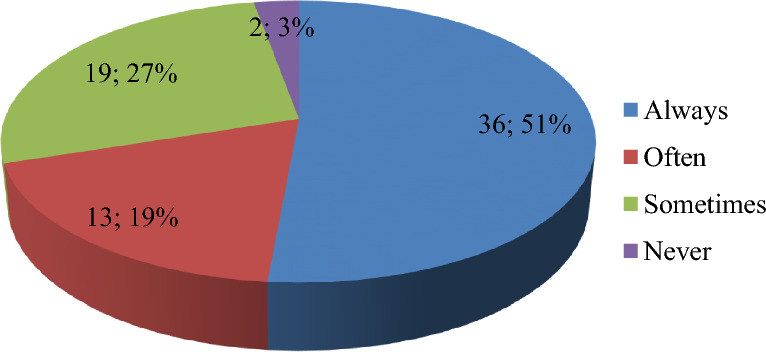
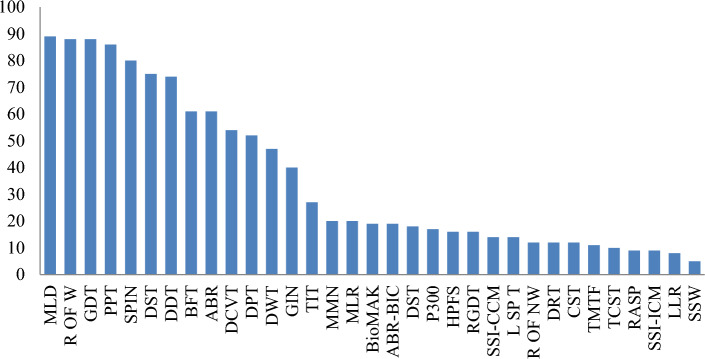
The current study aimed to determine the criteria used for screening and diagnosing cases with central auditory processing disorders (CAPD) in India. A cross-sectional questionnaire-based survey design was used in the present study. A questionnaire was developed to determine the criteria used for screening and diagnosing CAPD across clinics in India. Responses were obtained from 83 participants from all over India. Results indicated that 78% of respondents were currently doing CAPD evaluation. In that, the majority of respondents (63%) had a predetermined minimum battery that was relatively adaptable depending on the case history and age of the patient. In screening, most respondents used a screening questionnaire (SCAP, 75%) and a screening test (STAP, 60%). In the diagnostic protocol, the most used tests by the respondents were masking level difference (MLD), repetition of words (RW), gap detection test (GDT), pitch pattern test (PPT), speech perception in noise (SPIN), digit span test (DST), dichotic digit test (DDT), binaural fusion test (BFT), auditory brainstem response (ABR), dichotic CV test (DCVT), and duration pattern test (DPT). The current study's result will help professionals choose the minimum test battery for diagnosing CAPD.
Keywords: CAPD test battery; Central auditory processing; Central auditory processing disorder.
© Association of Otolaryngologists of India 2023. Springer Nature or its licensor (e.g. a society or other partner) holds exclusive rights to this article under a publishing agreement with the author(s) or other rightsholder(s); author self-archiving of the accepted manuscript version of this article is solely governed by the terms of such publishing agreement and applicable law.
Conflict of interest statement
Conflict of interestThere is no conflict of interest to disclose.
Figures
References
-
- American Academy of Audiology (2010) Guidelines for the diagnosis, treatment and management of children and adults with central auditory processing disorder (Task Force). Retrieved from http://www.audiology.org/resourcesdocumentlibrary
-
- American Speech-Language-Hearing Association (1996) Central auditory processing: Current status of research and implications for clinical practice. Task force on central auditory processing consensus development. Am J Audiol 5(2):41–52
-
- American Speech-Language-Hearing Association (2005) (Central) auditory processing disorder [Technical report]. www.asha.org/policy.
-
- Baddeley AD, Hitch G. Working memory. Psychol Learn Motiv Adv Res Theory. 1974;8(C):47–89. doi: 10.1016/S0079-7421(08)60452-1. - DOI
-
- Catts HW, Chermak GD, Craig CH, Johnston JR, Keith RW, Musiek FE, Robin DA, Sloan C, Paul-Brown D, Thompson ME, Campbell TF, Ferre JM, Kraus N, McNeil MR, Phillips DP, Stark RE, Tallal P, Watson CS. Central auditory processing: current status of research and implications for clinical practice task force on central auditory processing consensus development. Am J Audiol. 1996;5(2):41–52. doi: 10.1044/1059-0889.0502.41. - DOI
LinkOut - more resources
Full Text Sources
Miscellaneous