


Patient flow in emergency departments: a comprehensive umbrella review of solutions and challenges across the health system
- PMID: 38443894
- PMCID: PMC10913567
- DOI: 10.1186/s12913-024-10725-6
Patient flow in emergency departments: a comprehensive umbrella review of solutions and challenges across the health system
Abstract
Background: Globally, emergency departments (EDs) are overcrowded and unable to meet an ever-increasing demand for care. The aim of this study is to comprehensively review and synthesise literature on potential solutions and challenges throughout the entire health system, focusing on ED patient flow.
Methods: An umbrella review was conducted to comprehensively summarise and synthesise the available evidence from multiple research syntheses. A comprehensive search strategy was employed in four databases alongside government or organisational websites in March 2023. Gray literature and reports were also searched. Quality was assessed using the JBI critical appraisal checklist for systematic reviews and research syntheses. We summarised and classified findings using qualitative synthesis, the Population-Capacity-Process (PCP) model, and the input/throughput/output (I/T/O) model of ED patient flow and synthesised intervention outcomes based on the Quadruple Aim framework.
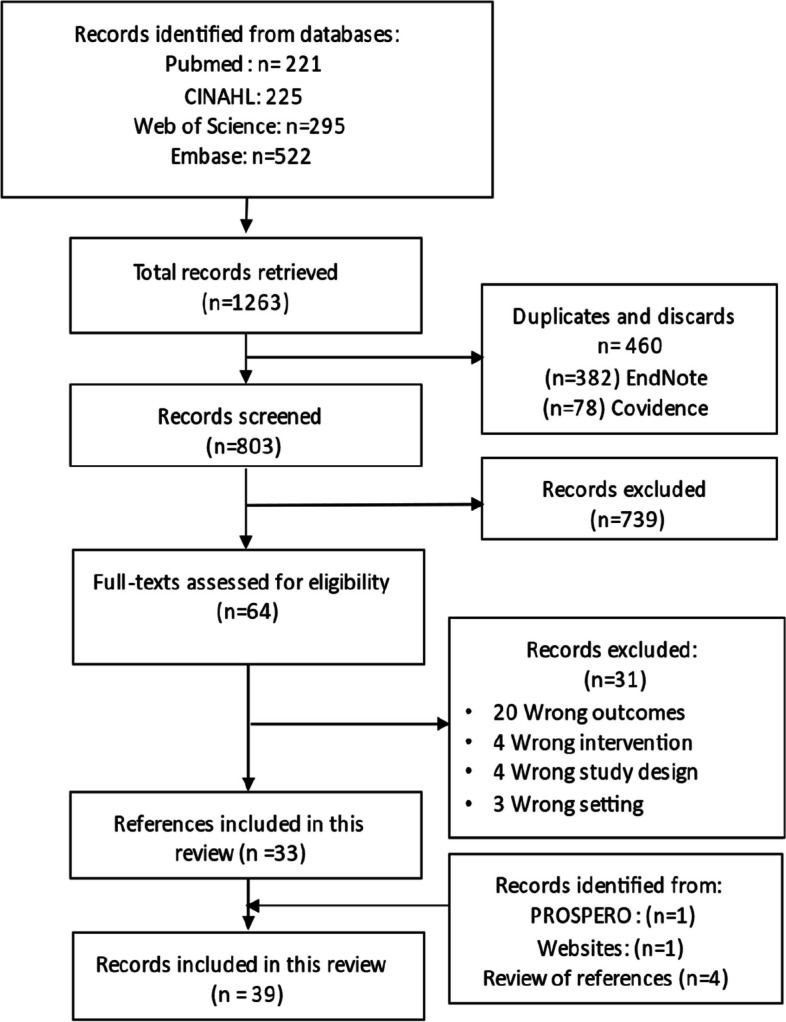
Results: The search strategy yielded 1263 articles, of which 39 were included in the umbrella review. Patient flow interventions were categorised into human factors, management-organisation interventions, and infrastructure and mapped to the relevant component of the patient journey from pre-ED to post-ED interventions. Most interventions had mixed or quadruple nonsignificant outcomes. The majority of interventions for enhancing ED patient flow were primarily related to the 'within-ED' phase of the patient journey. Fewer interventions were identified for the 'post-ED' phase (acute inpatient transfer, subacute inpatient transfer, hospital at home, discharge home, or residential care) and the 'pre-ED' phase. The intervention outcomes were aligned with the aim (QAIM), which aims to improve patient care experience, enhance population health, optimise efficiency, and enhance staff satisfaction.
Conclusions: This study found that there was a wide range of interventions used to address patient flow, but the effectiveness of these interventions varied, and most interventions were focused on the ED. Interventions for the remainder of the patient journey were largely neglected. The metrics reported were mainly focused on efficiency measures rather than addressing all quadrants of the quadruple aim. Further research is needed to investigate and enhance the effectiveness of interventions outside the ED in improving ED patient flow. It is essential to develop interventions that relate to all three phases of patient flow: pre-ED, within-ED, and post-ED.
Keywords: Challenges; Emergency department; Intervention; Outcomes; Patient flow; Solutions; Umbrella review.
© 2024. The Author(s).
Conflict of interest statement
The authors declare no competing interests.
Figures
References
-
- Dods S, Boyle J, Khanna S, O’Dwyer J, Sier D, Sparks R, et al. Evidence driven strategies for meeting hospital performance targets: The value of patient flow modeling. CSIRO Health Services. 2013;2013(1):2013.
Publication types
MeSH terms
LinkOut - more resources
Full Text Sources
