


Prognostic analysis of lung squamous cell carcinoma patients with second primary malignancies: a SEER database study
- PMID: 38444672
- PMCID: PMC10912175
- DOI: 10.3389/fonc.2024.1294383
Prognostic analysis of lung squamous cell carcinoma patients with second primary malignancies: a SEER database study
Abstract
Background: As lung squamous cell carcinoma (LUSC) patients are at increased risk of developing a second primary cancer, this complicates the patient's condition and thus makes prognostic assessment more difficult, posing a significant prognostic challenge for clinicians. Our goal was to assess the prognosis of LUSC patients with a second primary tumor, and provide insights into appropriate therapy and monitoring strategies.
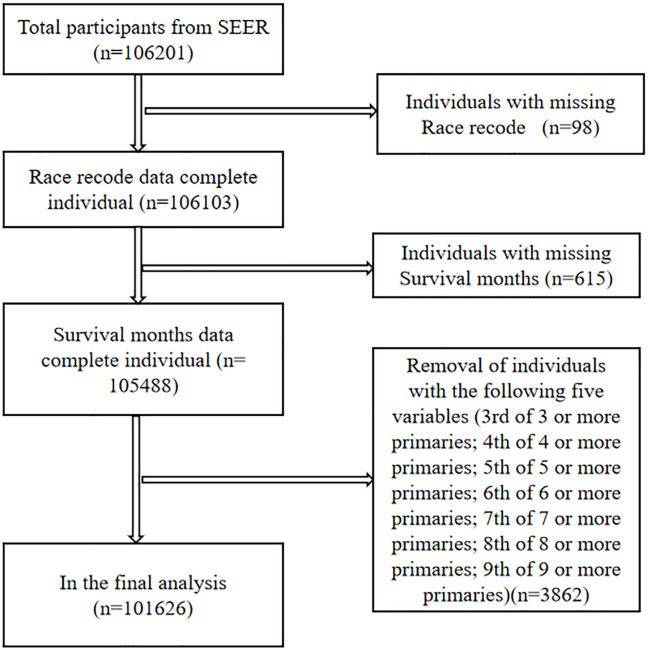
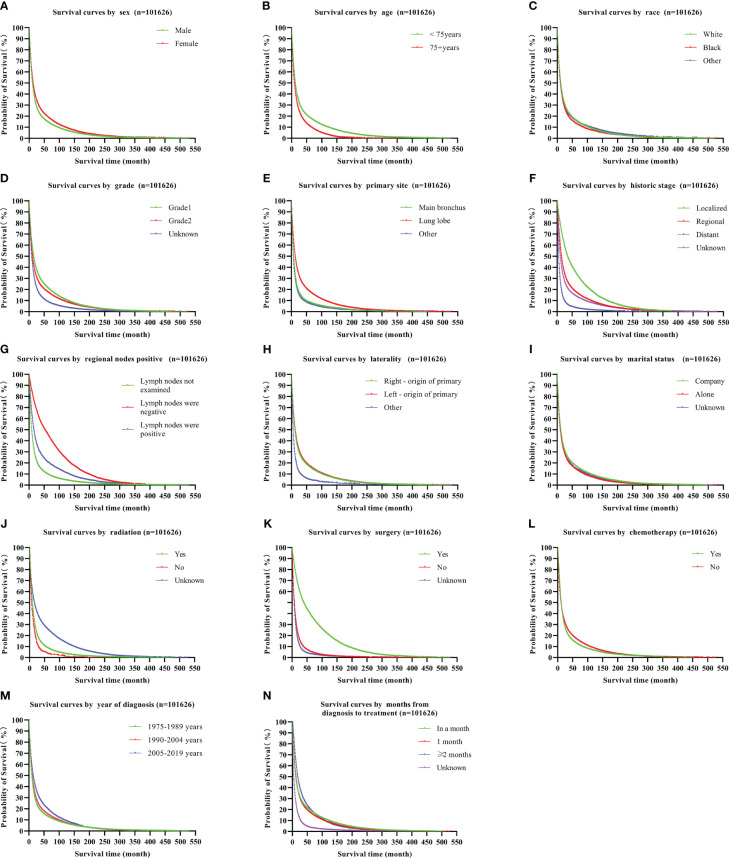
Methods: Data was obtained for LUSC patients from the Surveillance, Epidemiology, and End Results (SEER) database. The LUSC patients were divided into three groups (LS-SPM, OT-LUSC and LUSC-only). Univariate and stratified analyses were performed for the baseline and clinical characteristics of the participants. Multiple regression and Kaplan-Meier survival analyses were also performed, followed by a final life table analysis.
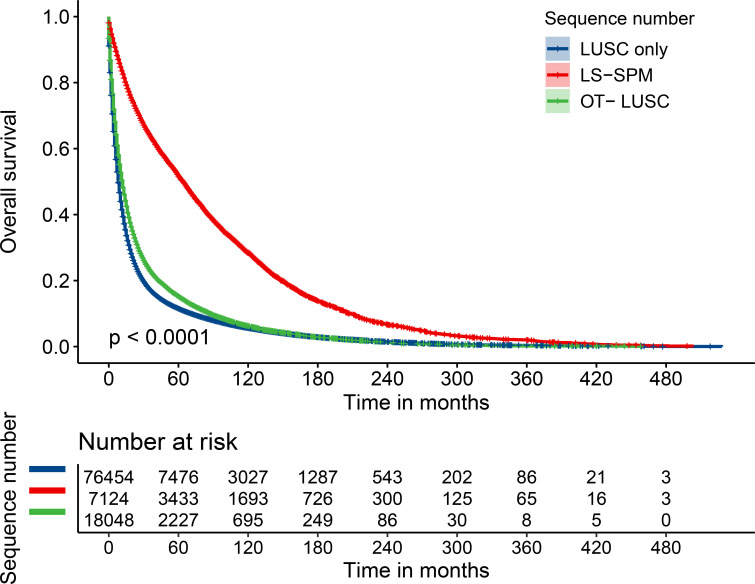
Results: In our sample of 101,626 patients, the HR for OS in the LS-SPM group was 0.40 in univariate analysis. Kaplan-Meier survival curves showed that LS-SPM patients had considerably longer lifespans compared to the other groups. The LS-SPM patients had median and mean survival times of 64 months and 89.11 months. Unadjusted and adjusted multiple regression analyses showed that LS-SPM patients had a superior survival compared to LUSC-only and OT-LUSC groups.
Conclusion: LS-SPM patients have a good prognosis with aggressive therapy and immune monitoring. The present study offers novel insights into the pathophysiological causes and treatments for LS-SPM.
Keywords: NSCLC; SEER; lung squamous cell carcinoma; second primary malignancy; survival time.
Copyright © 2024 Han, Wang, Su, Xu and Wei.
Conflict of interest statement
The authors declare that the research was conducted in the absence of any commercial or financial relationships that could be construed as a potential conflict of interest.
Figures
References
LinkOut - more resources
Full Text Sources
Research Materials
