


Low unspliced cell-associated HIV RNA in early treated adolescents living with HIV on long suppressive ART
- PMID: 38444847
- PMCID: PMC10912947
- DOI: 10.3389/fimmu.2024.1334236
Low unspliced cell-associated HIV RNA in early treated adolescents living with HIV on long suppressive ART
Abstract
Introduction: Initiation of antiretroviral treatment (ART) in patients early after HIV-infection and long-term suppression leads to low or undetectable levels of HIV RNA and cell-associated (CA) HIV DNA and RNA. Both CA-DNA and CA-RNA, overestimate the size of the HIV reservoir but CA-RNA as well as p24/cell-free viral RNA can be indicators of residual viral replication. This study describes HIV RNA amounts and levels of cytokines/soluble markers in 40 well-suppressed adolescents who initiated ART early in life and investigated which viral markers may be informative as endpoints in cure clinical trials within this population.
Methods: Forty adolescents perinatally infected with HIV on suppressive ART for >5 years were enrolled in the CARMA study. HIV DNA and total or unspliced CA-RNA in PBMCs were analyzed by qPCR/RT-qPCR and dPCR/RT-dPCR. Cell-free HIV was determined using an ultrasensitive viral load (US-VL) assay. Plasma markers and p24 were analyzed by digital ELISA and correlations between total and unspliced HIV RNA and clinical markers, including age at ART, Western Blot score, levels of cytokines/inflammation markers or HIV CA-DNA, were tested.
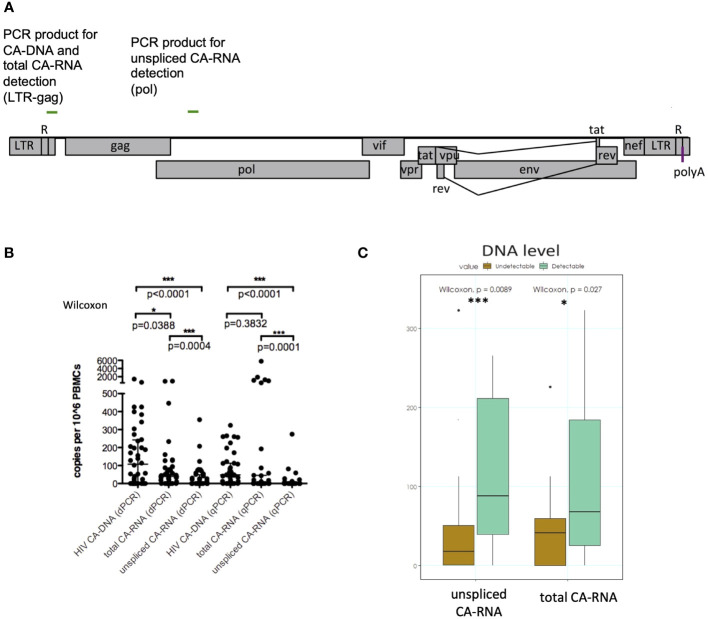
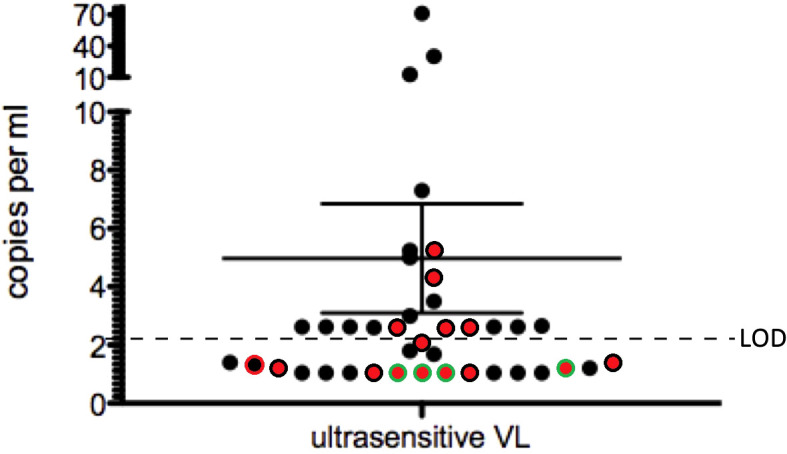
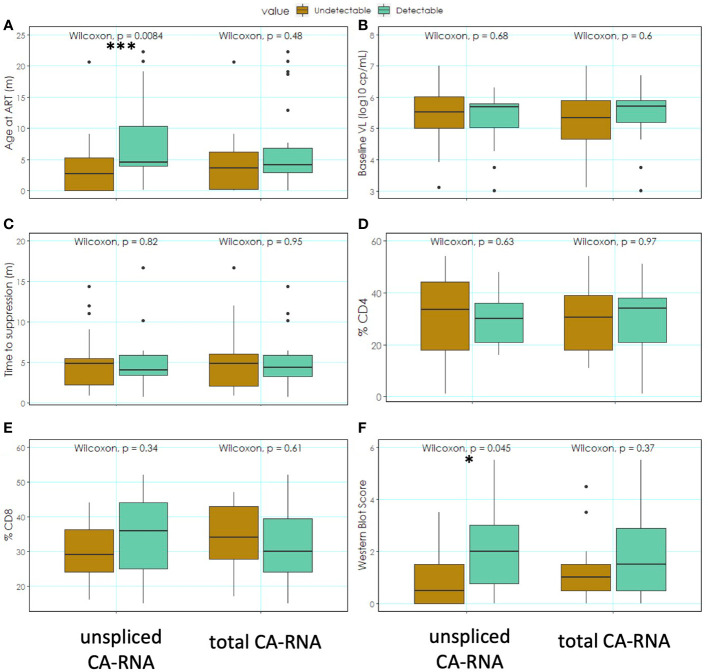
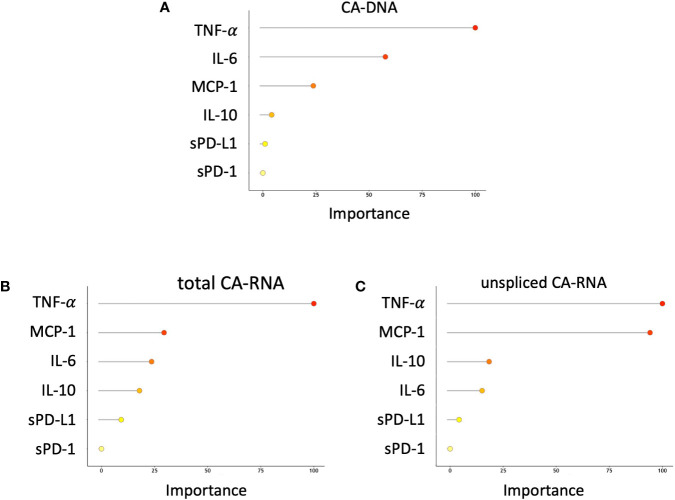
Results: CA-RNA was detected in two thirds of the participants and was comparable in RT-qPCR and RT-dPCR. Adolescents with undetectable CA-RNA showed significantly lower HIV DNA compared to individuals with detectable CA-RNA. Undetectable unspliced CA-RNA was positively associated with age at ART initiation and Western Blot score. We found that a higher concentration of TNF-α was predictive of higher CA-DNA and CA-RNA. Other clinical characteristics like US-VL, time to suppression, or percent CD4+ T-lymphocytes were not predictive of the CA-RNA in this cross-sectional study.
Conclusions: Low CA-DNA after long-term suppressive ART is associated with lower CA-RNA, in concordance with other reports. Patients with low CA-RNA levels in combination with low CA-DNA and low Western Blot scores should be further investigated to characterize candidates for treatment interruption trials. Unspliced CA-RNA warrants further investigation as a marker that can be prioritized in paediatric clinical trials where the sample volume can be a significant limitation.
Keywords: HIV-1; adolescents; cell-associated DNA; cell-associated RNA; cytokines; early treated; suppressed.
Copyright © 2024 Gärtner, Domínguez-Rodríguez, Heaney, Gkouleli, Grant, Dorgham, Sauce, Soulie, Busby, O’Sullivan, Spyer, Botha, Muñoz-Fernandez, Tagarro, Cotugno, Huggett, Klein, Palma, Rojo Conejo, Foster, Giaquinto, Rossi, Persaud, De Rossi, Marcelin and Nastouli.
Conflict of interest statement
The authors declare that the research was conducted in the absence of any commercial or financial relationships that could be construed as a potential conflict of interest. The author(s) declared that they were an editorial board member of Frontiers, at the time of submission. This had no impact on the peer review process and the final decision.
Figures
References
-
- Consolidated Guidelines on HIV Prevention, Diagnosis, Treatment and Care for Key Populations - 2016 Update. Geneva: WHO; (2016). Guidelines Approved by the Guidelines Review Committee. - PubMed
-
- Tagarro A, Chan M, Zangari P, Ferns B, Foster C, De Rossi A, et al. Early and highly suppressive antiretroviral therapy are main factors associated with low viral reservoir in european perinatally HIV-infected children. J Acquir Immune Defic Syndr (2018) 79(2):269–76. doi: 10.1097/QAI.0000000000001789 - DOI - PMC - PubMed
Publication types
MeSH terms
Substances
LinkOut - more resources
Full Text Sources
Medical
Research Materials
