


From hyperglycemia to intervertebral disc damage: exploring diabetic-induced disc degeneration
- PMID: 38444852
- PMCID: PMC10912372
- DOI: 10.3389/fimmu.2024.1355503
From hyperglycemia to intervertebral disc damage: exploring diabetic-induced disc degeneration
Abstract
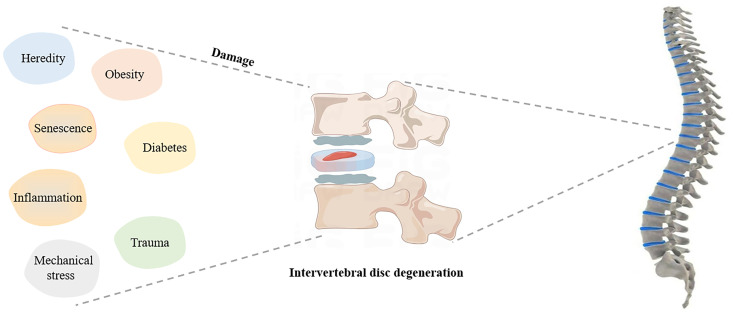
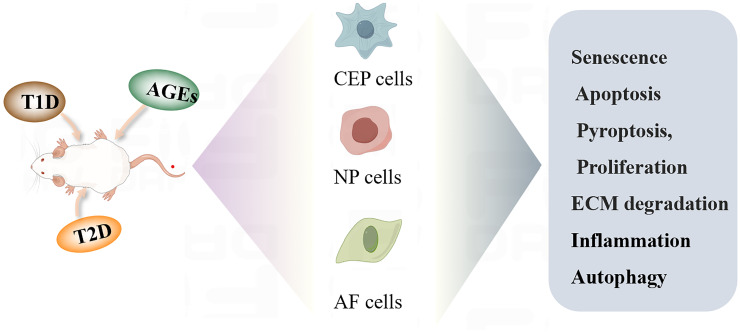
The incidence of lumbar disc herniation has gradually increased in recent years, and most patients have symptoms of low back pain and nerve compression, which brings a heavy burden to patients and society alike. Although the causes of disc herniation are complex, intervertebral disc degeneration (IDD) is considered to be the most common factor. The intervertebral disc (IVD) is composed of the upper and lower cartilage endplates, nucleus pulposus, and annulus fibrosus. Aging, abnormal mechanical stress load, and metabolic disorders can exacerbate the progression of IDD. Among them, high glucose and high-fat diets (HFD) can lead to fat accumulation, abnormal glucose metabolism, and inflammation, which are considered important factors affecting the homeostasis of IDD. Diabetes and advanced glycation end products (AGEs) accumulation- can lead to various adverse effects on the IVD, including cell senescence, apoptosis, pyroptosis, proliferation, and Extracellular matrix (ECM) degradation. While current research provides a fundamental basis for the treatment of high glucose-induced IDD patients. further exploration into the mechanisms of abnormal glucose metabolism affecting IDD and in the development of targeted drugs will provide the foundation for the effective treatment of these patients. We aimed to systematically review studies regarding the effects of hyperglycemia on the progress of IDD.
Keywords: AGEs; Intervertebral disc degeneration; annulus fibrosus; cartilage endplates; high glucose; nucleus pulposus.
Copyright © 2024 Li, Du, Huang, Gao, Zhao, Chang, Zhang and He.
Conflict of interest statement
The authors declare that the research was conducted in the absence of any commercial or financial relationships that could be construed as a potential conflict of interest.
Figures
References
Publication types
MeSH terms
Substances
LinkOut - more resources
Full Text Sources
Medical
