


The role of gut microorganisms and metabolites in intracerebral hemorrhagic stroke: a comprehensive review
- PMID: 38449739
- PMCID: PMC10915040
- DOI: 10.3389/fnins.2024.1346184
The role of gut microorganisms and metabolites in intracerebral hemorrhagic stroke: a comprehensive review
Abstract
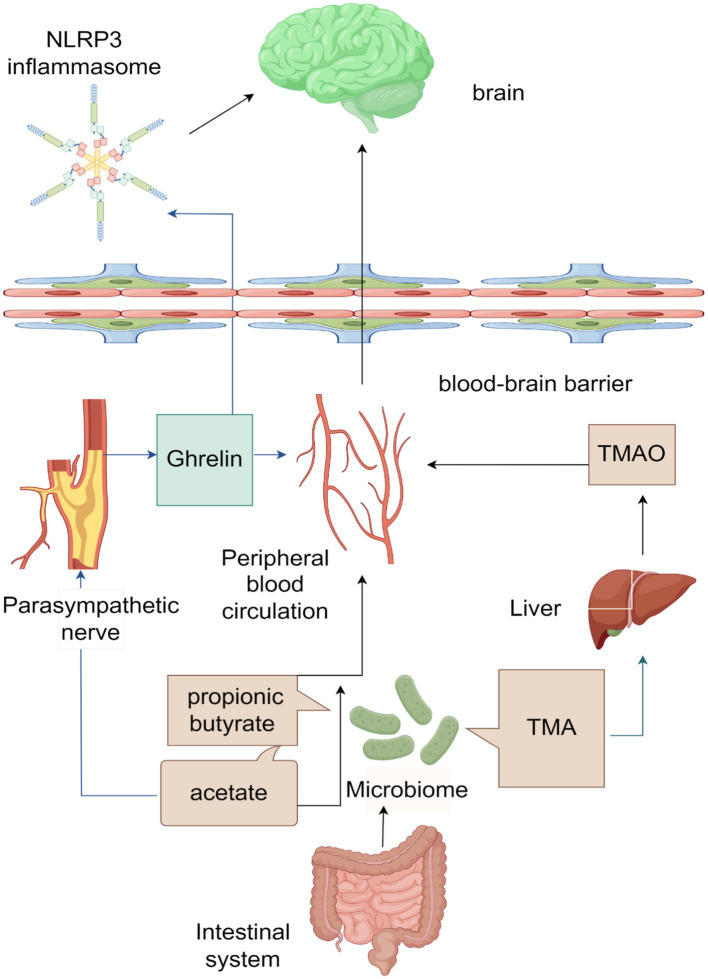
Intracerebral hemorrhagic stroke, characterized by acute hemorrhage in the brain, has a significant clinical prevalence and poses a substantial threat to individuals' well-being and productivity. Recent research has elucidated the role of gut microorganisms and their metabolites in influencing brain function through the microbiota-gut-brain axis (MGBA). This article provides a comprehensive review of the current literature on the common metabolites, short-chain fatty acids (SCFAs) and trimethylamine-N-oxide (TMAO), produced by gut microbiota. These metabolites have demonstrated the potential to traverse the blood-brain barrier (BBB) and directly impact brain tissue. Additionally, these compounds have the potential to modulate the parasympathetic nervous system, thereby facilitating the release of pertinent substances, impeding the buildup of inflammatory agents within the brain, and manifesting anti-inflammatory properties. Furthermore, this scholarly analysis delves into the existing dearth of investigations concerning the influence of gut microorganisms and their metabolites on cerebral functions, while also highlighting prospective avenues for future research.
Keywords: NLRP3 inflammasome; ghrelin; intracerebral hemorrhage; microbiota-gut-brain axis; short-chain fatty acids; trimethylamine N-oxide.
Copyright © 2024 Wen, Dong and Zou.
Conflict of interest statement
The authors declare that the research was conducted in the absence of any commercial or financial relationships that could be construed as a potential conflict of interest.
Figures
References
Publication types
LinkOut - more resources
Full Text Sources
