


Rosacea: Pathogenesis and Therapeutic Correlates
- PMID: 38450615
- PMCID: PMC11015710
- DOI: 10.1177/12034754241229365
Rosacea: Pathogenesis and Therapeutic Correlates
Abstract
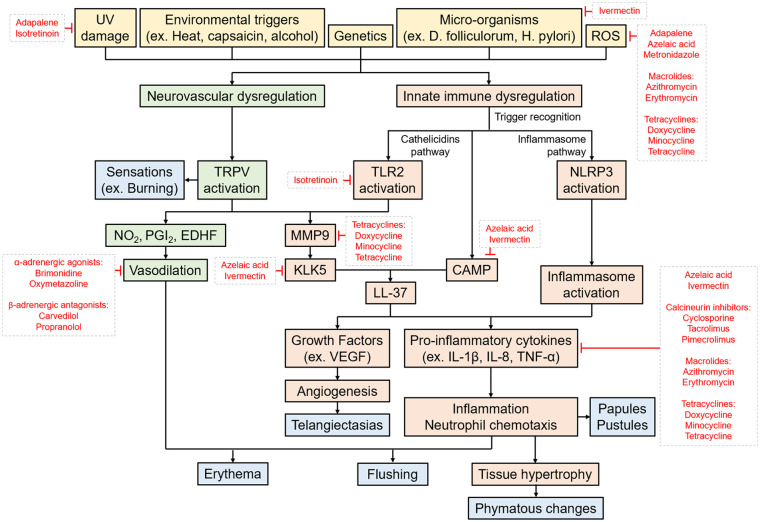
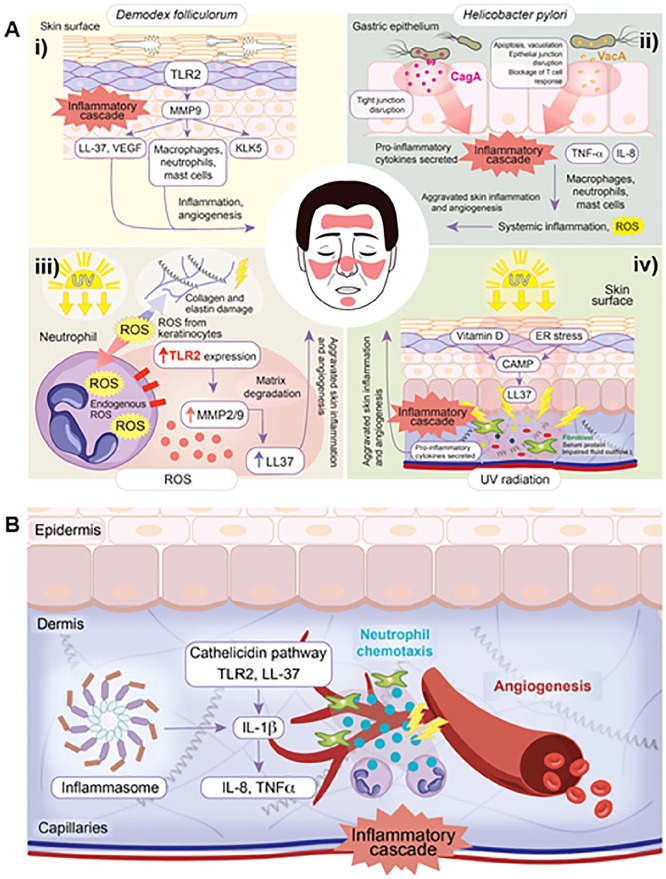
Rosacea is a chronic inflammatory condition of which there is no cure. The pathogenesis of rosacea is likely multifactorial, involving genetic and environmental contributions. Current understanding suggests that pro-inflammatory pathways involving cathelicidins and inflammasome complexes are central to rosacea pathogenesis. Common rosacea triggers modulate these pathways in a complex manner, which may contribute to the varying severity and clinical presentations of rosacea. Established and emerging rosacea treatments may owe their efficacy to their ability to target different players in these pro-inflammatory pathways. Improving our molecular understanding of rosacea will guide the development of new therapies and the use of combination therapies.
Keywords: pathogenesis; rosacea; treatment.
Conflict of interest statement
Declaration of Conflicting InterestsThe author(s) declared the following potential conflicts of interest with respect to the research, authorship, and/or publication of this article: Dr R. Gary Sibbald is the Co-Editor-in-Chief for the Advances in Skin and Wound Care Journal. Dr Asfandyar Mufti was a speaker on an advisory board for Amgen. The authors have disclosed that they have no financial relationships with, or financial interests in, any commercial companies relevant to this educational activity.
Figures
References
Publication types
MeSH terms
Substances
LinkOut - more resources
Full Text Sources
Medical
