


Defining suffering in pain: a systematic review on pain-related suffering using natural language processing
- PMID: 38452202
- PMCID: PMC11190900
- DOI: 10.1097/j.pain.0000000000003195
Defining suffering in pain: a systematic review on pain-related suffering using natural language processing
Abstract
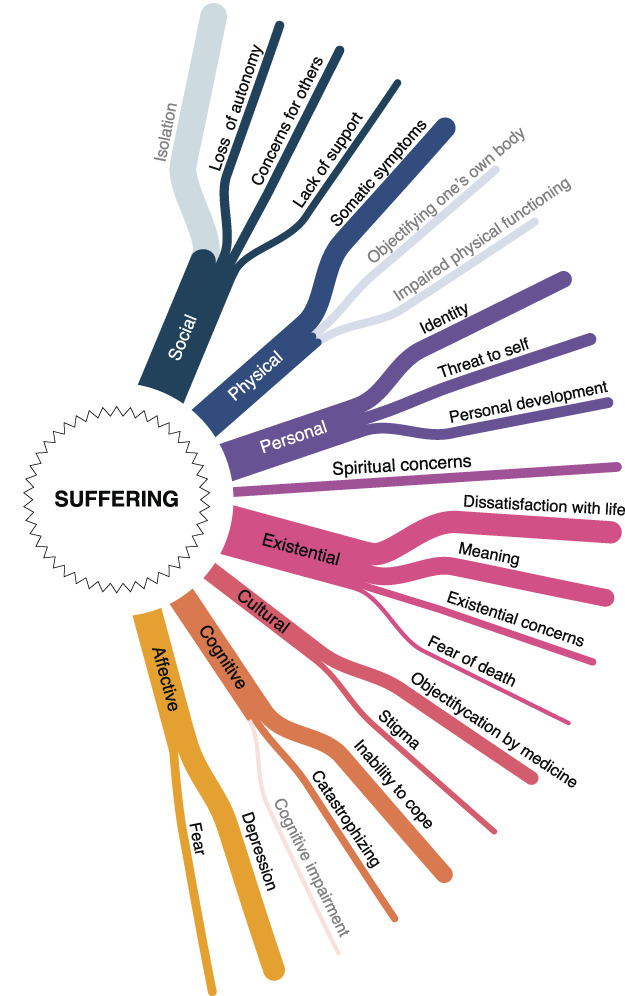
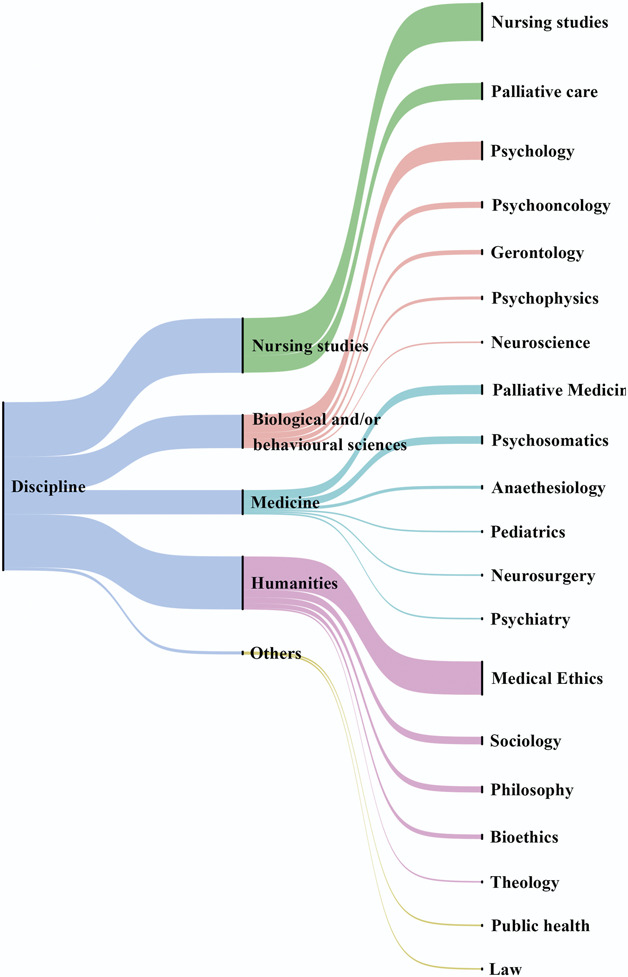
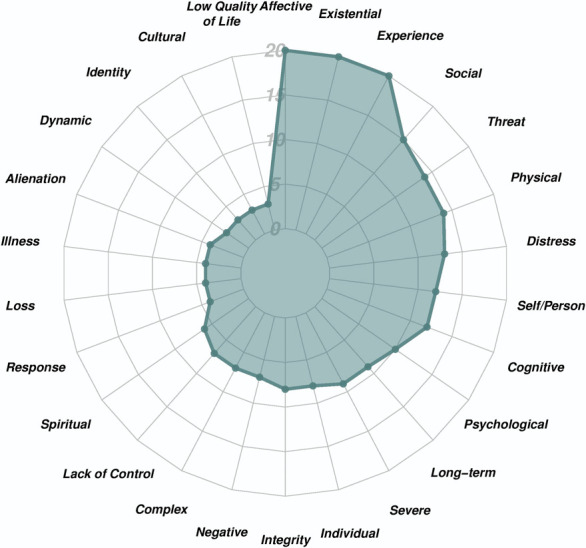
Understanding, measuring, and mitigating pain-related suffering is a key challenge for both clinical care and pain research. However, there is no consensus on what exactly the concept of pain-related suffering includes, and it is often not precisely operationalized in empirical studies. Here, we (1) systematically review the conceptualization of pain-related suffering in the existing literature, (2) develop a definition and a conceptual framework, and (3) use machine learning to cross-validate the results. We identified 111 articles in a systematic search of Web of Science, PubMed, PsychINFO, and PhilPapers for peer-reviewed articles containing conceptual contributions about the experience of pain-related suffering. We developed a new procedure for extracting and synthesizing study information based on the cross-validation of qualitative analysis with an artificial intelligence-based approach grounded in large language models and topic modeling. We derived a definition from the literature that is representative of current theoretical views and describes pain-related suffering as a severely negative, complex, and dynamic experience in response to a perceived threat to an individual's integrity as a self and identity as a person. We also offer a conceptual framework of pain-related suffering distinguishing 8 dimensions: social, physical, personal, spiritual, existential, cultural, cognitive, and affective. Our data show that pain-related suffering is a multidimensional phenomenon that is closely related to but distinct from pain itself. The present analysis provides a roadmap for further theoretical and empirical development.
Copyright © 2024 The Author(s). Published by Wolters Kluwer Health, Inc. on behalf of the International Association for the Study of Pain.
Conflict of interest statement
The authors have no conflict of interest to declare.
Sponsorships or competing interests that may be relevant to content are disclosed at the end of this article.
Figures
References
-
- Adunsky A, Zvi Aminoff B, Arad M, Bercovitch M. Mini-suffering state examination: suffering and survival of end-of-life cancer patients in a hospice setting. Am J Hosp Palliat Med 2008;24:493–8. - PubMed
-
- Aguilera B. Nonconscious pain, suffering, and moral status. Neuroethics 2020;13:337–45.
-
- Andaya E, Campo-Engelstein L. Conceptualizing pain and personhood in the periviable period: perspectives from reproductive health and neonatal intensive care unit clinicians. Soc Sci Med 2021;269:113558. - PubMed
-
- Baines BK, Norlander L. The relationship of pain and suffering in a hospice population. Am J Hosp Palliat Care 2000;17:319–26. - PubMed
-
- Bellieni C. Pain definitions revised: newborns not only feel pain, they also suffer. Ethics Med 2005;21:5–9. - PubMed
Publication types
MeSH terms
Grants and funding
LinkOut - more resources
Full Text Sources
Medical
