


Diffusion tensor imaging of white-matter structural features of maltreating mothers and their associations with intergenerational chain of childhood abuse
- PMID: 38453944
- PMCID: PMC10920819
- DOI: 10.1038/s41598-024-53666-0
Diffusion tensor imaging of white-matter structural features of maltreating mothers and their associations with intergenerational chain of childhood abuse
Abstract
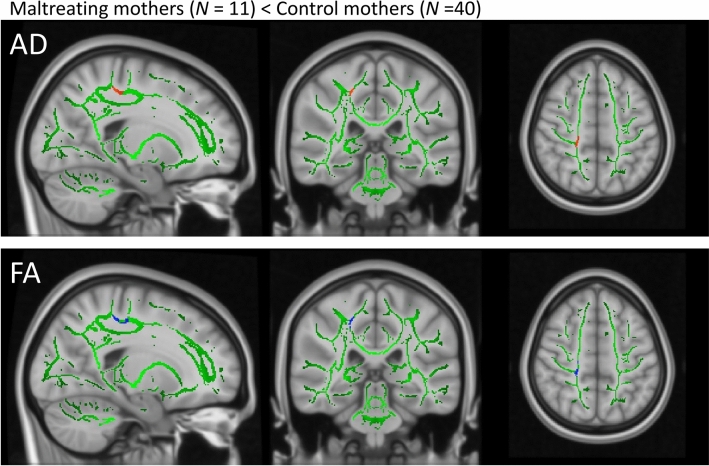
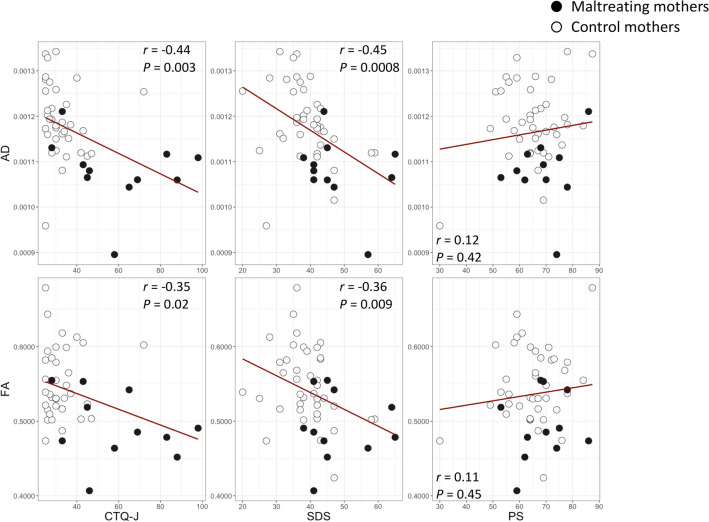
Child abuse causes lifelong adverse outcomes for both physical and mental health, although many are resilient. Efforts to prevent this issue from the parental side require an understanding of the neurobiological basis that leads abusive parents to perpetrate abuse and the influence of the intergenerational chain of childhood abuse. Therefore, this study was conducted to compare the brain white-matter fiber structures between 11 maltreating mothers who had been recognized as having conducted child abuse prior to the intervention and 40 age-matched control mothers using tract-based spatial statistics. There was a significantly reduced axial diffusivity (AD) and a similar trend in fractional anisotropy (FA) in the right corticospinal tract in maltreating mothers compared to control mothers. Therefore, maltreating mothers may have excessive control over the forcefulness of voluntary movements. These features also decreased as the number of childhood abuse experiences increased, suggesting that an intergenerational chain of child abuse may also be involved. Other aspects observed were that the higher the current depressive symptoms, the lower the AD and FA values; however, they were not related to parental practice or empathy. These results corroborate the neurobiological features that perpetrate behaviors in abusive mothers.
© 2024. The Author(s).
Conflict of interest statement
The authors declare no competing interests.
Figures
References
MeSH terms
Grants and funding
LinkOut - more resources
Full Text Sources
Medical
