


Therapeutic Response of Meniere's Disease Utilizing Sorbus domestica
- PMID: 38455836
- PMCID: PMC10919166
- DOI: 10.7759/cureus.53702
Therapeutic Response of Meniere's Disease Utilizing Sorbus domestica
Abstract
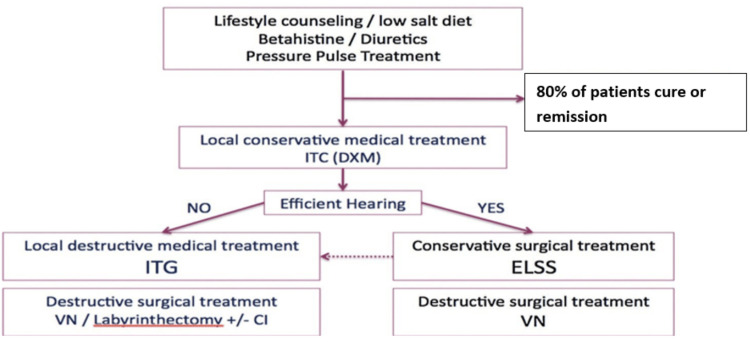
Introduction Meniere's disease (MD) is a chronic condition characterized by episodic attacks of vertigo, fluctuating hearing loss, and tinnitus. MD can impart a significant socioeconomic impact with associated progressive hearing loss. First-line therapies consist of diuretics and antihistamines, with second-line therapies including intratympanic steroids and pulse therapy. Third-line treatments include endolymphatic sac surgery (ELSS) followed by intratympanic gentamicin injection and/or vestibular neurectomy. The gemmotherapy Sorbus domestica's inherent properties to regulate venous circulation and lymphatic drainage have been utilized in the European literature for the treatment of MD and the patients in this study. Methods Patients presenting for rehabilitation at Pulaski Health and Rehabilitation Facility with a history of vertigo were examined and, through history and specific exam, to define MD. This resulted in six patients whose symptoms and exam were consistent with MD and interfered with their therapeutic progression. These patients were offered and accepted treatment with Sorbus domestica for their MD. Results All patients responded with either resolution or significant improvement in their symptoms and hearing loss. Treatment also resulted in an improved and probably shortened rehabilitative course. All patients had no adverse reactions and were supplied with resources for continual treatment upon discharge. Conclusion Sorbus domestica is a safe and viable treatment option for MD. It has been useful, especially in treatment-resistant diseases, without side effects and can be utilized in initial cases with improvement or resolution of hearing loss.
Keywords: gemmotherapy; meniere’s disease; sorbus domestica; tinnitus; vertigo.
Copyright © 2024, Williams et al.
Conflict of interest statement
The authors have declared that no competing interests exist.
Figures
References
-
- Prosper Ménière and his disease. Baloh RW. Arch Neurol. 2001;58:1151–1156. - PubMed
-
- Endolymphatic hydrops in Ménière's disease: cause, consequence, or epiphenomenon? Foster CA, Breeze RE. Otol Neurotol. 2013;34:1210–1214. - PubMed
-
- The AAO-HNS Committee on Hearing and Equilibrium guidelines for the diagnosis and evaluation of therapy in Menière's disease: have they been applied in the published literature of the last decade? Thorp MA, Shehab ZP, Bance ML, Rutka JA. Clin Otolaryngol Allied Sci. 2003;28:173–176. - PubMed
-
- Diagnostic criteria for Menière's disease. Lopez-Escamez JA, Carey J, Chung WH, et al. J Vestib Res. 2015;25:1–7. - PubMed
LinkOut - more resources
Full Text Sources