


Connecting single-nucleotide polymorphisms, glycosylation status, and interactions of plasma serine protease inhibitors
- PMID: 38455847
- PMCID: PMC10914678
- DOI: 10.1016/j.chempr.2022.11.018
Connecting single-nucleotide polymorphisms, glycosylation status, and interactions of plasma serine protease inhibitors
Abstract
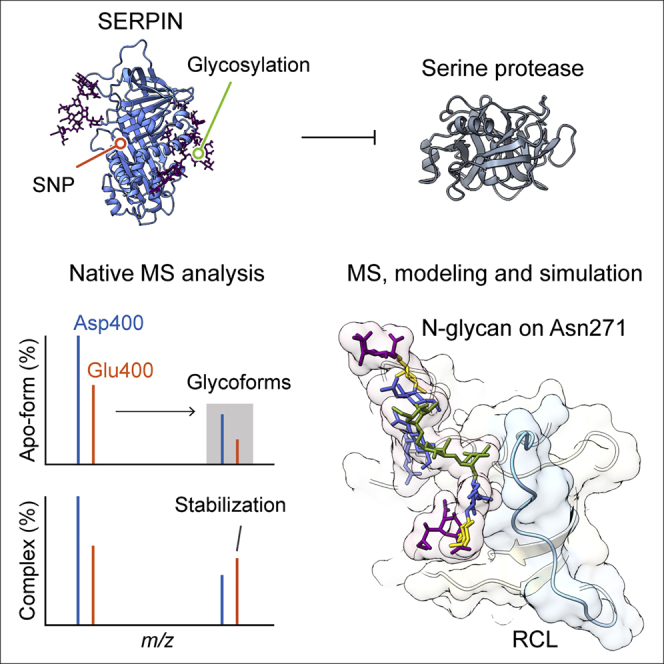
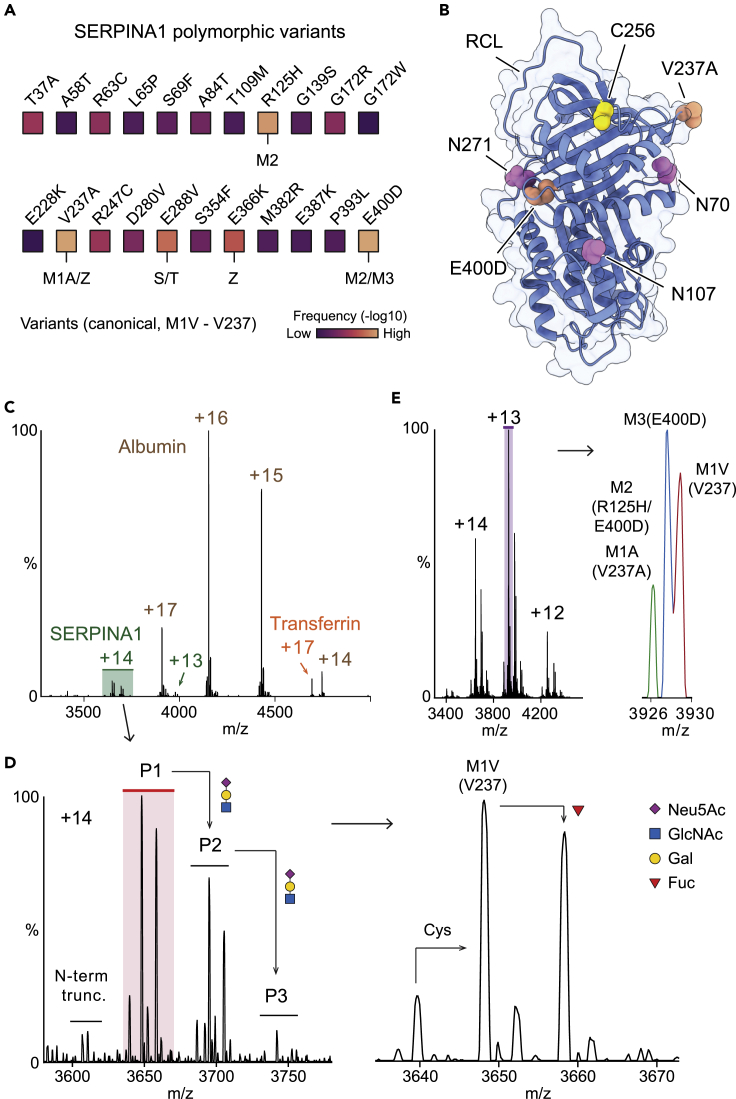
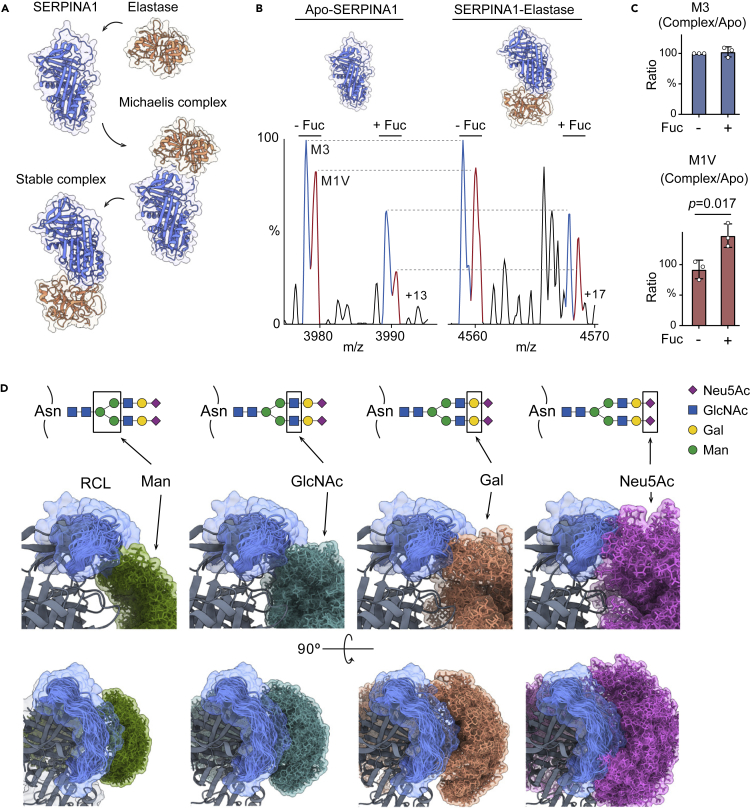
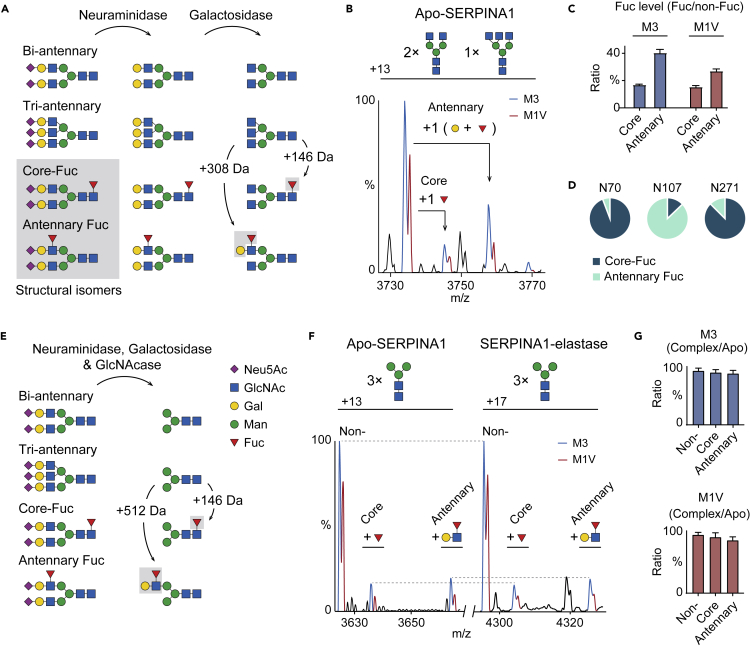
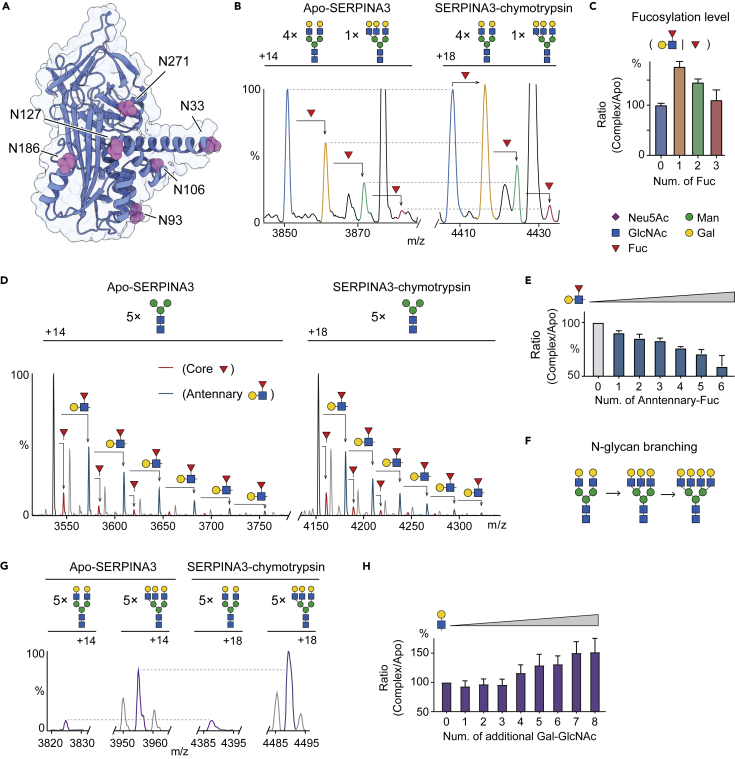
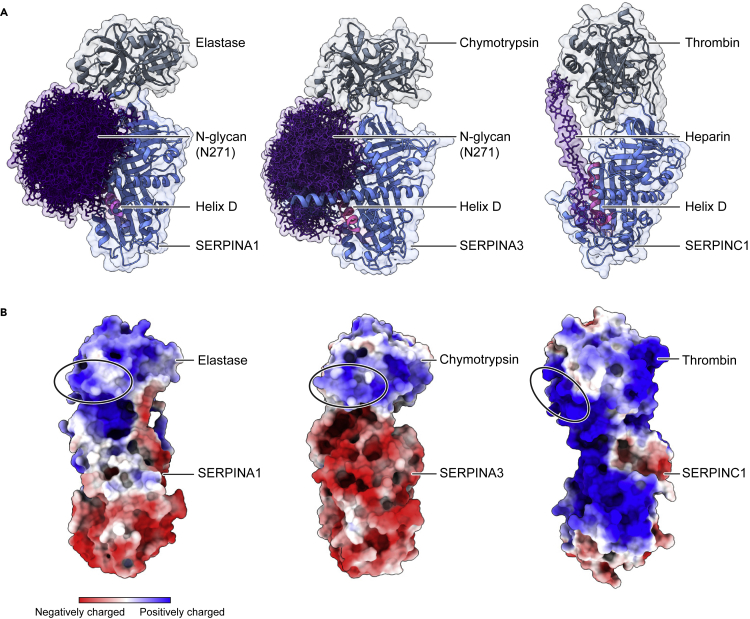
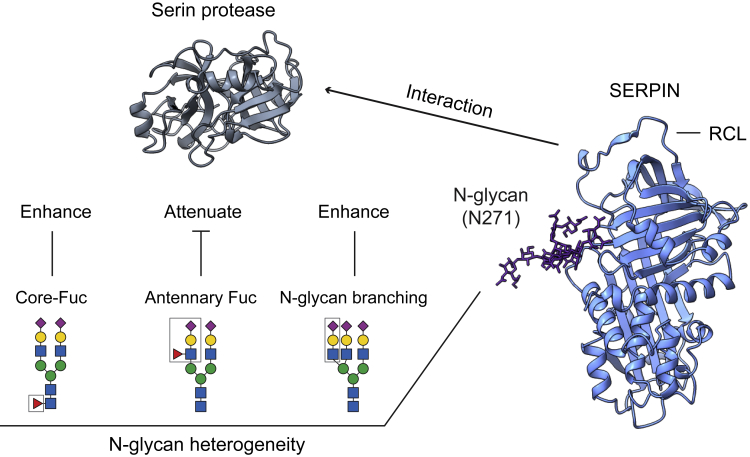
Understanding the combined impacts of genetic variances and post-translational modifications requires new approaches. Here, we delineate proteoforms of plasma serine protease inhibitors and relate specific proteoforms to their interactions in complexes through the use of native mass spectrometry (MS). First, we dissect the proteoform repertoire of an acute-phase plasma protein, serine protease inhibitor A1 (SERPINA1), resolving four SERPINA1 variants (M1V, M1A, M2, and M3) with common single-nucleotide polymorphisms (SNPs). Investigating the glycosylation status of these variants and their ability to form complexes with a serine protease, elastase, we find that fucosylation stabilizes the interaction of the SERPINA1 M1V variant through its core fucosylation on Asn271. In contrast, antennary fucosylation on Asn271 destabilizes SERPINA1-elastase interactions. We unveil the same opposing effects of core and antennary fucosylation on SERPINA3 interactions with chymotrypsin. Together, our native MS results highlight the modulating effects of fucosylation with different linkages on glycoprotein interactions.
Keywords: glycosylation; interaction; proteoform; serine protease inhibitors; single-nucleotide polymorphism.
© 2022 The Authors.
Conflict of interest statement
The authors declare no competing interests.
Figures
References
Associated data
Grants and funding
LinkOut - more resources
Full Text Sources
Molecular Biology Databases
Research Materials
Miscellaneous