


Micronutrient supplementation practices in relation to the World Health Organisation 2013 guidelines on management of severe acute malnutrition
- PMID: 38456385
- PMCID: PMC11168367
- DOI: 10.1111/mcn.13636
Micronutrient supplementation practices in relation to the World Health Organisation 2013 guidelines on management of severe acute malnutrition
Abstract
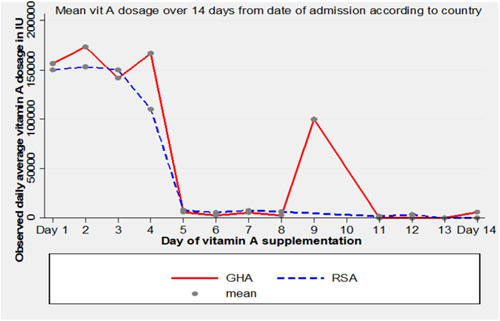
In 2013, the World Health Organisation (WHO) updated the recommendations for micronutrient deficiency correction in hospitalised under-5 children with complicated severe acute malnutrition (SAM). This study aimed to describe the micronutrient deficiency correction practices in relation to WHO 2013 recommendations. Data from medical records of under-5 children admitted for SAM management at two hospitals in South Africa and three tertiary hospitals in Ghana were extracted. Micronutrient correction practices were compared to the WHO 2013 recommendations by considering the dosage, timing of micronutrient supplementation (vitamin A, iron and folic acid) and therapeutic feeds administered. In total, 723 medical records were included. Nearly half (48.3%) of the children received at least one of the studied micronutrients as a supplement. Vitamin A was supplemented in 27.4% of the children, while iron and folic acid were supplemented in 9.5% and 34.9%, respectively. Among the children who received vitamin A, 60.1% received the first dose on Day 1 of admission. Also, 46.4% of the iron-supplemented children received iron within the first week of admission. Vitamin A, iron and folic acid were administered within the dose range of 100,000-180,000 IU, 3.1-7.7 mg per kg per day, and 3-5 mg per day, respectively. Additionally, 71.7% of the children reportedly received therapeutic feeds that met WHO recommendations. The micronutrient deficiency correction practices regarding dose and timing differed from the 2013 WHO guidelines. Qualitative studies investigating the reasons for the disparities are recommended.
Keywords: WHO guidelines; micronutrient deficiency; severe acute malnutrition; supplementation; therapeutic feeds; under‐5 children.
© 2024 The Authors. Maternal & Child Nutrition published by John Wiley & Sons Ltd.
Conflict of interest statement
The authors declare no conflict of interest.
Figures
References
-
- Ashworth, A. , Khanum, S. , Jackson, A. , & Schofield, E. C. (2003). World Health Organization guidelines for the inpatient treatment of severely malnourished children. Accessed September 10, 2020. http://www.who.int/nutrition/publications/severemalnutrition/9241546093/en/
-
- Bebars, G. M. , Afifi, M. F. , Mahrous, D. M. , Okaily, N. E. , Mounir, S. M. , & Mohammed, E. A. (2019). Assessment of some micronutrients serum levels in children with severe acute malnutrition with and without cerebral palsy—A follow up case control study. Clinical Nutrition Experimental, 23, 34–43. 10.1016/j.yclnex.2018.10.008 - DOI
-
- Carboo, J. A. , Lombard, M. , Conradie, C. , Dolman, R. C. , & Ricci, C. (2020). Evaluation of the treatment guidelines, practices and outcomes of complicated severe acute malnutrition in children aged 0‐59 months in sub‐Saharan Africa: A study protocol for the SAMAC study. Pan African Medical Journal, 36, 241. 10.11604/pamj.2020.36.241.19584 - DOI - PMC - PubMed
-
- Das, J. K. , Salam, R. A. , Saeed, M. , Kazmi, F. A. , & Bhutta, Z. A. (2020). Effectiveness of interventions for managing acute malnutrition in children under five years of age in low‐income and middle‐income countries: A systematic review and meta‐analysis. Nutrients, 12(1), 116. 10.3390/nu12010116 - DOI - PMC - PubMed
MeSH terms
Substances
Grants and funding
LinkOut - more resources
Full Text Sources
Medical
Miscellaneous
