


Factors associated with informal human milk sharing among donors and recipients: A mixed-methods systematic review
- PMID: 38457478
- PMCID: PMC10923476
- DOI: 10.1371/journal.pone.0299367
Factors associated with informal human milk sharing among donors and recipients: A mixed-methods systematic review
Abstract
Background: The multiple benefits associated with the provision of human milk exceed individual health outcomes, engendering substantial economic, societal and environmental domains. Human milk is the absolute, unparalleled source of nutrition for infants. Informal human milk sharing is a modernistic and rapidly progressing practice. No systematic review of the factors associated with this contemporary practice among donors and recipients of informal human milk sharing exists.
Aim: The aim of this review was to identify, evaluate, synthesize and integrate the evidence on the factors associated with informal human milk sharing among donors and recipients.
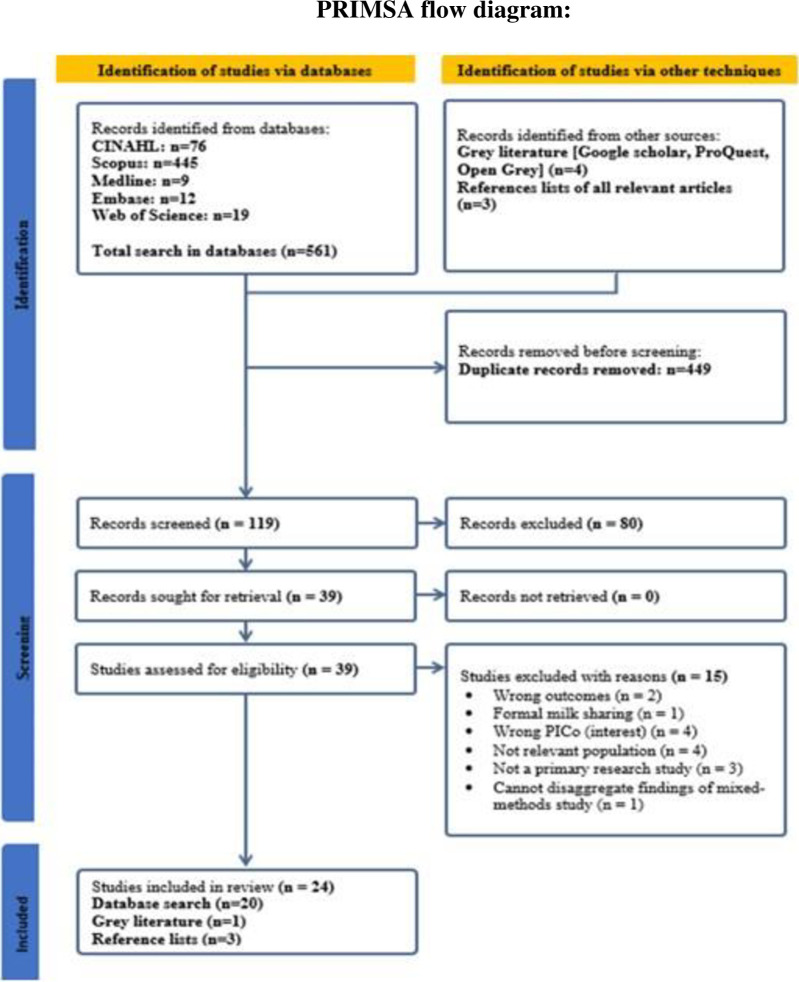
Methods: A mixed methods systematic review was conducted according to the Joanna Briggs Institute methodological guidance utilizing a convergent integrated approach. The following databases were systematically searched: CINAHL, Scopus, Medline and Embase and Web of Science between inception to August 2023. A grey literature search was conducted using multiple techniques. This review followed the Preferred Reporting Items for Systematic Reviews and Meta-Analyses guidelines.
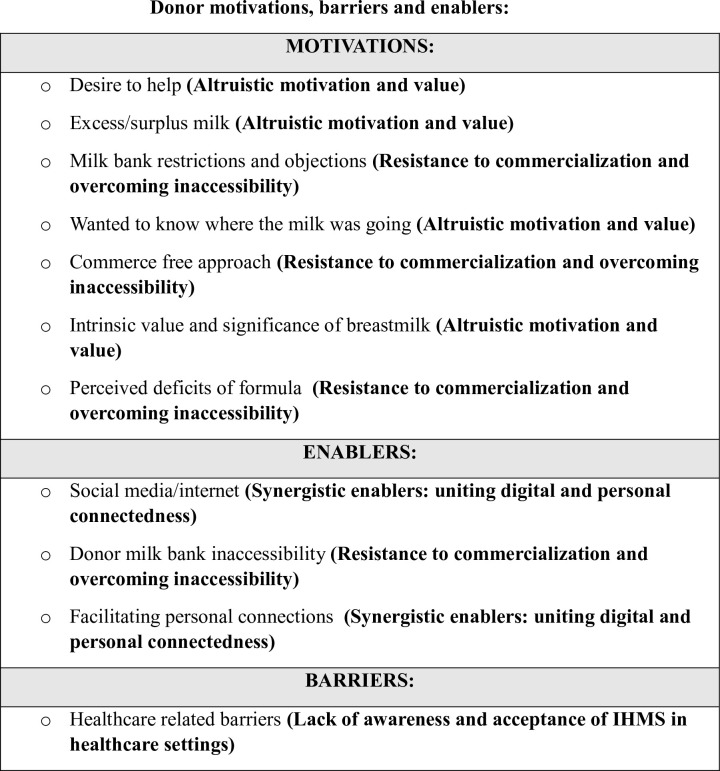
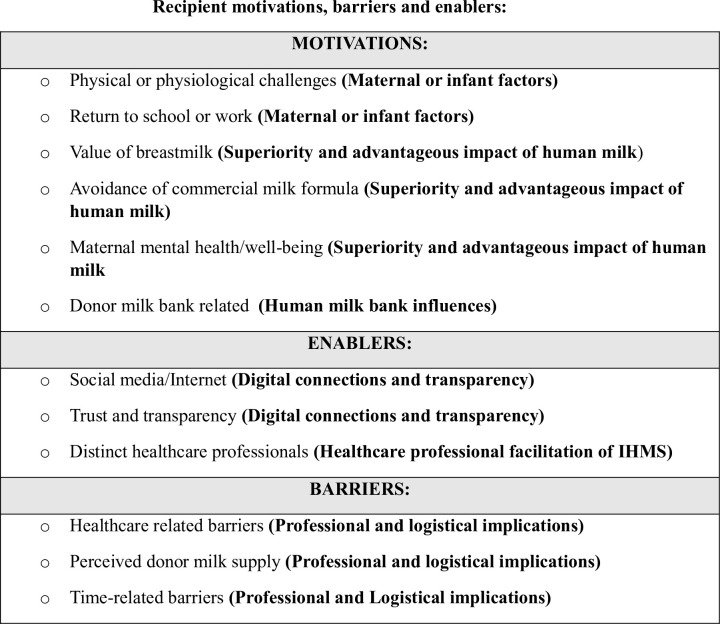
Results: Twenty-four studies were included in this review. Ten integrated findings relating to the factors associated with informal human milk sharing among donors and recipients were identified. The four integrated findings pertaining to donors included: altruistic motivation and value, resistance to commercialization and overcoming inaccessibility, uniting digital and personal connectedness and lack of awareness and acceptance of informal human milk sharing in healthcare settings. The six integrated findings relating to recipients included: maternal or infant factors, superiority and advantageous impact of breastmilk, human milk bank influences, digital connections and transparency, healthcare professional facilitation of informal human milk sharing, and professional and logistical implications.
Conclusion: This review highlighted a multitude of factors that motivate, facilitate and impede the practice of informal human milk sharing. Future research is required to explore these factors further within broader geographical locations to enhance the generalizability and rigor of the body of knowledge. Further studies should consider the exploration of the experiences and psychological impact of informal human milk sharing on donors and recipients. The provision of human milk to all infants is an imperative public health endeavor and thus positioning this as a key benchmark for research and practice is crucial.
Copyright: © 2024 Vickers et al. This is an open access article distributed under the terms of the Creative Commons Attribution License, which permits unrestricted use, distribution, and reproduction in any medium, provided the original author and source are credited.
Conflict of interest statement
The authors have declared that no competing interests exist
Figures
References
-
- World Health Organization. Infant and young child feeding: key facts. 2021. [cited 18 August 2023] Available from: https://www.who.int/news-room/fact sheets/detail/infant-and-young-child-feeding.
-
- American Academy of Pediatrics. Policy statement: breastfeeding and the use of human milk. 2022. [cited 18 August 2023] Available from: 10.1542/peds.2022-057988. - DOI
-
- Holden E, Linnerud K, Banister D. The imperatives of sustainable development: The imperatives of sustainable development. Sustain. Dev. 2017; 25(3), 213–226. doi: doi.org/10.1002/sd.1647
Publication types
MeSH terms
LinkOut - more resources
Full Text Sources
