


This is a preprint.
Suppressing APOE4-induced mortality and cellular damage by targeting VHL
- PMID: 38464138
- PMCID: PMC10925324
- DOI: 10.1101/2024.02.28.582664
Suppressing APOE4-induced mortality and cellular damage by targeting VHL
Abstract
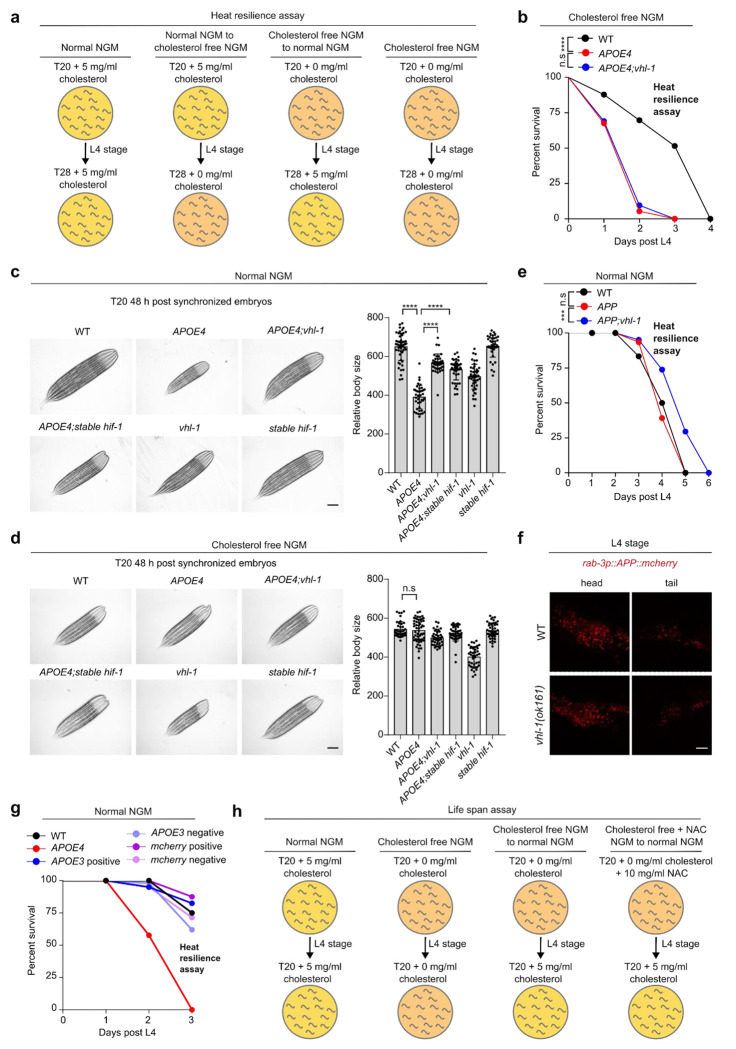
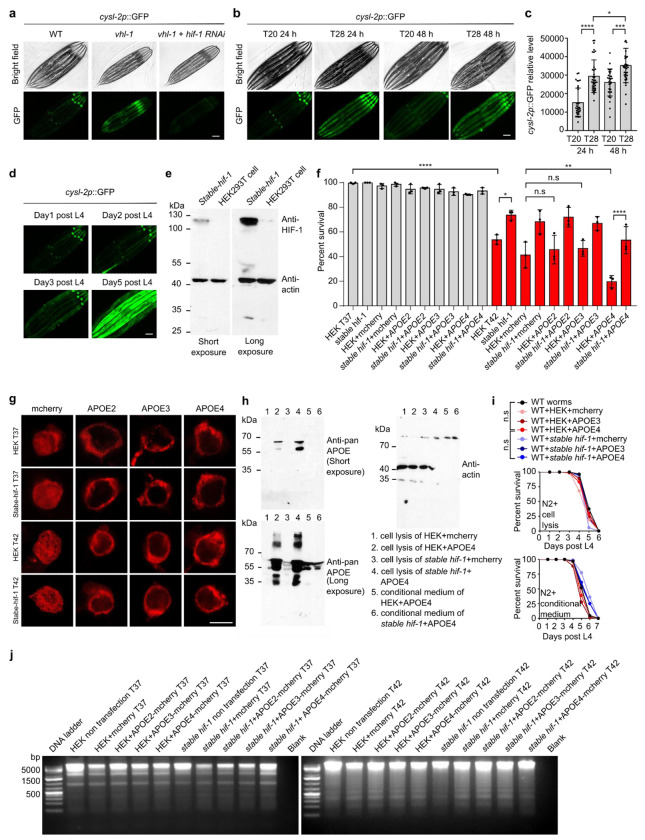
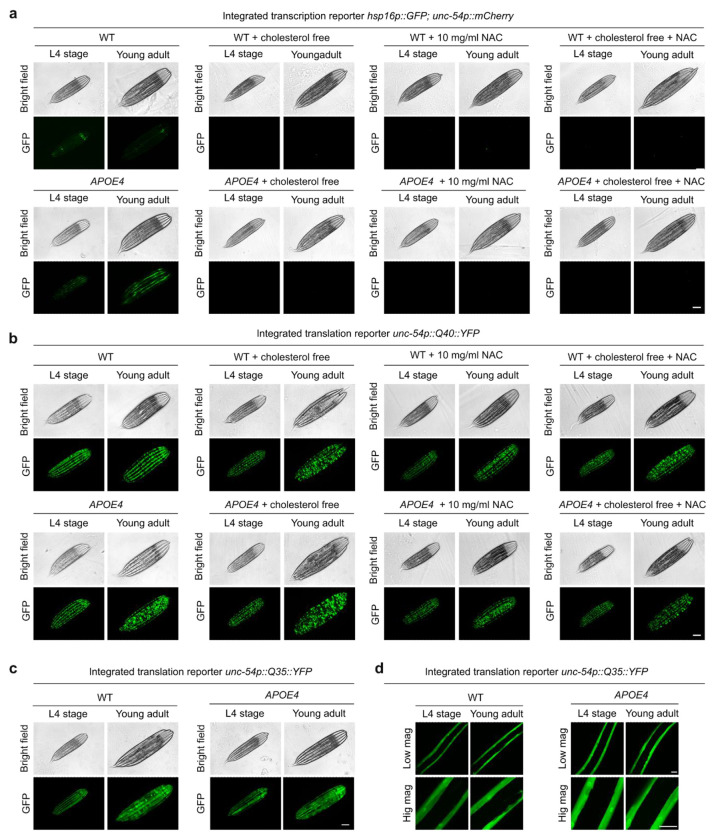
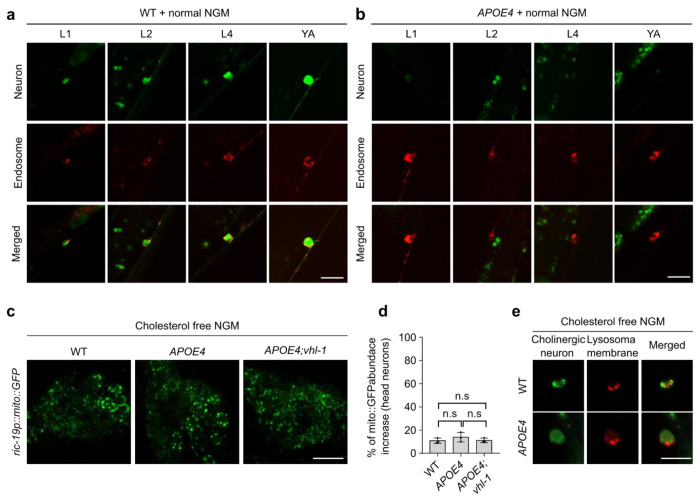
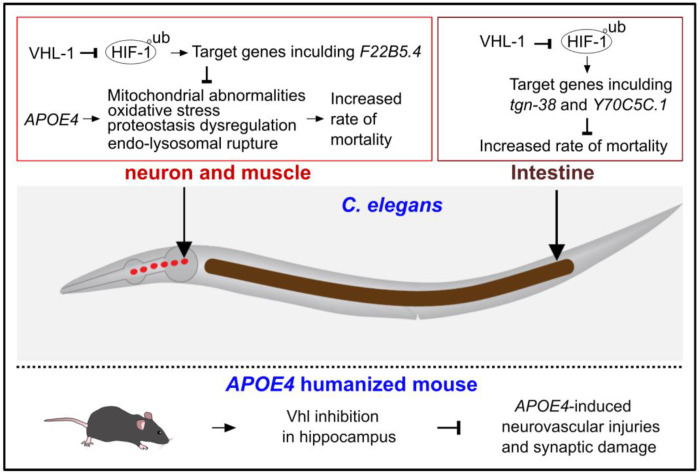
Mortality rate increases with age and can accelerate upon extrinsic or intrinsic damage to individuals. Identifying factors and mechanisms that curb population mortality rate has wide-ranging implications. Here, we show that targeting the VHL-1 (Von Hippel-Lindau) protein suppresses C. elegans mortality caused by distinct factors, including elevated reactive oxygen species, temperature, and APOE4, the genetic variant that confers high risks of neurodegeneration in Alzheimer's diseases and all-cause mortality in humans. These mortality factors are of different physical-chemical nature, yet result in similar cellular dysfunction and damage that are suppressed by deleting VHL-1. Stabilized HIF-1 (hypoxia inducible factor), a transcription factor normally targeted for degradation by VHL-1, recapitulates the protective effects of deleting VHL-1. HIF-1 orchestrates a genetic program that defends against mitochondrial abnormalities, excess oxidative stress, cellular proteostasis dysregulation, and endo-lysosomal rupture, key events that lead to mortality. Genetic Vhl inhibition also alleviates cerebral vascular injury and synaptic lesions in APOE4 mice, supporting an evolutionarily conserved mechanism. Collectively, we identify the VHL-HIF axis as a potent modifier of APOE4 and mortality and propose that targeting VHL-HIF in non-proliferative animal tissues may suppress tissue injuries and mortality by broadly curbing cellular damage.
Conflict of interest statement
Competing interests The authors declare no competing interests.
Figures






References
-
- Strittmatter W.J., Saunders A.M., Schmechel D., Pericak-Vance M., Enghild J., Salvesen G.S., and Roses A.D. (1993). Apolipoprotein E: high-avidity binding to beta-amyloid and increased frequency of type 4 allele in late-onset familial Alzheimer disease. Proc Natl Acad Sci U S A 90, 1977–1981. 10.1073/pnas.90.5.1977. - DOI - PMC - PubMed
-
- Corder E.H., Saunders A.M., Strittmatter W.J., Schmechel D.E., Gaskell P.C., Small G.W., Roses A.D., Haines J.L., and Pericak-Vance M.A. (1993). Gene dose of apolipoprotein E type 4 allele and the risk of Alzheimer’s disease in late onset families. Science 261, 921–923. 10.1126/science.8346443. - DOI - PubMed
-
- Bejanin A., lulita M.F., Vilaplana E., Carmona-Iragui M., Benejam B., Videla L., Barroeta I., Fernandez S., Altuna M., Pegueroles J., et al. (2021). Association of Apolipoprotein E ε4 Allele With Clinical and Multimodal Biomarker Changes of Alzheimer Disease in Adults With Down Syndrome. JAMA Neurol 78, 937–947. 10.1001/jamaneurol.2021.1893. - DOI - PMC - PubMed
Publication types
Grants and funding
LinkOut - more resources
Full Text Sources
Research Materials
