This is a preprint.
High frequency post-pause word choices and task-dependent speech behavior characterize connected speech in individuals with mild cognitive impairment
- PMID: 38464237
- PMCID: PMC10925339
- DOI: 10.1101/2024.02.25.24303329
High frequency post-pause word choices and task-dependent speech behavior characterize connected speech in individuals with mild cognitive impairment
Update in
-
High frequency post-pause word choices and task-dependent speech behavior characterize connected speech in individuals with mild cognitive impairment.J Alzheimers Dis. 2024 Dec;102(3):815-829. doi: 10.1177/13872877241291239. Epub 2024 Nov 13. J Alzheimers Dis. 2024. PMID: 39533950
Abstract
Background: Alzheimer's disease (AD) is characterized by progressive cognitive decline, including impairments in speech production and fluency. Mild cognitive impairment (MCI), a prodrome of AD, has also been linked with changes in speech behavior but to a more subtle degree.
Objective: This study aimed to investigate whether speech behavior immediately following both filled and unfilled pauses (post-pause speech behavior) differs between individuals with MCI and healthy controls (HCs), and how these differences are influenced by the cognitive demands of various speech tasks.
Methods: Transcribed speech samples were analyzed from both groups across different tasks, including immediate and delayed narrative recall, picture descriptions, and free responses. Key metrics including lexical and syntactic complexity, lexical frequency and diversity, and part of speech usage, both overall and post-pause, were examined.
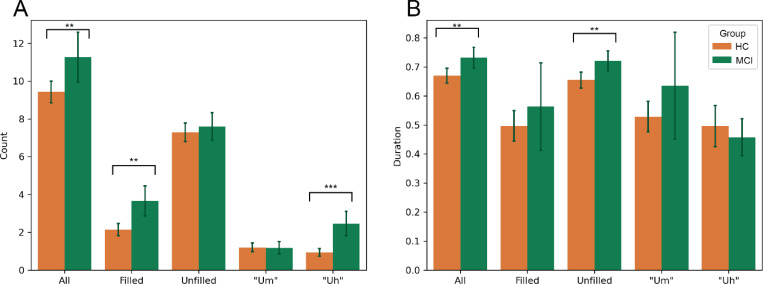
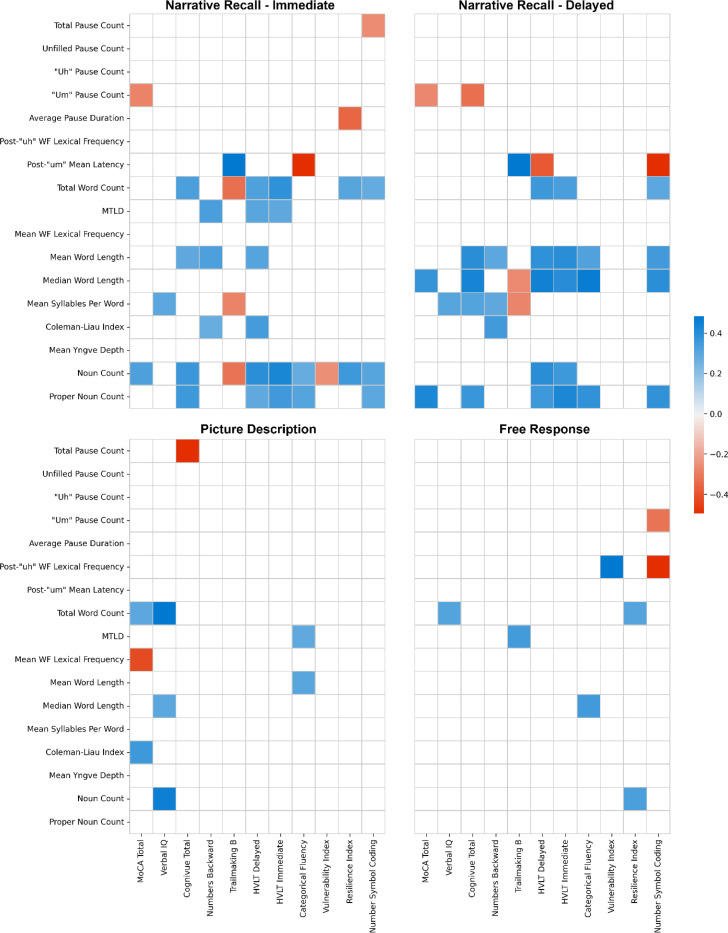
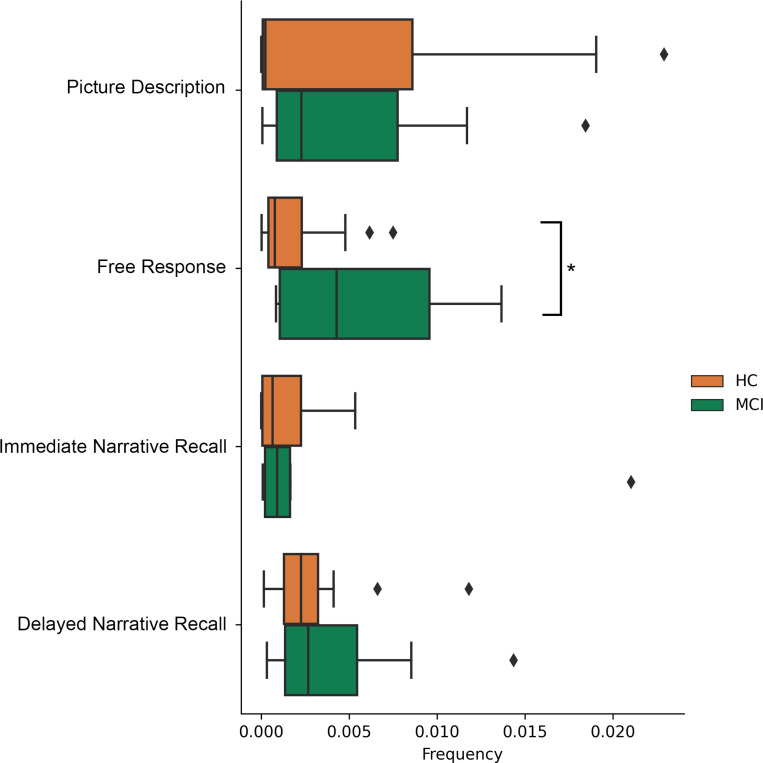
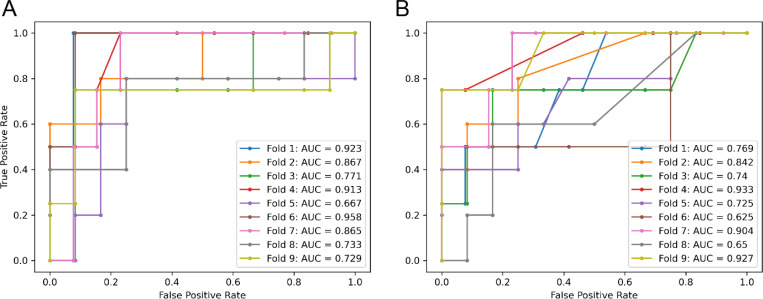
Results: Significant differences in pause usage were observed between groups, with a higher incidence and longer latencies following these pauses in the MCI group. Lexical frequency following filled pauses was higher among MCI participants in the free response task but not in other tasks, potentially due to the relative cognitive load of the tasks. The immediate recall task was most useful at differentiating between groups. Predictive analyses utilizing random forest classifiers demonstrated high specificity in using speech behavior metrics to differentiate between MCI and HCs.
Conclusions: Speech behavior following pauses differs between MCI participants and healthy controls, with these differences being influenced by the cognitive demands of the speech tasks. These post-pause speech metrics can be easily integrated into existing speech analysis paradigms.
Keywords: Mild cognitive impairment; machine learning; neuropsychological assessment; speech; verbal behavior.
Conflict of interest statement
CONFLICT OF INTEREST The authors have no conflict of interest to report
Figures
References
-
- Forbes-McKay KE, Venneri A (2005) Detecting subtle spontaneous language decline in early Alzheimer’s disease with a picture description task. Neurol Sci 26, 243–254. - PubMed
-
- Fraser KC, Meltzer JA, Rudzicz F (2015) Linguistic features identify Alzheimer’s disease in narrative speech. Journal of Alzheimer’s Disease 49, 407–422. - PubMed
Publication types
Grants and funding
LinkOut - more resources
Full Text Sources