


Short-term resistance training combined with cheese supplementation can optimize body parameters and intestinal microbiota in healthy adults
- PMID: 38464601
- PMCID: PMC10920736
- DOI: 10.1016/j.jesf.2024.02.006
Short-term resistance training combined with cheese supplementation can optimize body parameters and intestinal microbiota in healthy adults
Abstract
Background: Resistance training (RT) and protein supplementation have beneficial effects on the human body. However, it is unknown if RT's health-promoting benefits are enhanced by food-borne protein, such as cheese supplements. This study investigated at how the body composition, lipid profile, muscle strength and intestinal microbiota changed following four weeks of RT combined with cheese supplementation.
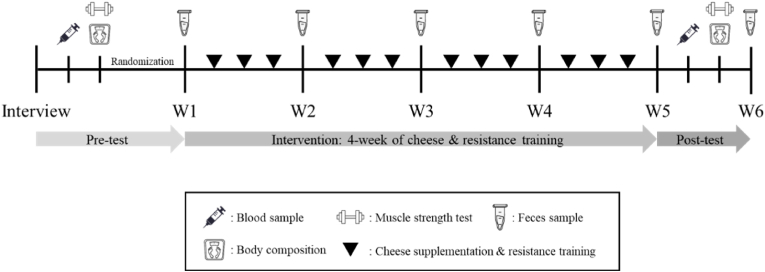
Methods: Thirty-five male and untrained adults were divided into 4 groups [control group (CON), low-dose group (LG), medium-dose group (MG), and high-dose group (HG)] and underwent a 4-week RT (3 times/week) in combination with cheese supplementation. Participants received 108 g (LG), 216 g (MG), or 324 g (HG) of cheese on the day of RT, and each serving (108 g) of cheese contained 6.7 g of food-borne protein. The RT program was a whole-body program with movements such as chest presses, leg presses, seated rowing, knee extensions and triceps pushdown. The exercise consisted of 3 sets of 8-12 repetitions at 70%RM, with a 120-s break in between. Body parameters (body composition, lipid profile and muscle strength) were assessed at baseline and after the 4 weeks of the intervention. The feces sample was taken every weekend. A two-way (group × time) mixed-design ANOVA was used to examine the body parameters. Independent one-way ANOVA was used to analyze the differences between groups in baseline characteristics and different values of each parameter.
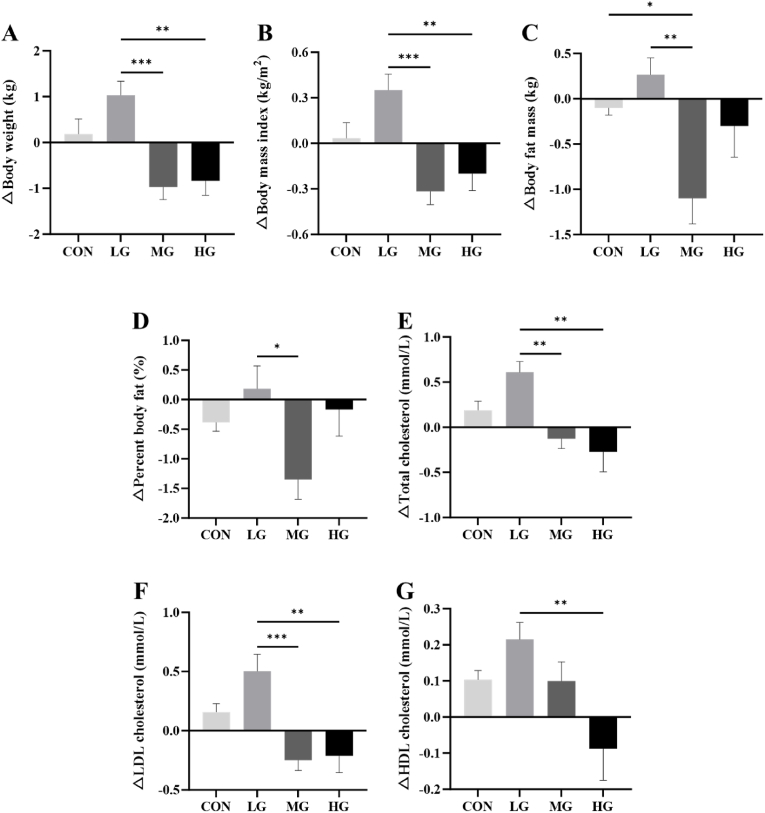
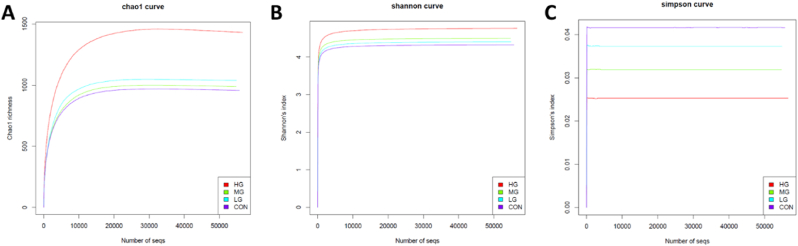
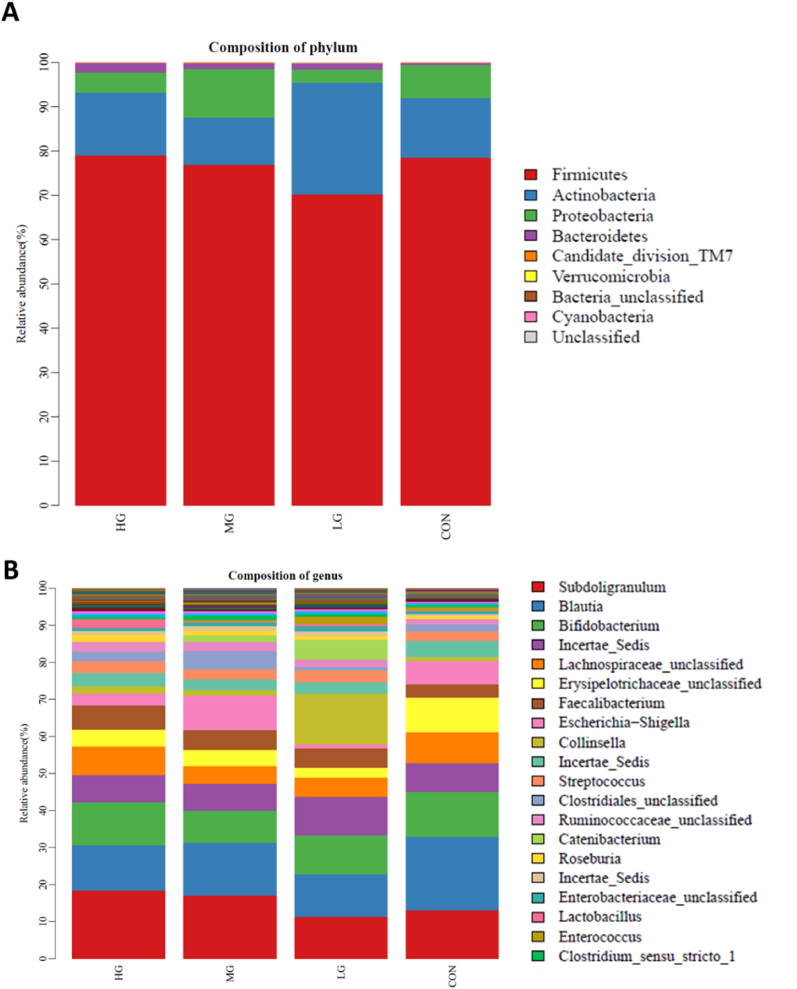
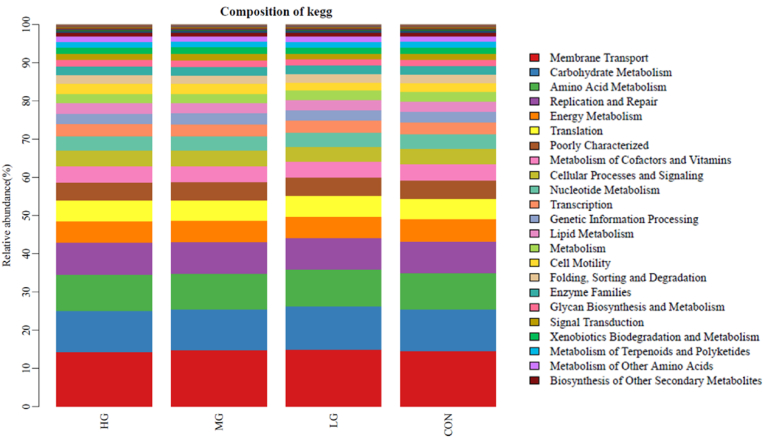
Results: HDL-C level was higher in MG than in LG. In comparison to LG, MG had lower levels of total cholesterol, low-density lipoprotein cholesterol, body weight, body mass index, body fat mass and body fat percentage. However, there was no difference in muscle strength between in the four groups. The abundance of Actinobacteria was higher in LG and Erysipelotrichaceae was lower in MG and HG.
Conclusion: The findings suggest that cheese could be a readily available food-borne protein supplement to enhance the beneficial effects of RT on health. It may improve body composition and lipid profile by altering the proportion of intestinal microbiota. During the 4-week RT intervention, 13.4 g of foodborne protein in the form of cheese 3 times per week was the ideal dosage.
Keywords: Body composition; Foodborne protein; Intestinal microbiota; Lipid profile; Resistance training.
© 2024 The Society of Chinese Scholars on Exercise Physiology and Fitness. Published by Elsevier (Singapore) Pte Ltd.
Conflict of interest statement
All authors disclosed no relevant relationships.
Figures
References
-
- Dieli-Conwright C.M., Courneya K.S., Demark-Wahnefried W., et al. Aerobic and resistance exercise improves physical fitness, bone health, and quality of life in overweight and obese breast cancer survivors: a randomized controlled trial. Breast Cancer Res. 2018;20(1):124. doi: 10.1186/s13058-018-1051-6. - DOI - PMC - PubMed
-
- Soriano-Maldonado A., Carrera-Ruiz A., Diez-Fernandez D.M., et al. Effects of a 12-week resistance and aerobic exercise program on muscular strength and quality of life in breast cancer survivors: study protocol for the EFICAN randomized controlled trial. Medicine (Baltim) 2019;98(44) doi: 10.1097/MD.0000000000017625. - DOI - PMC - PubMed
LinkOut - more resources
Full Text Sources
