


Direct Immunofluorescence
Abstract
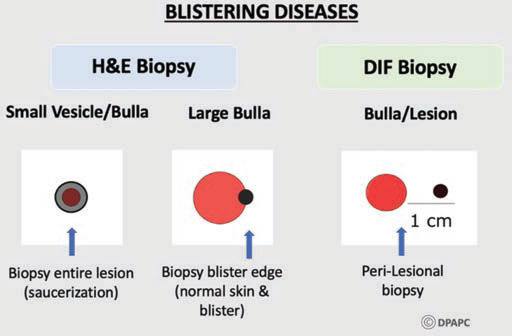
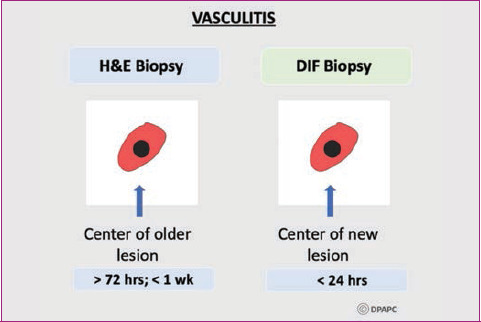
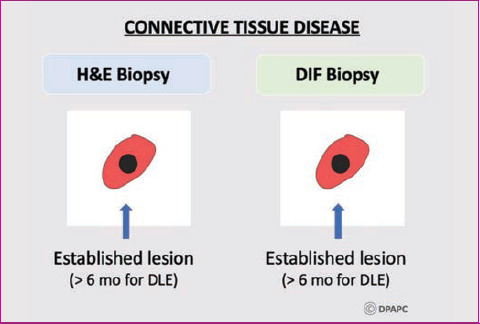
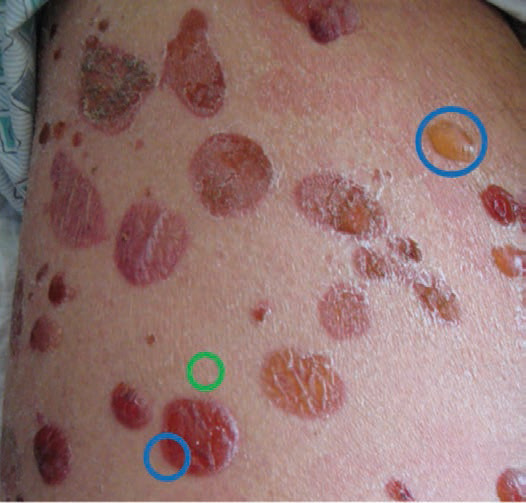
Direct immunofluorescence (DIF) is a valuable diagnostic tool in the dermatology clinic. The proper use of a biopsy for DIF is dependent on several factors, including appropriate clinical indication, correct clinical site selection, and proper specimen handling and transport. Improper use of DIF can lead to false negatives, decreased diagnostic yield, and poor resource utilization. This article provides instruction on the appropriate indications and biopsy site selection for DIF. Three examples of skin diseases in which DIF would be particular useful when making a diagnosis are provided.
Copyright © 2023. Matrix Medical Communications. All rights reserved.
Conflict of interest statement
DISCLOSURES: Dr. Robinson reports no conflicts of interest relevant to the content of this article.
Figures
References
-
- Kim RH, Brinster NK. Practical direct immunofluorescence. Am J Dermatopathol. 2020;42:75–85. - PubMed
-
- Minz RW, Chhabra S, Singh S et al. Direct immunofluorescence of skin biopsy: perspective of an immunopathologist. Indian J Dermatol Venereol Leprol. 2010;76:150–157. - PubMed
-
- Elston DM, Stratman EJ, Miller SJ. Skin biopsy: biopsy issues in specific diseases. J Am Acad Dermatol. 2016;74:1–16. - PubMed
-
- Chhabra S, Walker Minz R, Saikia B. Immunofluorescence in dermatology. Indian J Dermatol Venereol Leprol. 2012;78:677–691. - PubMed
LinkOut - more resources
Full Text Sources