


How healthcare systems are experienced by autistic adults in the United Kingdom: A meta-ethnography
- PMID: 38465626
- PMCID: PMC11403927
- DOI: 10.1177/13623613241235531
How healthcare systems are experienced by autistic adults in the United Kingdom: A meta-ethnography
Abstract
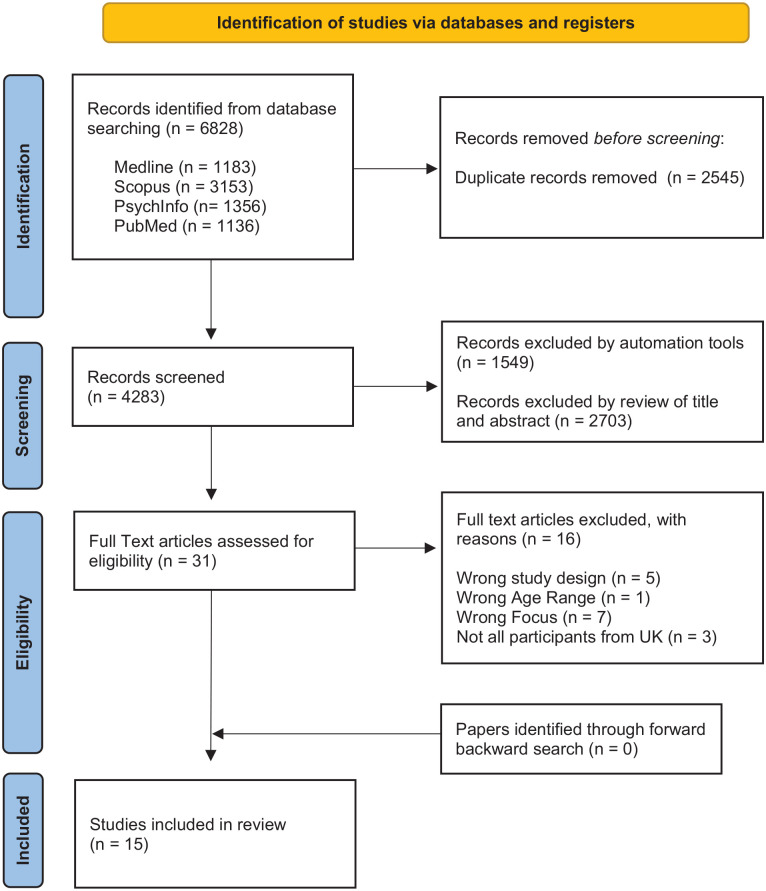
Autistic adults are more likely to experience mental and physical health difficulties, and yet can find it difficult to get the support that they need. A meta-ethnographic approach was used to review the existing research on autistic adults' experiences of accessing healthcare. Four databases were searched for qualitative and mixed-method studies which looked at the experiences of autistic adults who did not also have a learning disability when using healthcare services in the United Kingdom. Fifteen papers met the criteria to be included, and seven steps were used to analyse the information and develop new themes. Three main themes were identified: Professionals' lack of knowledge can be damaging, Need to reduce processing demands and Adaptation to improve engagement. This review highlights how damaging misdiagnosis, inappropriate treatment, overwhelming environments and systems that are difficult to access can have on the well-being of autistic adults. Limited knowledge and understanding about autism knowledge among healthcare professionals along with autistic adult's own communication and sensory differences indicate that there is a need for improved training developed with autistic adults and adaptations.
Keywords: UK healthcare; adults; autism spectrum disorders; autistic; health services; healthcare; qualitative research.
Conflict of interest statement
Declaration of conflicting interestsThe author(s) declared no potential conflicts of interest with respect to the research, authorship and/or publication of this article.
Figures
References
-
- Ali D., O’Brien S., Hull L., Kenny L., Mandy W. (2023). ‘The key to this is not so much the technology. It’s the individual who is using the technology’: Perspectives on telehealth delivery for autistic adults during the COVID-19 pandemic. Autism, 27(2), 552–564. 10.1177/13623613221108010 - DOI - PMC - PubMed
-
- American Psychiatric Association. (Ed.). (2013). Diagnostic and statistical manual of mental disorders: DSM-5 (5th ed.).
-
- Babb C., Brede J., Jones C. R. G., Elliott M., Zanker C., Tchanturia K., Serpell L., Mandy W., Fox J. R. E. (2021). ‘It’s not that they don’t want to access the support . . . it’s the impact of the autism’: The experience of eating disorder services from the perspective of autistic women, parents and healthcare professionals. Autism, 25(5), 1409–1421. 10.1177/1362361321991257 - DOI - PMC - PubMed
-
- Bradshaw P., Pellicano E., van Driel M., Urbanowicz A. (2019). How can we support the healthcare needs of autistic adults without intellectual disability? Current Developmental Disorders Reports, 6(2), 45–56. 10.1007/s40474-019-00159-9 - DOI
Publication types
MeSH terms
LinkOut - more resources
Full Text Sources
Miscellaneous
