


Dyspnea (breathlessness) in amyotrophic lateral sclerosis/motor neuron disease: prevalence, progression, severity, and correlates
- PMID: 38465877
- PMCID: PMC11286210
- DOI: 10.1080/21678421.2024.2322545
Dyspnea (breathlessness) in amyotrophic lateral sclerosis/motor neuron disease: prevalence, progression, severity, and correlates
Abstract
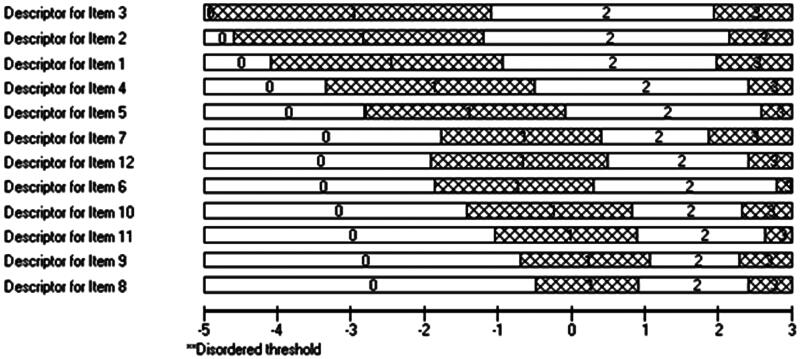
Objective: Dyspnea, or breathlessness, is an important symptom in amyotrophic lateral sclerosis/motor neuron disease (ALS/MND). We examined the measurement properties of the Dyspnea-12.
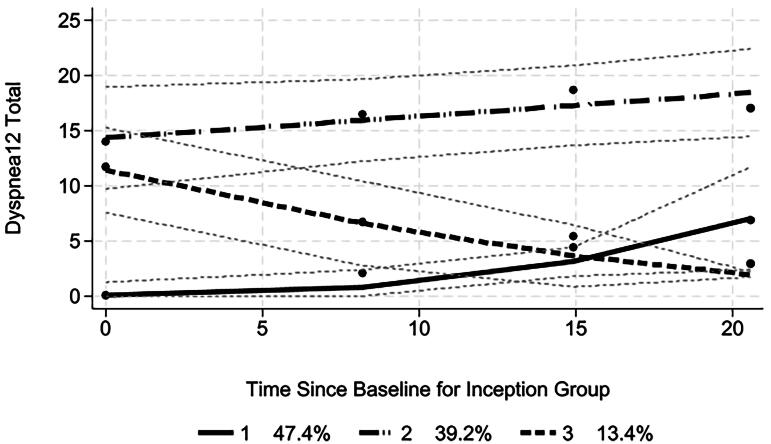
Methods: Rasch analysis enabled conversion of raw Dyspnea-12 scores to interval level metric equivalents. Converted data were used to perform trajectory modeling; those following different trajectories were compared for demographic, clinical, symptom, and functioning characteristics. Logistic regression examined differences between distinct trajectories.
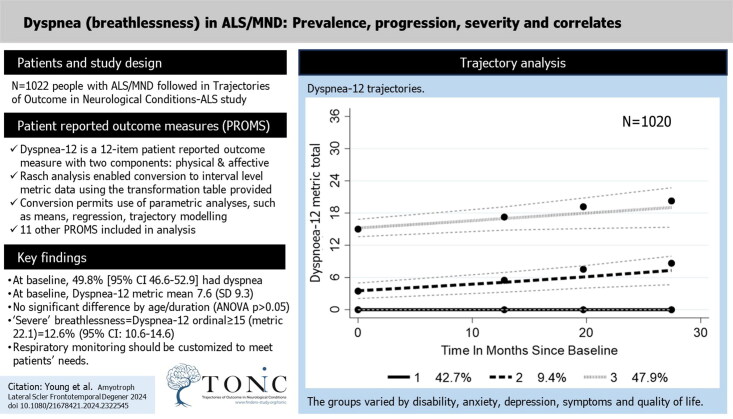
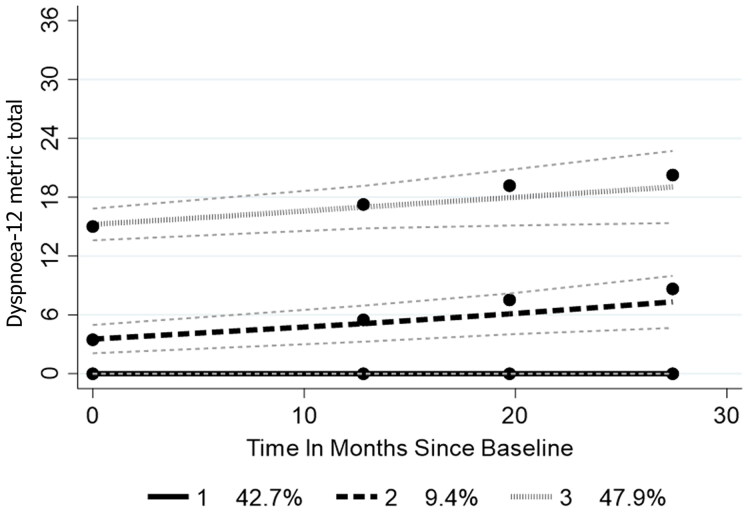
Results: In 1022 people, at baseline, mean metric Dyspnea-12 was 7.6 (SD 9.3). 49.8% had dyspnea, severe in 12.6%. Trajectory analysis over 28 months revealed three breathlessness trajectories: group 1 reported none at baseline/follow-up (42.7%); group 2 significantly increased over time (9.4%); group 3 had a much higher level at baseline which rose over follow-up (47.9%). Group 3 had worse outcomes on all symptoms, functioning and quality of life; compared to group 1, their odds of: respiratory onset sixfold greater; King's stage ≥3 2.9 greater; increased odds of being bothered by choking, head drop, fasciculations, and muscle cramps; fatigue and anxiety also elevated (p < .01).
Conclusion: Dyspnea is a cardinal symptom in ALS/MND and can be quickly measured using the Dyspnea-12. Raw scores can easily be converted to interval level measurement, for valid change scores and trajectory modeling. Dyspnea trajectories reveal different patterns, showing that clinical services must provide monitoring which is customized to individual patient need. Almost half of this large population had worsening dyspnea, confirming the importance of respiratory monitoring and interventions being integrated into routine ALS care.
Keywords: Dyspnea; Rasch; breathlessness; measure; trajectories of outcome in neurological conditions-ALS.
Conflict of interest statement
The authors report no conflicts of interest. The authors alone are responsible for the content and writing of this article.
Figures
References
-
- American Thoracic Society . Dyspnea. Mechanisms, assessment, and management: a consensus statement. Am J Respir Crit Care Med. 1999;159:321–40. - PubMed
MeSH terms
LinkOut - more resources
Full Text Sources
Other Literature Sources
Medical
Miscellaneous
