


Survival-Associated Cellular Response Maintained in Pancreatic Ductal Adenocarcinoma (PDAC) Switched Between Soft and Stiff 3D Microgel Culture
- PMID: 38466617
- PMCID: PMC11005012
- DOI: 10.1021/acsbiomaterials.3c01079
Survival-Associated Cellular Response Maintained in Pancreatic Ductal Adenocarcinoma (PDAC) Switched Between Soft and Stiff 3D Microgel Culture
Abstract
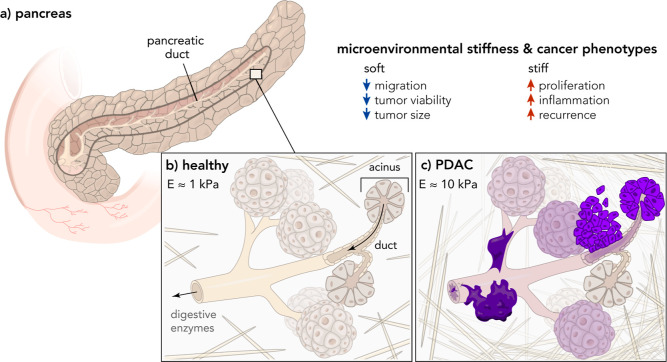
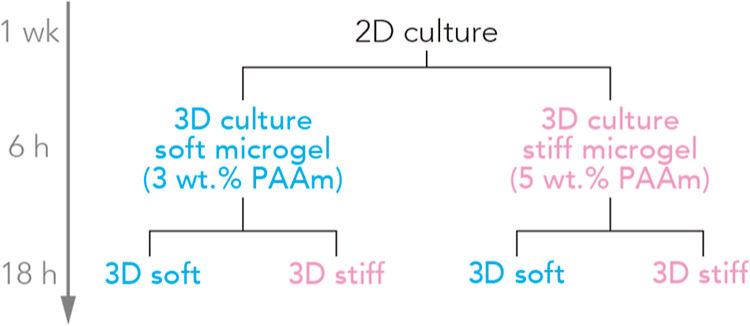
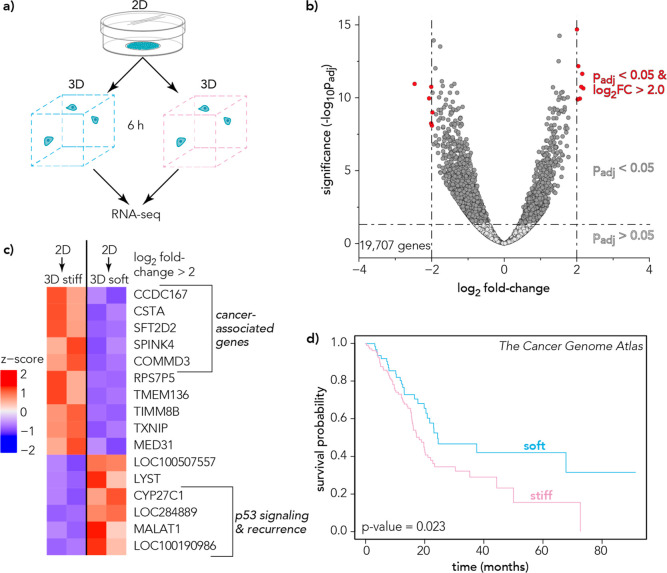
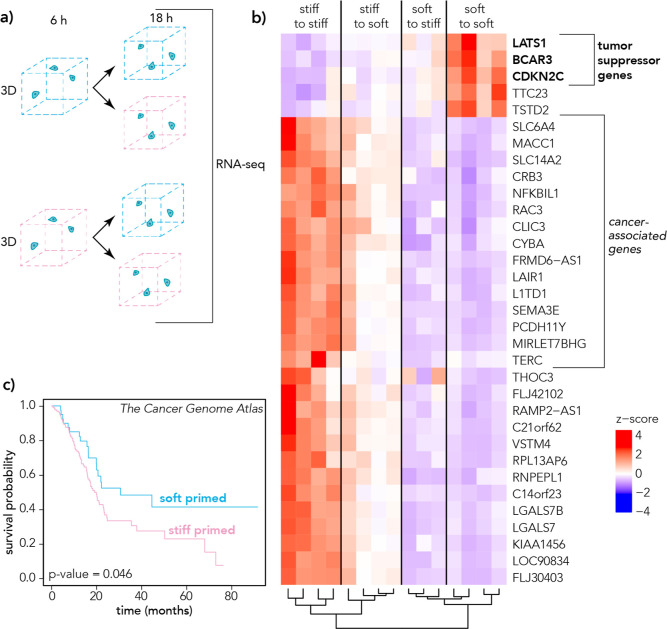
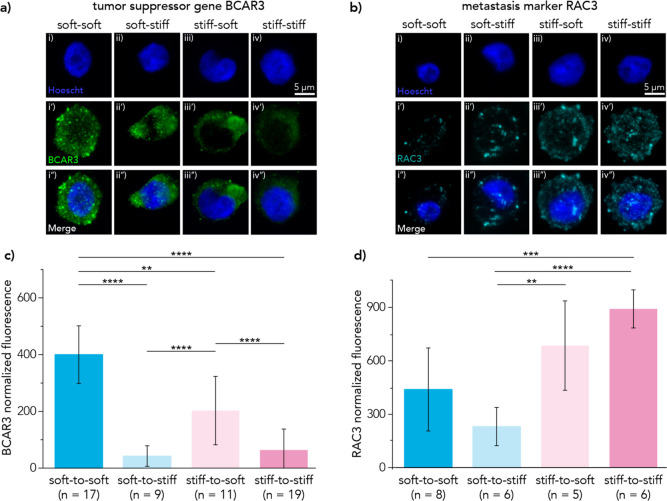
Pancreatic ductal adenocarcinoma (PDAC) accounts for about 90% of all pancreatic cancer cases. Five-year survival rates have remained below 12% since the 1970s, in part due to the difficulty in detection prior to metastasis (migration and invasion into neighboring organs and glands). Mechanical memory is a concept that has emerged over the past decade that may provide a path toward understanding how invading PDAC cells "remember" the mechanical properties of their diseased ("stiff", elastic modulus, E ≈ 10 kPa) microenvironment even while invading a healthy ("soft", E ≈ 1 kPa) microenvironment. Here, we investigated the role of mechanical priming by culturing a dilute suspension of PDAC (FG) cells within a 3D, rheologically tunable microgel platform from hydrogels with tunable mechanical properties. We conducted a suite of acute (short-term) priming studies where we cultured PDAC cells in either a soft (E ≈ 1 kPa) or stiff (E ≈ 10 kPa) environment for 6 h, then removed and placed them into a new soft or stiff 3D environment for another 18 h. Following these steps, we conducted RNA-seq analyses to quantify gene expression. Initial priming in the 3D culture showed persistent gene expression for the duration of the study, regardless of the subsequent environments (stiff or soft). Stiff 3D culture was associated with the downregulation of tumor suppressors (LATS1, BCAR3, CDKN2C), as well as the upregulation of cancer-associated genes (RAC3). Immunofluorescence staining (BCAR3, RAC3) further supported the persistence of this cellular response, with BCAR3 upregulated in soft culture and RAC3 upregulated in stiff-primed culture. Stiff-primed genes were stratified against patient data found in The Cancer Genome Atlas (TCGA). Upregulated genes in stiff-primed 3D culture were associated with decreased survival in patient data, suggesting a link between patient survival and mechanical priming.
Keywords: 3D cell culture; confinement; mechanical memory; microgel; stiffness.
Conflict of interest statement
The authors declare no competing financial interest.
Figures
References
-
- Howlader N.; Noone A.; Krapcho M.; Miller D.; Brest A.; Yu M.; Ruhl J.; Tatalovich Z.; Mariotto A.; Lewis D.; Chen H.; Feuer E.; Cronin K.. SEER Cancer Statistics Review, 1975–2017; National Cancer Institute. Bethesda, MD, based on November 2019 SEER data submission, posted to the SEER web site, April 2020, https://seer.cancer.gov/csr/1975_2017/. (accessed: 08-03-2023).
-
- Survival Rates for Pancreatic Cancer, 2023. https://www.cancer.org/cancer/types/pancreatic-cancer/detection-diagnosi.... (accessed: 08-03-2023).
-
- Konstantinidis I. T.; Warshaw A. L.; Allen J. N.; Blaszkowsky L. S.; Castillo C. F.-d.; Deshpande V.; Hong T. S.; Kwak E. L.; Lauwers G. Y.; Ryan D. P.; Wargo J. A.; Lillemoe K. D.; Ferrone C. R. Pancreatic Ductal Adenocarcinoma: Is There a Survival Difference for R1 Resections Versus Locally Advanced Unresectable Tumors? What Is a “True” R0 Resection?. Ann. Surg. 2013, 257, 731–736. 10.1097/sla.0b013e318263da2f. - DOI - PubMed
Publication types
MeSH terms
Substances
Grants and funding
LinkOut - more resources
Full Text Sources
Medical
Miscellaneous