


Acute Microbial Protease Supplementation Increases Net Postprandial Plasma Amino Acid Concentrations After Pea Protein Ingestion in Healthy Adults: A Randomized, Double-Blind, Placebo-Controlled Trial
- PMID: 38467279
- PMCID: PMC11130700
- DOI: 10.1016/j.tjnut.2024.03.009
Acute Microbial Protease Supplementation Increases Net Postprandial Plasma Amino Acid Concentrations After Pea Protein Ingestion in Healthy Adults: A Randomized, Double-Blind, Placebo-Controlled Trial
Abstract
Background: Digestibility is a primary factor in determining the quality of dietary protein. Microbial protease supplementation may be a strategy for improving protein digestion and subsequent postprandial plasma amino acid availability.
Objectives: To assess the effect of co-ingesting a microbial protease mixture with pea protein on postprandial plasma amino acid concentrations.
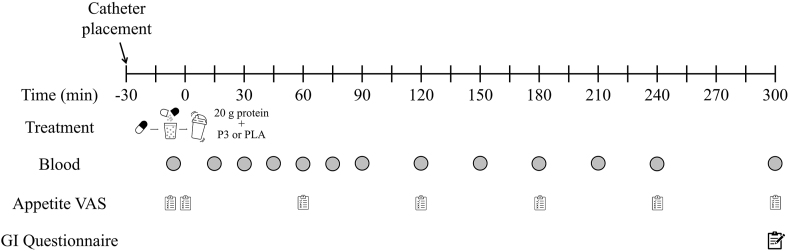
Design: A mixture of 3 microbial protease preparations (P3) was tested for proteolytic efficacy in an in vitro static simulation of gastrointestinal digestion. Subsequently, in a randomized, double-blind, placebo-controlled crossover trial, 24 healthy adults (27 ± 4 y; 12 females, 12 males) ingested 25 g pea protein isolate (20 g protein, 2.2 g fat) with either P3 or maltodextrin placebo (PLA). Blood samples were collected at baseline and throughout a 0‒5 h postprandial period and both the early (0-2 h) iAUC and total (0-5 h) iAUC were examined.
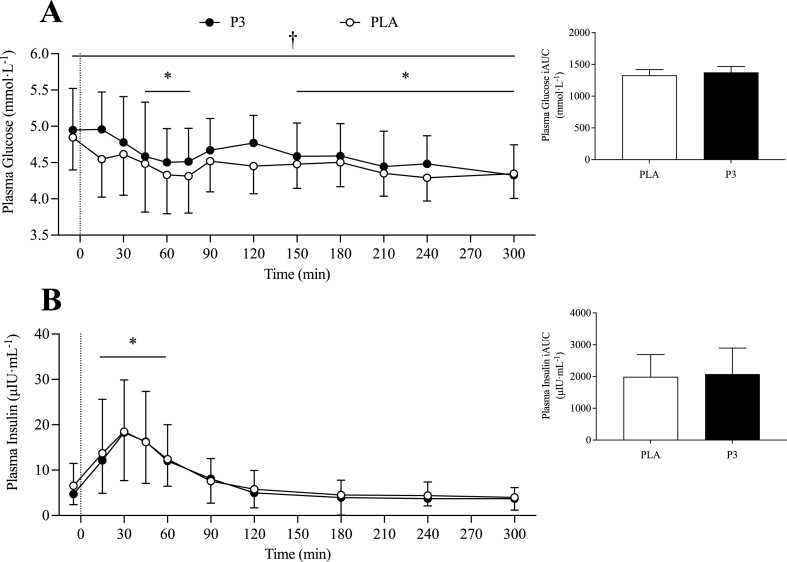
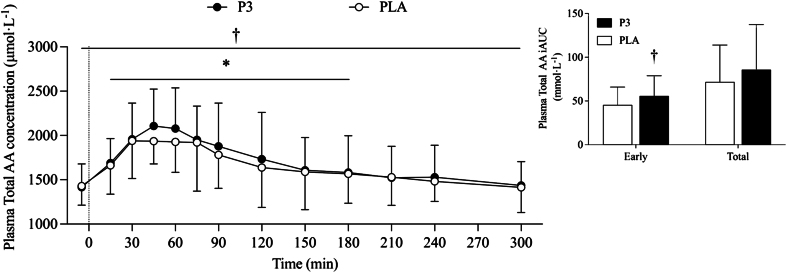
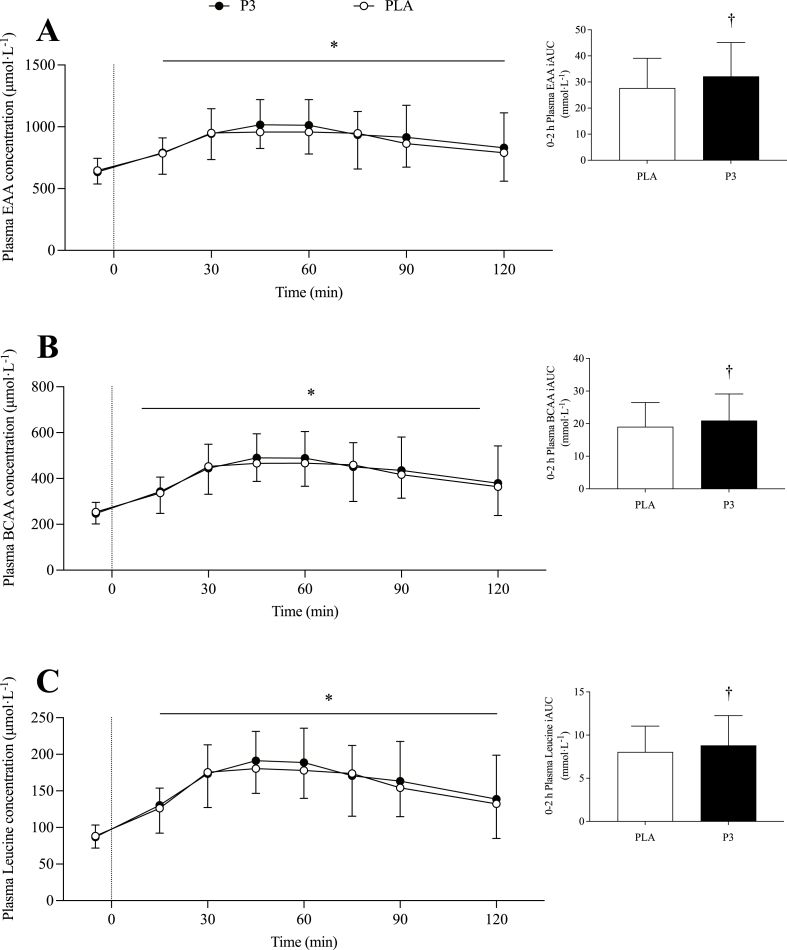
Results: Plasma glucose concentrations decreased in both conditions (P < 0.001), with higher concentrations after P3 ingestion compared with PLA (P < 0.001). Plasma insulin concentrations increased for both conditions (P < 0.001) with no difference between conditions (P = 0.331). Plasma total amino acid (TAA) concentrations increased over time (P < 0.001) with higher concentrations observed for P3 compared with PLA (P = 0.010) during the 0‒5 h period. There was a trend for elevated essential amino acid (EAA) concentrations for P3 compared with PLA (P = 0.099) during the 0‒5 h postprandial period but not for leucine (P = 0.282) or branched-chain amino acids (BCAA, P = 0.410). The early net exposure (0‒2 h iAUC) to amino acids (leucine, BCAA, EAA, and TAA) was higher for P3 compared with PLA (all, P < 0.05).
Conclusions: Microbial protease co-ingestion increases plasma TAA concentrations (0-5 h) and leucine, BCAA, EAA, and TAA availability in the early postprandial period (0‒2 h) compared with ingesting pea protein with placebo in healthy adults.
Keywords: anabolism; leucine; plant-based protein; protein foods.
Copyright © 2024 The Author(s). Published by Elsevier Inc. All rights reserved.
Figures
References
-
- Morton R.W., Murphy K.T., McKellar S.R., Schoenfeld B.J., Henselmans M., Helms E., et al. A systematic review, meta-analysis and meta-regression of the effect of protein supplementation on resistance training-induced gains in muscle mass and strength in healthy adults. Br. J. Sports Med. 2018;52:376–384. doi: 10.1136/bjsports-2017-097608. - DOI - PMC - PubMed
-
- Gorissen S.H.M., Trommelen J., Kouw I.W.K., Pennings B., Wall B.T., Churchward-Venne T.A., et al. Protein type, protein dose, and age modulate dietary protein digestion and phenylalanine absorption kinetics and plasma phenylalanine availability in humans. J. Nutr. 2020;150:2041–2050. doi: 10.1093/jn/nxaa024. - DOI - PMC - PubMed
-
- Tang J.E., Moore D.R., Kujbida G.W., Tarnopolsky M.A., Phillips S.M. Ingestion of whey hydrolysate, casein, or soy protein isolate: effects on mixed muscle protein synthesis at rest and following resistance exercise in young men. J. Appl. Physiol. 2009;107:987–992. doi: 10.1152/japplphysiol.00076.2009. - DOI - PubMed
Publication types
MeSH terms
LinkOut - more resources
Full Text Sources
Medical
