


Anxiety Symptoms in Young Children Are Associated With a Maladaptive Neurobehavioral Profile of Error Responding
- PMID: 38467303
- PMCID: PMC11156542
- DOI: 10.1016/j.bpsc.2024.03.001
Anxiety Symptoms in Young Children Are Associated With a Maladaptive Neurobehavioral Profile of Error Responding
Abstract
Background: Childhood anxiety symptoms have been linked to alterations in cognitive control and error processing, but the diverse findings on neural markers of anxiety in young children, which vary by severity and developmental stage, suggest the need for a wider perspective. Integrating new neural markers with established ones, such as the error-related negativity, the error positivity, and frontal theta, could clarify this association. Error-related alpha suppression (ERAS) is a recently proposed index of post-error attentional engagement that has not yet been explored in children with anxiety.
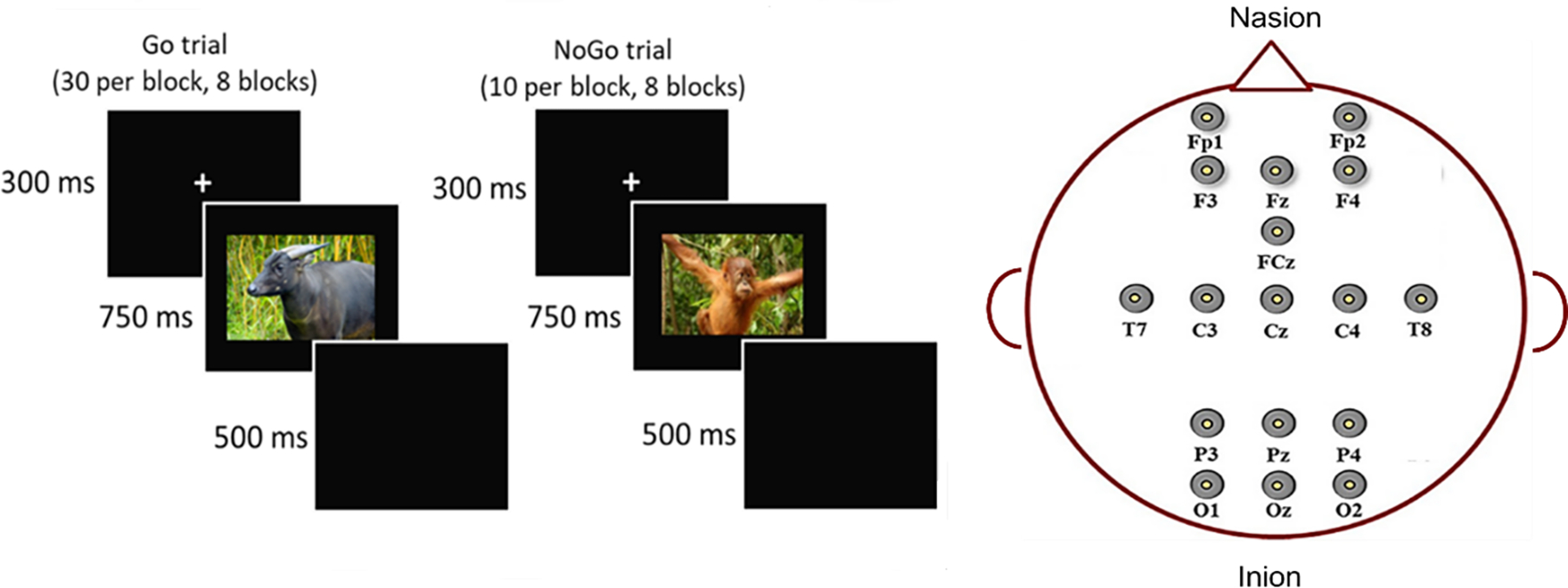
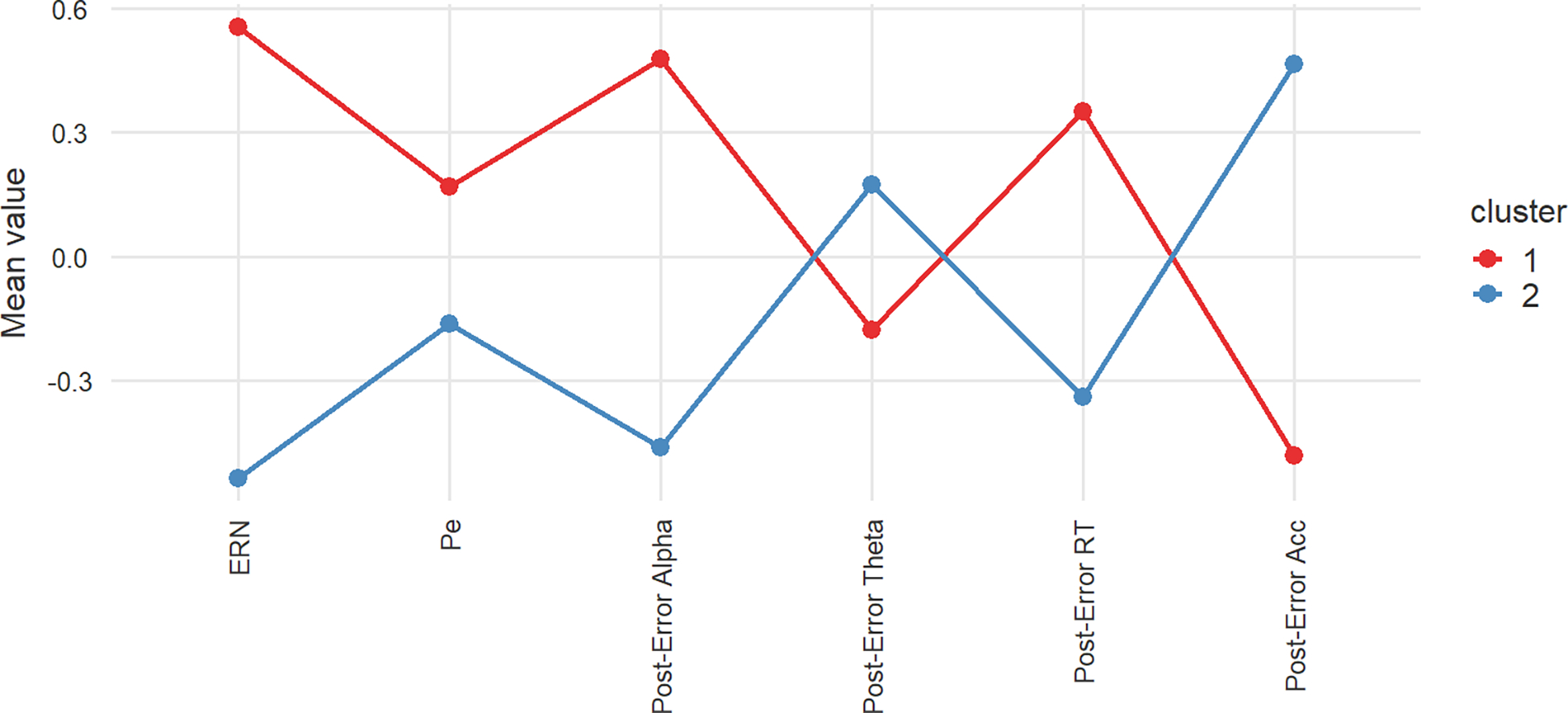
Methods: To identify neurobehavioral profiles of anxiety in young children by integrating ERAS with the error-related negativity, error positivity, frontal theta, and post-error performance indicators, we employed K-means clustering as an unsupervised multimetric approach. For this, we first aimed to confirm the presence and scalp distribution of ERAS in young children. We performed event-related potentials and spectral analysis of electroencephalogram data collected during a Go/NoGo task (Zoo Task) completed by 181 children (ages 4-7 years; 103 female) who were sampled from across the clinical-to-nonclinical range of anxiety severity using the Child Behavior Checklist.
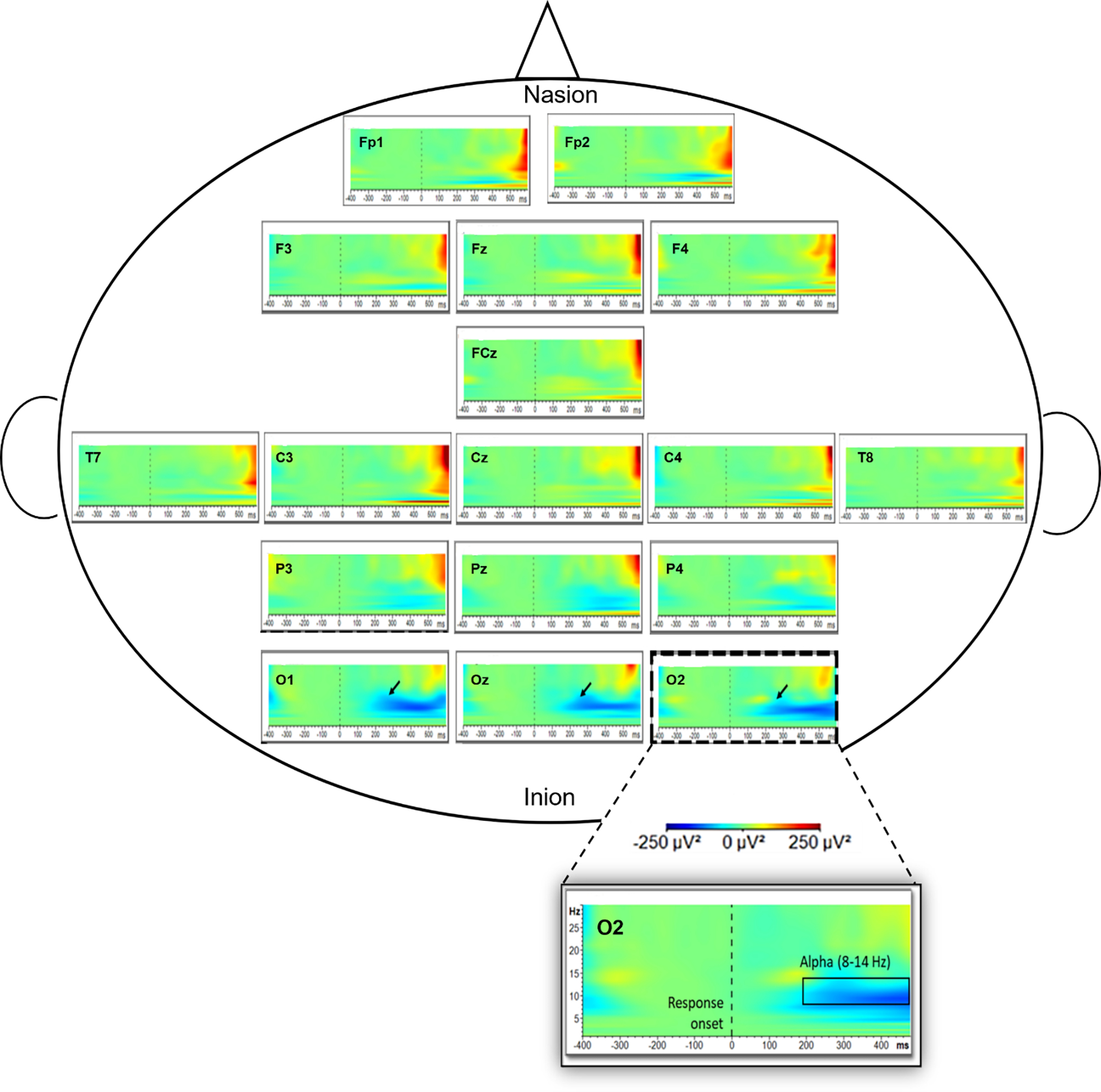
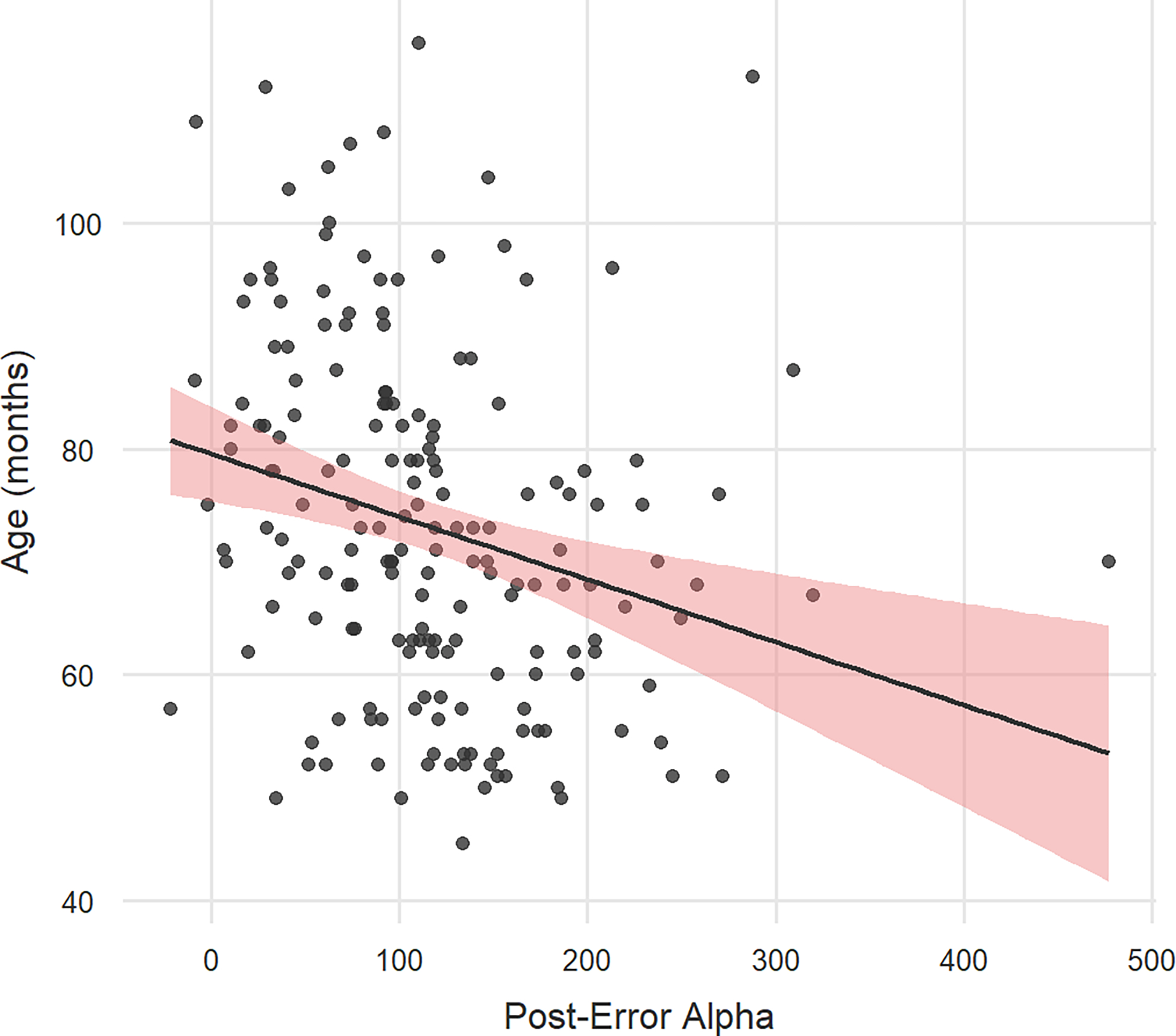
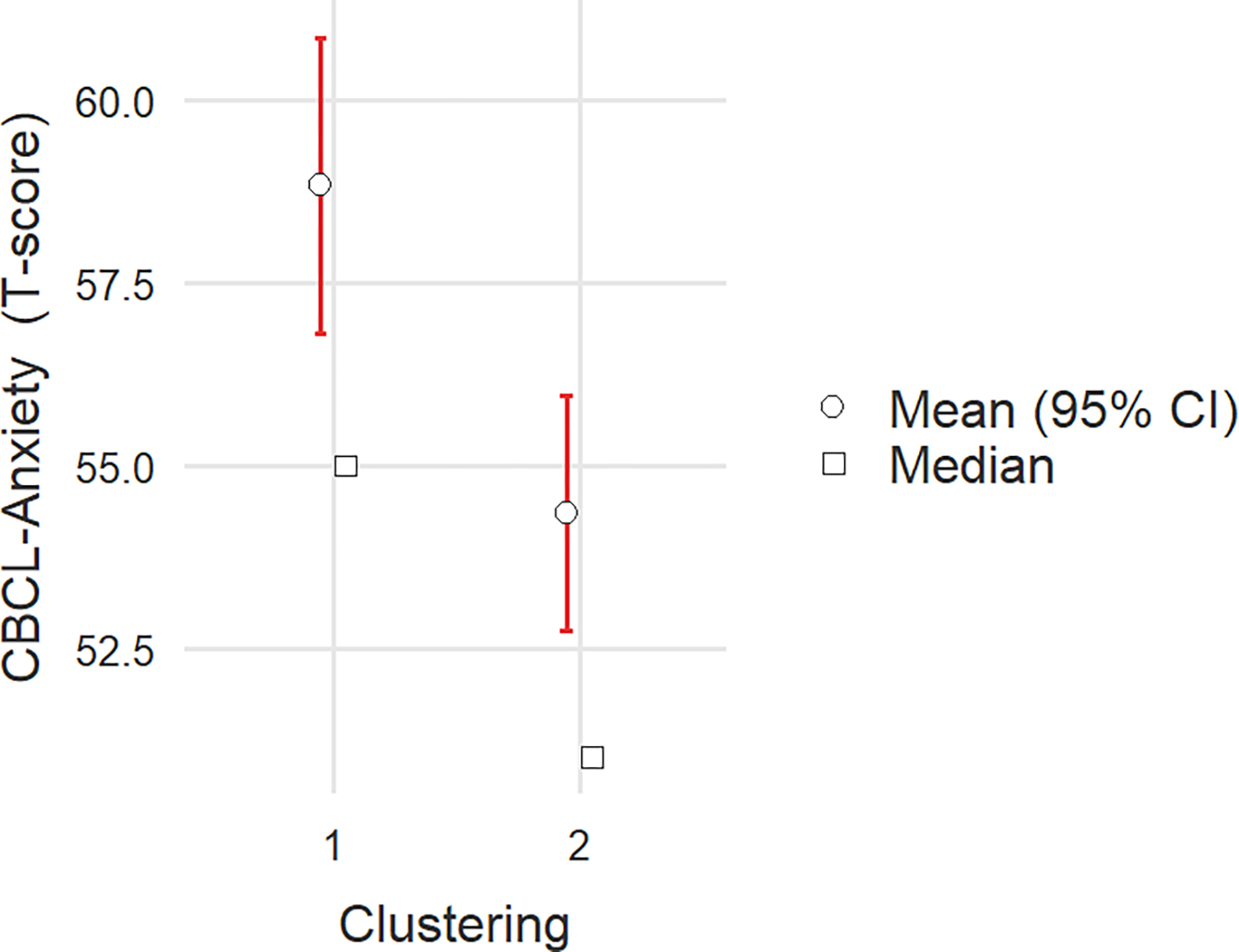
Results: Results confirmed ERAS, showing lower post-error alpha power, maximal suppression at occipital sites, and less ERAS in younger children. K-means clustering revealed that high anxiety and younger age were associated with reduction in ERAS and frontal theta, less negative error-related negativity, enlarged error positivity, more post-error slowing, and reduced post-error accuracy.
Conclusions: Our findings indicate a link between ERAS, maladaptive neural mechanisms of attention elicited by errors, and anxiety in young children, suggesting that anxiety may arise from or interfere with attention and error processing.
Keywords: Childhood anxiety; ERN; Error processing; Error-related alpha suppression; Pe.
Published by Elsevier Inc.
Conflict of interest statement
FINANCIAL DISCLOSURES/CONFLICTS
The authors report no biomedical financial interests or potential conflicts of interest that could have appeared to influence the work reported in this paper.
Figures
References
-
- Kessler RC, et al. , Lifetime prevalence and age-of-onset distributions of DSM-IV disorders in the National Comorbidity Survey Replication. Arch Gen Psychiatry, 2005. 62(6): p. 593–602. - PubMed
-
- Kroes M, et al. , A longitudinal community study: do psychosocial risk factors and child behavior checklist scores at 5 years of age predict psychiatric diagnoses at a later age? J Am Acad Child Adolesc Psychiatry, 2002. 41(8): p. 955–63. - PubMed
-
- Mesman J, Bongers IL, and Koot HM, Preschool developmental pathways to preadolescent internalizing and externalizing problems. J Child Psychol Psychiatry, 2001. 42(5): p. 679–89. - PubMed
-
- Moffitt TE, et al. , Depression and generalized anxiety disorder: cumulative and sequential comorbidity in a birth cohort followed prospectively to age 32 years. Arch Gen Psychiatry, 2007. 64(6): p. 651–60. - PubMed
MeSH terms
Grants and funding
LinkOut - more resources
Full Text Sources
Medical
