AI-guided pipeline for protein-protein interaction drug discovery identifies a SARS-CoV-2 inhibitor
- PMID: 38467836
- PMCID: PMC10987651
- DOI: 10.1038/s44320-024-00019-8
AI-guided pipeline for protein-protein interaction drug discovery identifies a SARS-CoV-2 inhibitor
Abstract
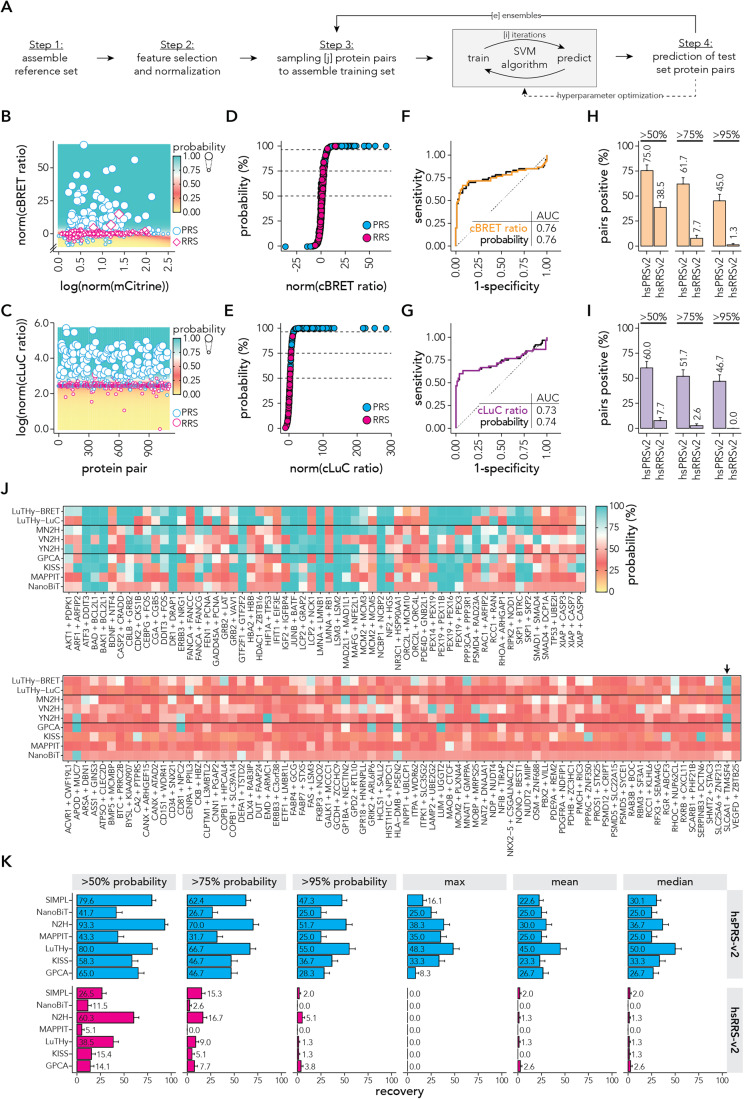
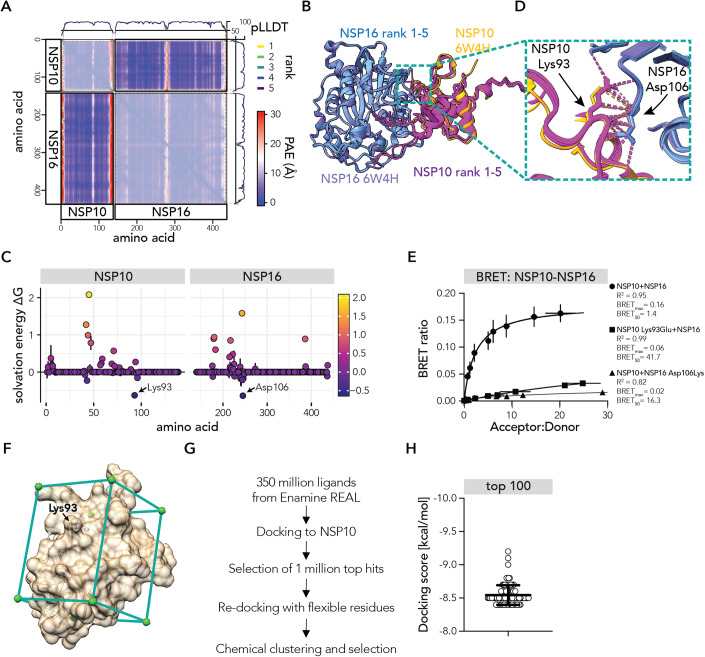
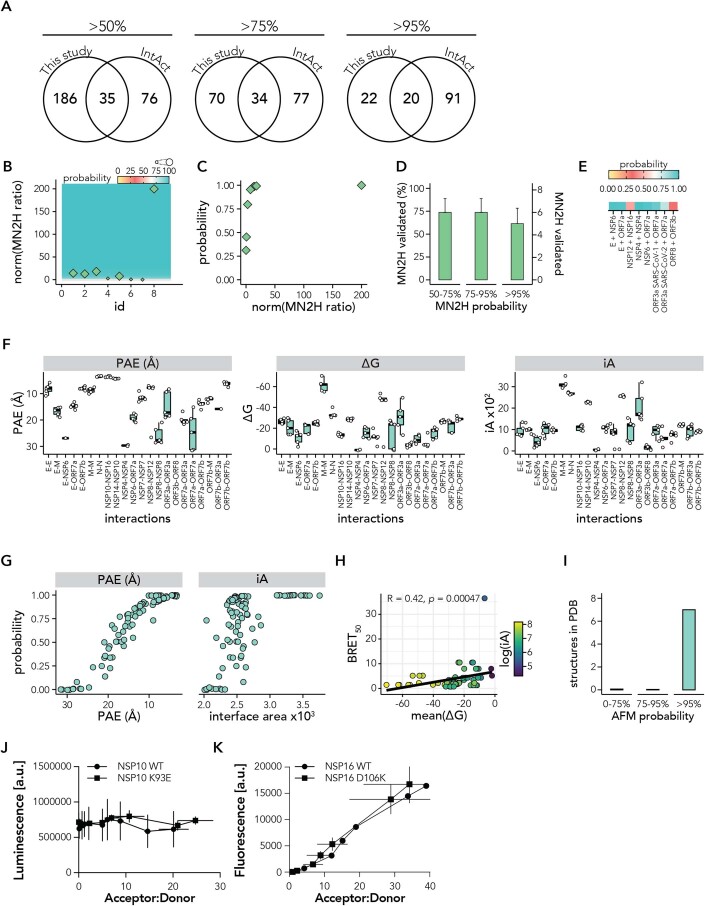
Protein-protein interactions (PPIs) offer great opportunities to expand the druggable proteome and therapeutically tackle various diseases, but remain challenging targets for drug discovery. Here, we provide a comprehensive pipeline that combines experimental and computational tools to identify and validate PPI targets and perform early-stage drug discovery. We have developed a machine learning approach that prioritizes interactions by analyzing quantitative data from binary PPI assays or AlphaFold-Multimer predictions. Using the quantitative assay LuTHy together with our machine learning algorithm, we identified high-confidence interactions among SARS-CoV-2 proteins for which we predicted three-dimensional structures using AlphaFold-Multimer. We employed VirtualFlow to target the contact interface of the NSP10-NSP16 SARS-CoV-2 methyltransferase complex by ultra-large virtual drug screening. Thereby, we identified a compound that binds to NSP10 and inhibits its interaction with NSP16, while also disrupting the methyltransferase activity of the complex, and SARS-CoV-2 replication. Overall, this pipeline will help to prioritize PPI targets to accelerate the discovery of early-stage drug candidates targeting protein complexes and pathways.
Keywords: AlphaFold; Machine Learning; Protein–Protein Interactions; SARS-CoV-2; VirtualFlow.
© 2024. The Author(s).
Conflict of interest statement
The authors declare no competing interests. MV is an editorial advisory board member. This has no bearing on the editorial consideration of this article for publication.
Figures




Update of
-
AI-guided pipeline for protein-protein interaction drug discovery identifies a SARS-CoV-2 inhibitor.bioRxiv [Preprint]. 2023 Jun 14:2023.06.14.544560. doi: 10.1101/2023.06.14.544560. bioRxiv. 2023. Update in: Mol Syst Biol. 2024 Apr;20(4):428-457. doi: 10.1038/s44320-024-00019-8. PMID: 37398436 Free PMC article. Updated. Preprint.
References
-
- Ahdritz G, Bouatta N, Floristean C, Kadyan S, Xia Q, Gerecke W, O’Donnell TJ, Berenberg D, Fisk I, Zanichelli N et al (2022) OpenFold: retraining AlphaFold2 yields new insights into its learning mechanisms and capacity for generalization. Preprint at bioRxiv https://www.biorxiv.org/content/10.1101/2022.11.20.517210v1 - DOI - PMC - PubMed
-
- Araujo MEG, de, Naschberger A, Fürnrohr BG, Stasyk T, Dunzendorfer-Matt T, Lechner S, Welti S, Kremser L, Shivalingaiah G, Offterdinger M, et al. Crystal structure of the human lysosomal mTORC1 scaffold complex and its impact on signaling. Science. 2017;358:377–381. doi: 10.1126/science.aao1583. - DOI - PubMed
MeSH terms
Substances
Grants and funding
LinkOut - more resources
Full Text Sources
Medical
Research Materials
Miscellaneous