


Effects of intratesticular injection of hypertonic mannitol and saline on the quality of donkey sperm, indicators of oxidative stress and testicular tissue pathology
- PMID: 38468237
- PMCID: PMC10926677
- DOI: 10.1186/s12917-024-03915-1
Effects of intratesticular injection of hypertonic mannitol and saline on the quality of donkey sperm, indicators of oxidative stress and testicular tissue pathology
Abstract
Objectives: The aim of the present study was to examine donkey sperm quality after intratesticular injection of hypertonic mannitol (HM) and saline (HS).
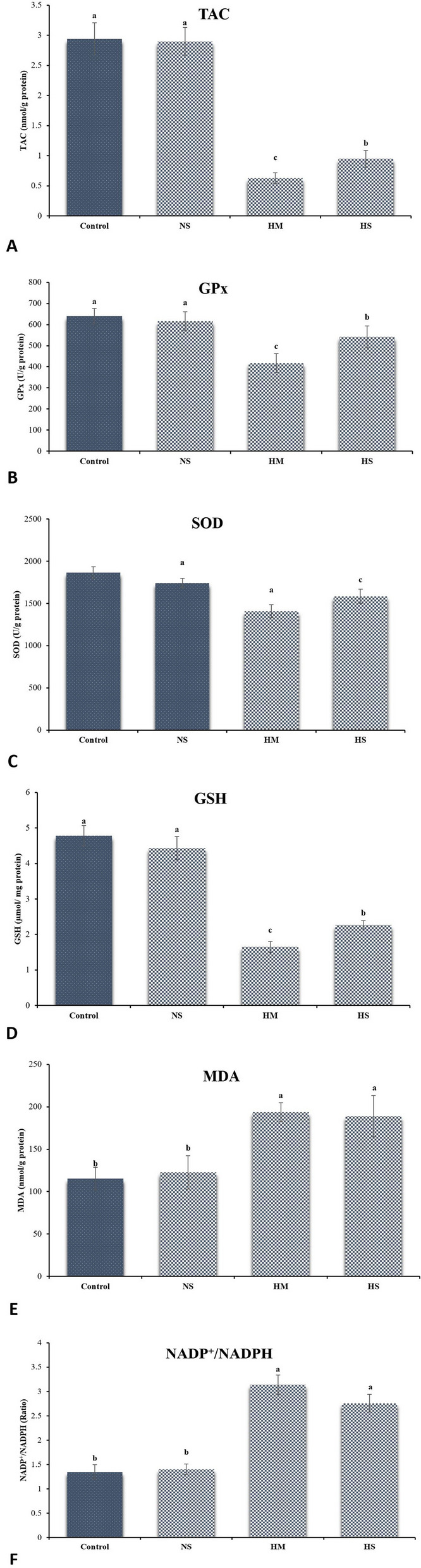
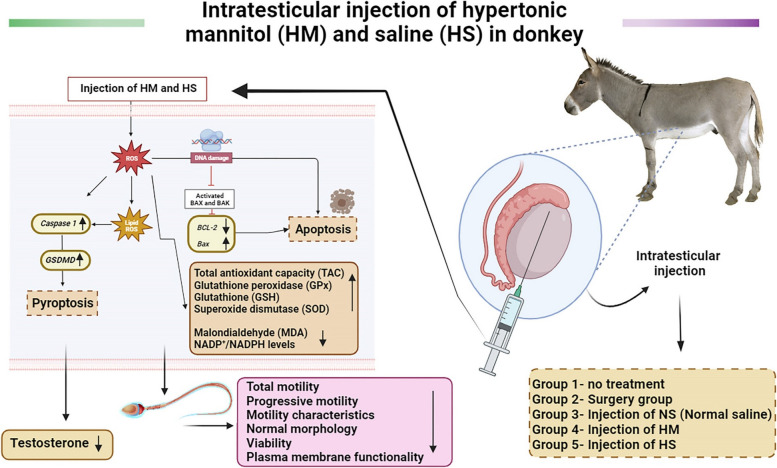
Methods: Randomly assigned to five treatment groups were 15 adult male donkeys: (1) Control group (no treatment), (2) Surgery group (surgical castration for testosterone control), (3) NS group (normal saline intratesticular injection), (4) HS group (hypertonic saline), and (5) HM group. We injected 20 mL per testicle. We took 5 mL blood from all donkeys before injection. Castration was performed under general anesthesia 60 days later. Samples included blood and testicular tissue. Total motility (TM), progressive motility (PM), movementy features, DNA damage, morphology, viability, and plasma membrane functionality were evaluated. Hormone analyses, histomorphometric studies and oxidative stress indices including total antioxidant capacity (TAC), glutathione peroxidase (GPx), glutathione (GSH), superoxide dismutase (SOD), malondialdehyde (MDA), and NADP+/NADPH were evaluated. Apoptosis, pyroptosis-related Bax, Caspase-1, GSDMD, and Bcl-2 expression were also assessed.
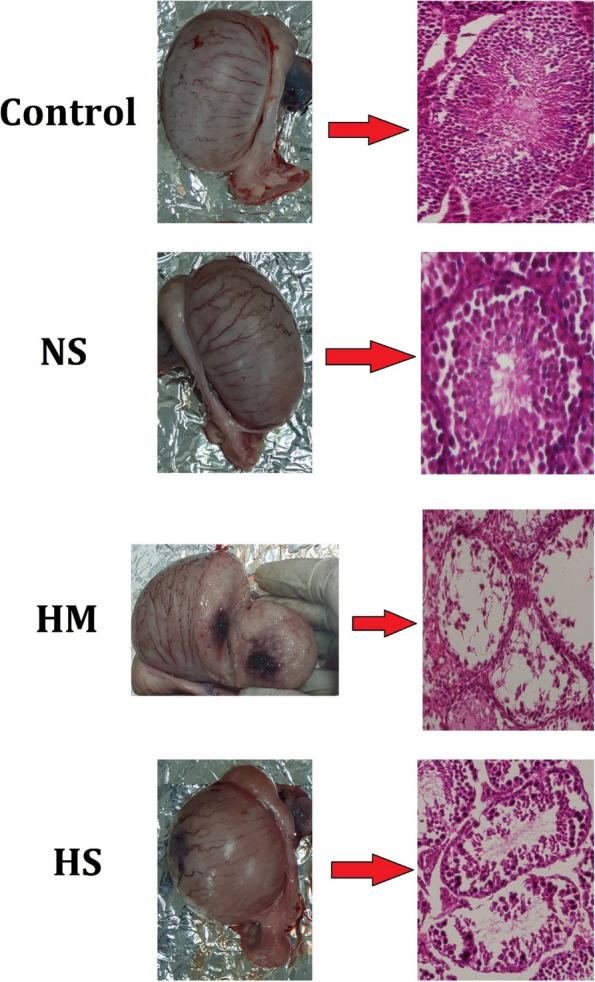
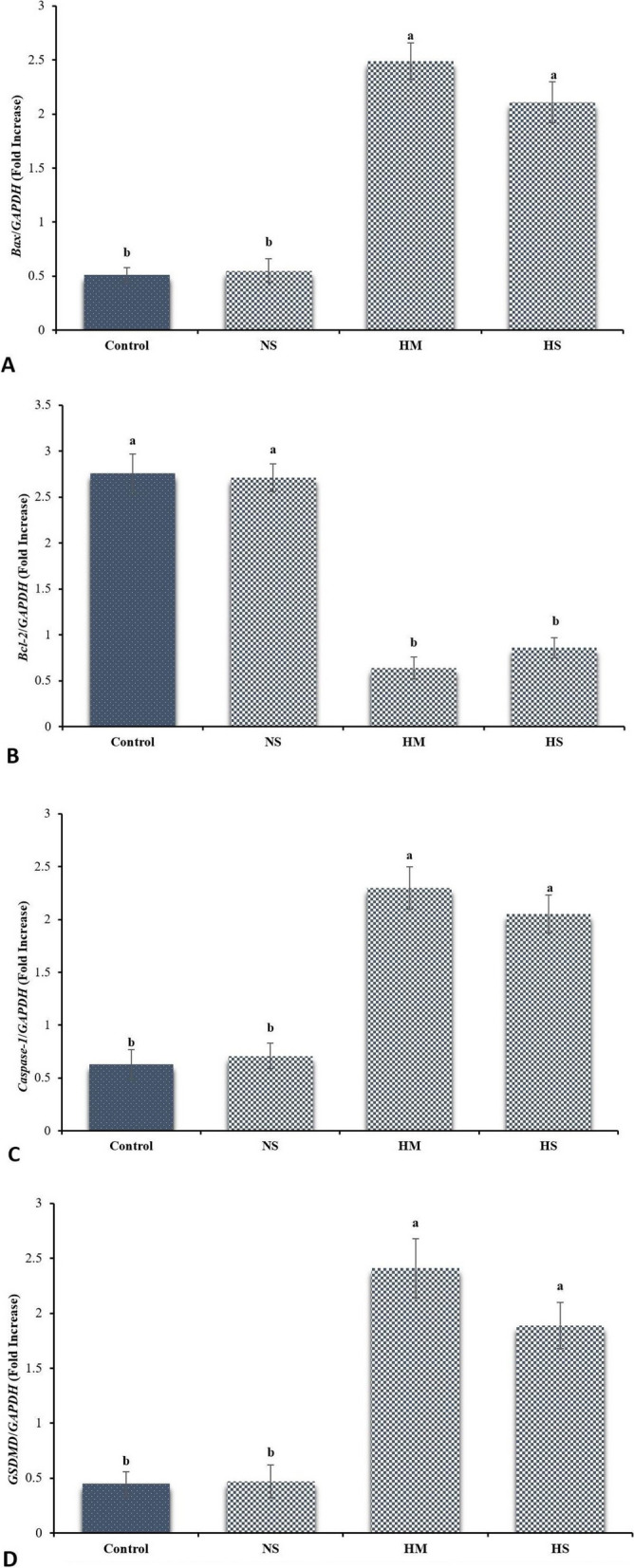
Results: In HS and HM groups, testosterone, epididymal sperm count, motility, viability, and plasma membrane functionality dropped while sperm DNA damage increased. HS and HM groups had significantly lower histomorphometric parameters, TAC, GPx, SOD, GSH, and Bcl-2 gene expression. MDA, NADP+/NADPH, Bax, Caspase-1, and GSDMD gene expression were substantially higher in the HS and HM groups than in the control group.
Conclusions: Toxic effects of hypertonic saline and mannitol on reproductive parameters were seen following, hence, they might be considered as a good chemical sterilizing treatment in donkeys.
Keywords: Apoptosis; Chemical sterilization; Donkey; Genes expression; Pyroptosis.
© 2024. The Author(s).
Conflict of interest statement
The authors declare no competing interests.
Figures

References
-
- Hamed MA, Amin YA, Mohamed RH, El-Adl M, Bazeed SM, Elnegiry AA, et al. Evaluation of chemical castration using intra-testicular injection of zinc gluconate into the testis of the male donkey versus surgical castration: antimullerian hormone as an endpoint marker. BMC Vet Res. 2023;19:140. doi: 10.1186/s12917-023-03694-1. - DOI - PMC - PubMed
-
- Okwee-Acai J, Ojok L, Acon J. Testicular morphologic and hormonal responses to an intratesticular injection of lactic acid for induction of chemosterilisation in adult mubende goats. Afr J Anim Biomed Sci. 2008;3:5–11.
Publication types
MeSH terms
Substances
LinkOut - more resources
Full Text Sources
Research Materials
Miscellaneous
