


Evaluation of mechanical properties of anatomically customized fiber posts using E-glass short fiber-reinforced composite to restore weakened endodontically treated premolars
- PMID: 38468269
- PMCID: PMC10926594
- DOI: 10.1186/s12903-024-04102-2
Evaluation of mechanical properties of anatomically customized fiber posts using E-glass short fiber-reinforced composite to restore weakened endodontically treated premolars
Abstract
Objective: This study was conducted to assess the influence of combining different forms of fiber-reinforced composites (FRC) on the mechanical behavior and bond strength of compromised endodontically treated teeth (ETT).
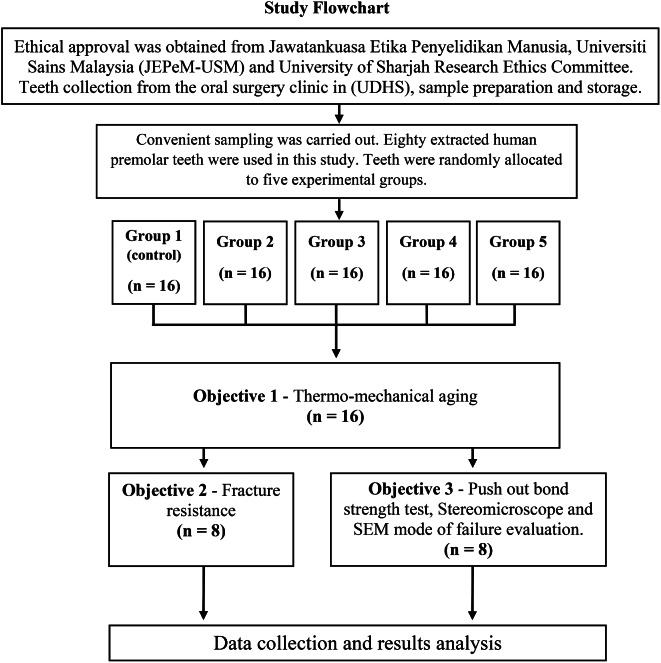
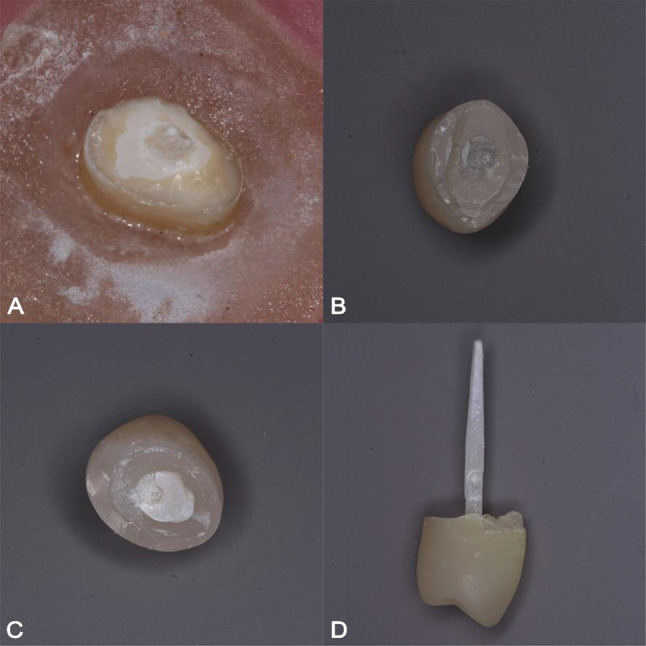
Materials and methods: Eighty extracted human premolar teeth were randomly divided into five experimental groups according to the type of intra-radicular restoration and the canal preparation design which was either non-flared (Group 1), flared (Groups 2-5), closed-apex (Groups 1,3,5) or open-apex (Groups 2,4). Standard prefabricated fiber posts were used as intra-radicular restoration for Groups 1-3 while Groups 4-5 were restored with anatomically customized relined fiber posts. After composite core fabrication, all samples were sent for an artificial aging process. Fracture resistance and push-out bond strength tests were then carried out through a universal testing machine followed by mode of failure analysis via a stereomicroscope and scanning electron microscope.
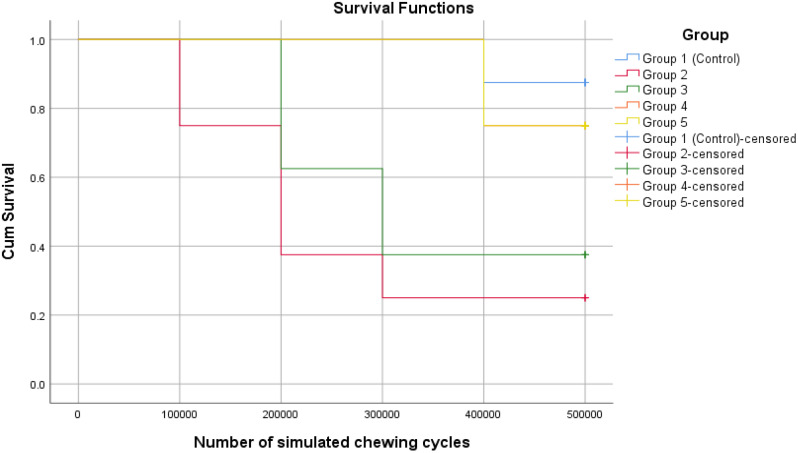
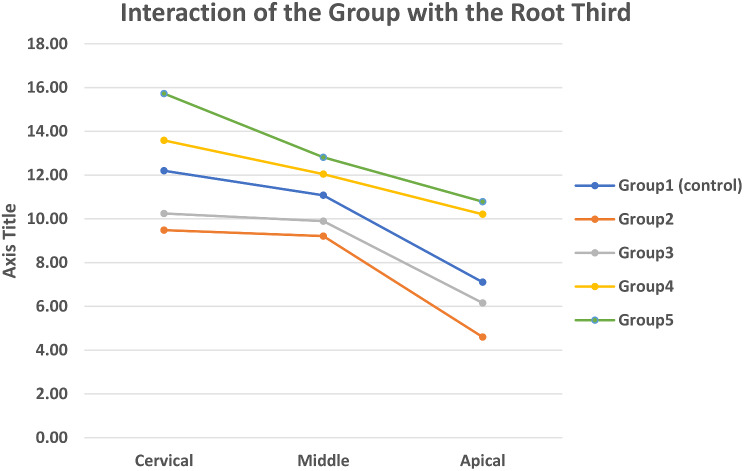
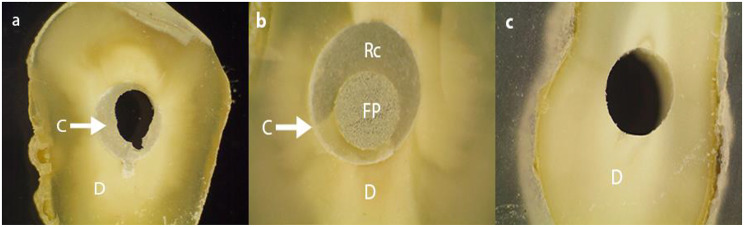
Results: Pairwise Log-Rank comparisons revealed that the survival rate of Group 2 and Group 3 was significantly lower than all other groups after artificial aging. The highest fracture resistance value (1796 N) was recorded in Group 5 and was significantly higher than that of the other groups (p < 0.05), while Group 2 exhibited the lowest fracture resistance (758 N), which was significantly lower compared to the other groups. Group 5 and Group 4 demonstrated a significantly higher push-out bond strength, at all root thirds, than Group 3, Group 2, and Group 1 (p < 0.05). The most frequently observed failure mode in the tested groups occurred between the resin cement and radicular dentin.
Conclusion: The use of short fiber-reinforced composite (SFRC) to reline the prefabricated FRC post has been proven to have superior fracture resistance with favorable failure patterns and increased push-out bond strength values compared to standard prefabricated FRC posts.
Keywords: Endodontically treated teeth; Fiber-reinforced composite Post; Post and core; Short fiber-Reinforced composite.
© 2024. The Author(s).
Conflict of interest statement
The authors declare no competing interests.
Figures

References
-
- Grandini S, Sapio S, Simonetti M. Use of anatomic post and core for reconstructing an endodontically treated tooth: a case report. J Adhes Dent. 2003;5(3):243–7. - PubMed
-
- Grandini S, Goracci C, Monticelli F, Borracchini A, Ferrari M. SEM evaluation of the cement layer thickness after luting two different posts. J Adhes Dent. 2005;7:235–40. - PubMed
MeSH terms
Substances
LinkOut - more resources
Full Text Sources
Miscellaneous
