


Predicting long-term progression of Alzheimer's disease using a multimodal deep learning model incorporating interaction effects
- PMID: 38468358
- PMCID: PMC10926590
- DOI: 10.1186/s12967-024-05025-w
Predicting long-term progression of Alzheimer's disease using a multimodal deep learning model incorporating interaction effects
Abstract
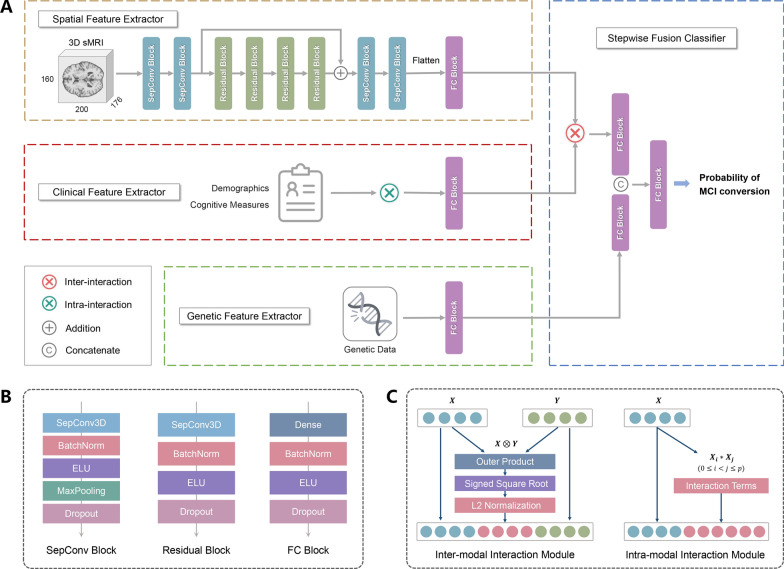
Background: Identifying individuals with mild cognitive impairment (MCI) at risk of progressing to Alzheimer's disease (AD) provides a unique opportunity for early interventions. Therefore, accurate and long-term prediction of the conversion from MCI to AD is desired but, to date, remains challenging. Here, we developed an interpretable deep learning model featuring a novel design that incorporates interaction effects and multimodality to improve the prediction accuracy and horizon for MCI-to-AD progression.
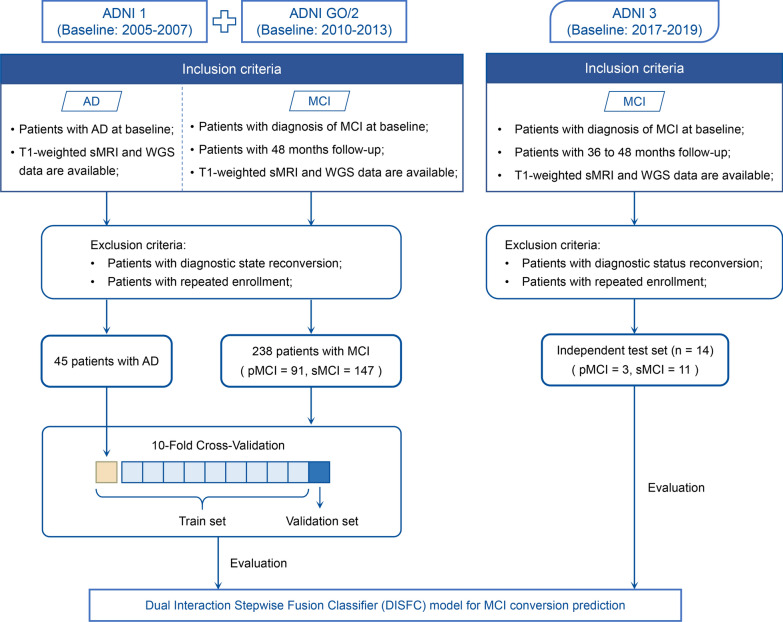
Methods: This multi-center, multi-cohort retrospective study collected structural magnetic resonance imaging (sMRI), clinical assessments, and genetic polymorphism data of 252 patients with MCI at baseline from the Alzheimer's Disease Neuroimaging Initiative (ADNI) database. Our deep learning model was cross-validated on the ADNI-1 and ADNI-2/GO cohorts and further generalized in the ongoing ADNI-3 cohort. We evaluated the model performance using the area under the receiver operating characteristic curve (AUC), accuracy, sensitivity, specificity, and F1 score.
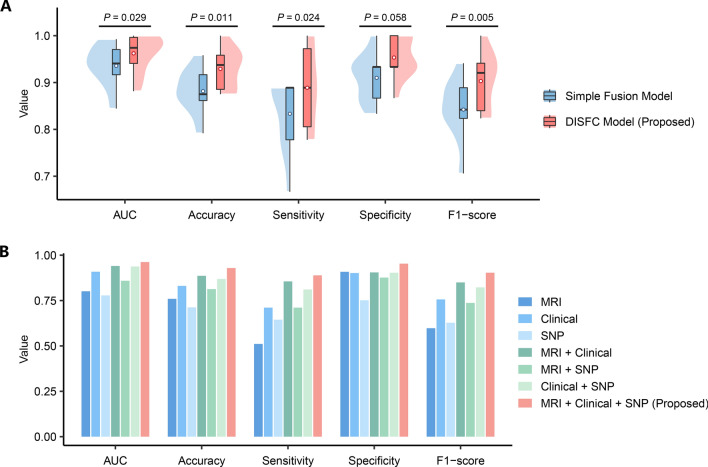
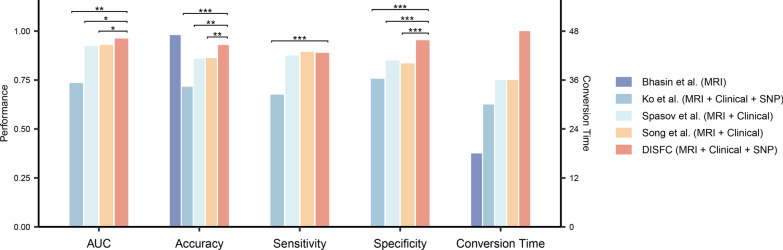
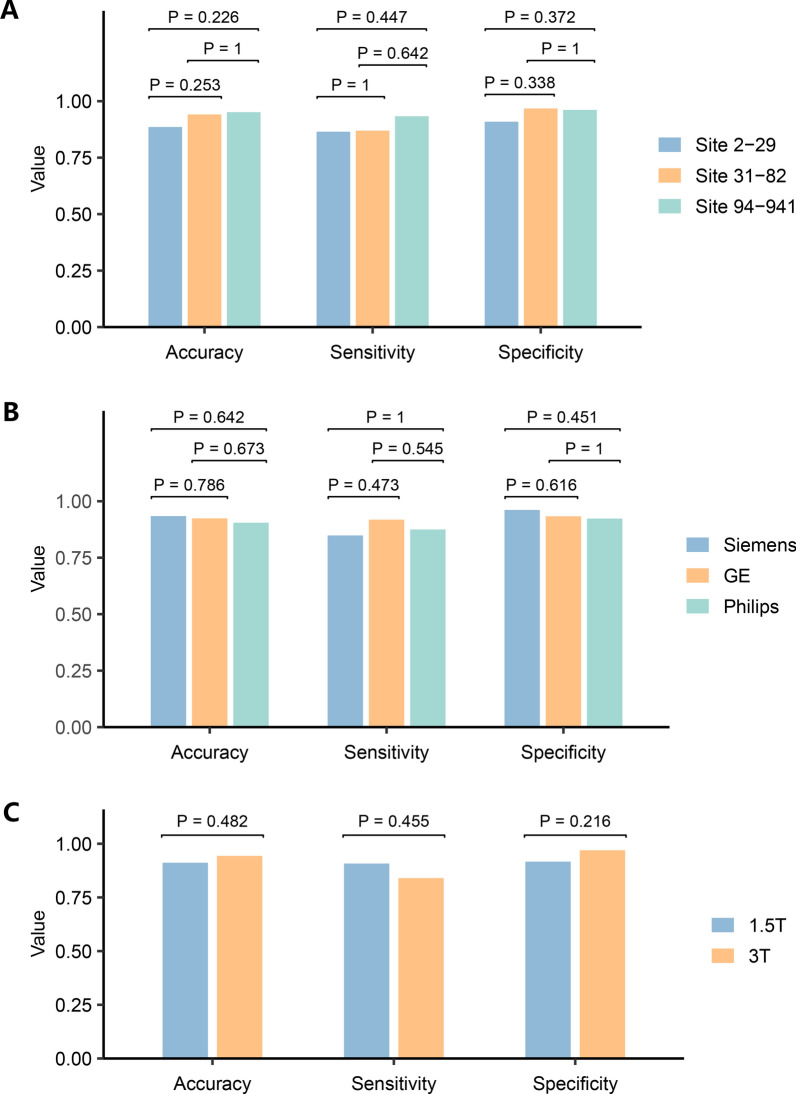
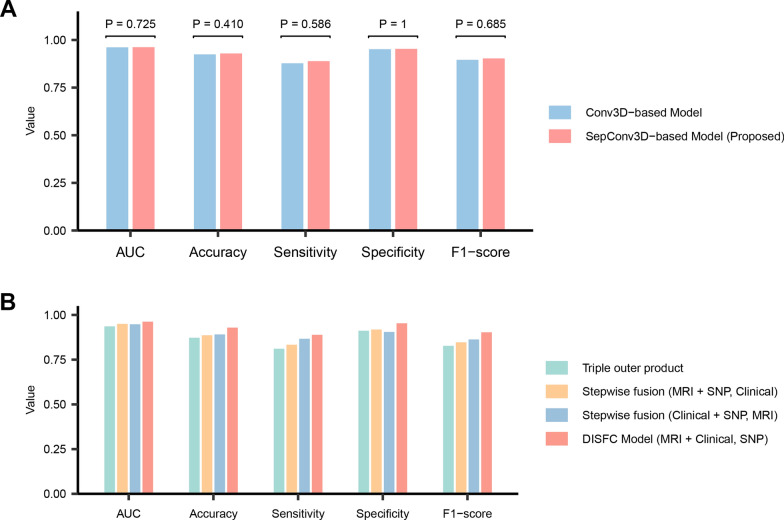
Results: On the cross-validation set, our model achieved superior results for predicting MCI conversion within 4 years (AUC, 0.962; accuracy, 92.92%; sensitivity, 88.89%; specificity, 95.33%) compared to all existing studies. In the independent test, our model exhibited consistent performance with an AUC of 0.939 and an accuracy of 92.86%. Integrating interaction effects and multimodal data into the model significantly increased prediction accuracy by 4.76% (P = 0.01) and 4.29% (P = 0.03), respectively. Furthermore, our model demonstrated robustness to inter-center and inter-scanner variability, while generating interpretable predictions by quantifying the contribution of multimodal biomarkers.
Conclusions: The proposed deep learning model presents a novel perspective by combining interaction effects and multimodality, leading to more accurate and longer-term predictions of AD progression, which promises to improve pre-dementia patient care.
Keywords: Alzheimer’s disease; Artificial intelligence; Deep learning; Early diagnosis; Multimodal biomarkers.
© 2024. The Author(s).
Conflict of interest statement
The authors declare that they have no competing interests.
Figures


References
-
- 2022 Alzheimer’s disease facts and figures. Alzheimers Dement. 2022;18(4):700–89. - PubMed
-
- Winblad B, Palmer K, Kivipelto M, Jelic V, Fratiglioni L, Wahlund L-O, et al. Mild cognitive impairment—beyond controversies, towards a consensus: report of the International Working Group on Mild Cognitive Impairment. J Intern Med. 2004;256(3):240–246. doi: 10.1111/j.1365-2796.2004.01380.x. - DOI - PubMed
Publication types
MeSH terms
Grants and funding
LinkOut - more resources
Full Text Sources
Medical
