


Coexpression of Three Odorant-Binding Protein Genes in the Foreleg Gustatory Sensilla of Swallowtail Butterfly Visualized by Multicolor FISH Analysis
- PMID: 38468877
- PMCID: PMC10926539
- DOI: 10.3389/finsc.2021.696179
Coexpression of Three Odorant-Binding Protein Genes in the Foreleg Gustatory Sensilla of Swallowtail Butterfly Visualized by Multicolor FISH Analysis
Abstract
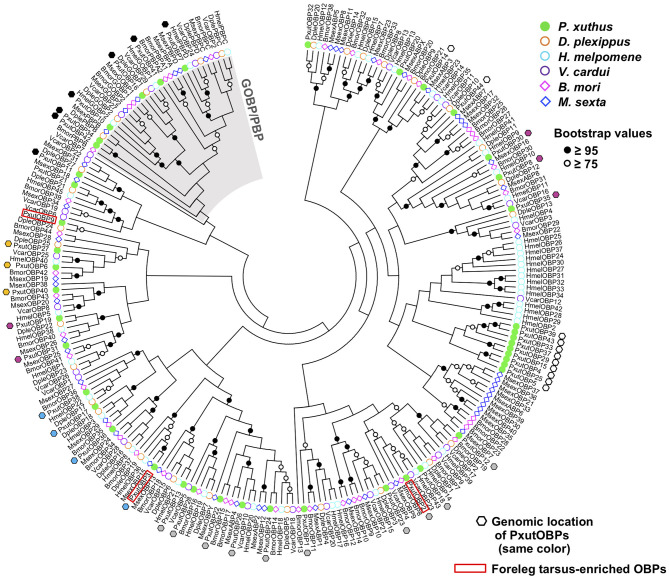
Lepidopteran insects are mostly monophagous or oligophagous. Female butterflies distinguish their host plants by detecting a combination of specific phytochemicals through the gustatory sensilla densely distributed on their foreleg tarsi, thereby ensuring oviposition on appropriate host plants. In this study, to gain insight into the molecular mechanism underlying host plant recognition by the gustatory sensilla, using Asian swallowtail, Papilio xuthus, we focused on a family of small soluble ligand-binding molecules, odorant-binding proteins (OBPs), and found that three OBP genes showed enriched expression in the foreleg tarsus. Multicolor fluorescence in situ hybridization analyses demonstrated the coexpression of these three OBP genes at the bases of the foreleg gustatory sensilla. Further analyses on other appendages revealed that PxutOBP3 was exclusively expressed in the tissues which could have direct contact with the leaf surface, suggesting that this OBP gene specifically plays an important role in phytochemicals perception.
Keywords: Papilio xuthus; butterfly; fluorescence in situ hybridization; gustatory sensilla; host plant selection; odorant-binding protein.
Copyright © 2021 Ugajin and Ozaki.
Conflict of interest statement
The authors declare that the research was conducted in the absence of any commercial or financial relationships that could be construed as a potential conflict of interest.
Figures


References
LinkOut - more resources
Full Text Sources
