


A novel heterozygous frameshift mutation in the KRT6A gene responsible for an uncommon phenotype of pachyonychia congenita: One case report and review of literature
- PMID: 38468954
- PMCID: PMC10926126
- DOI: 10.1016/j.heliyon.2024.e27195
A novel heterozygous frameshift mutation in the KRT6A gene responsible for an uncommon phenotype of pachyonychia congenita: One case report and review of literature
Abstract
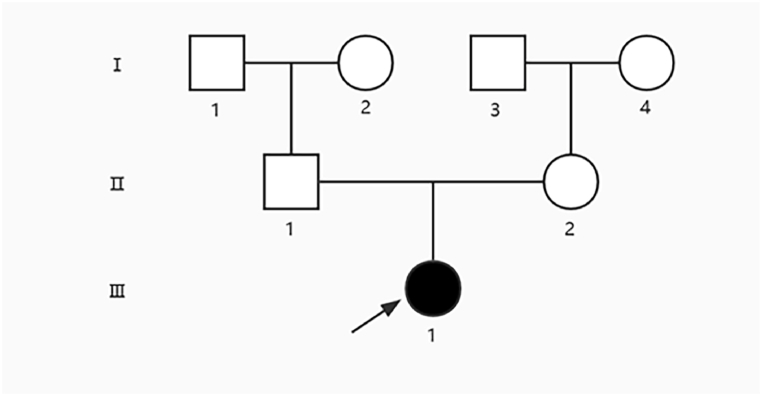
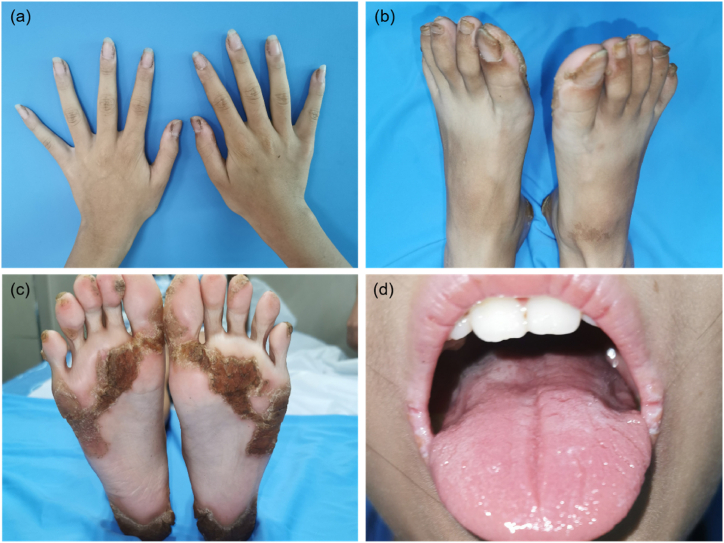
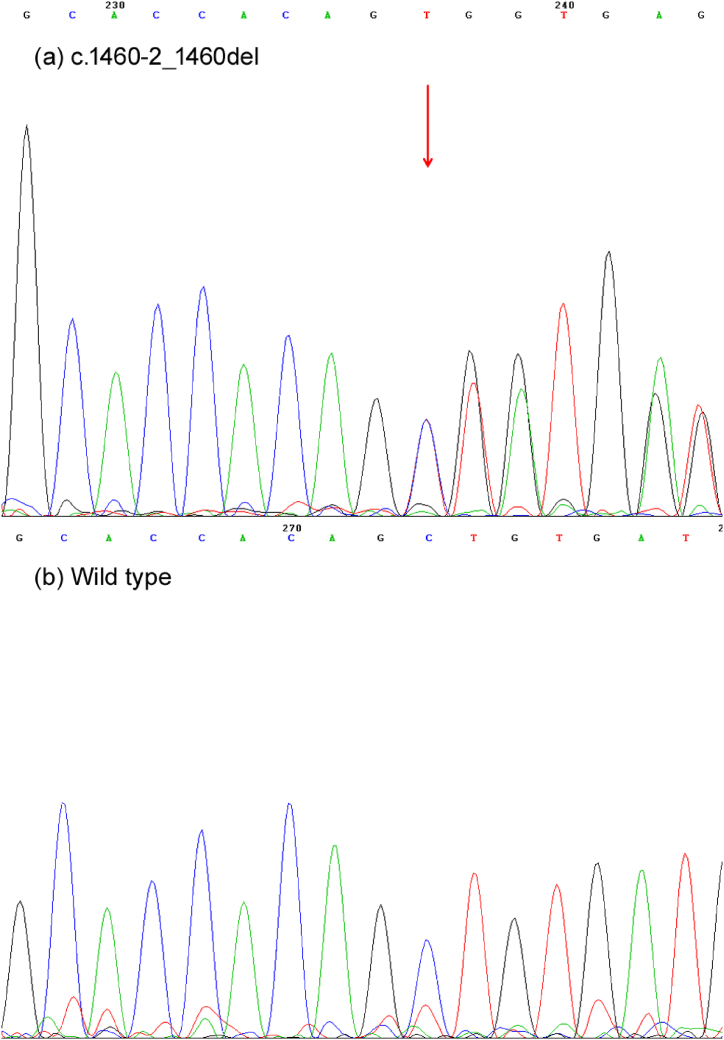
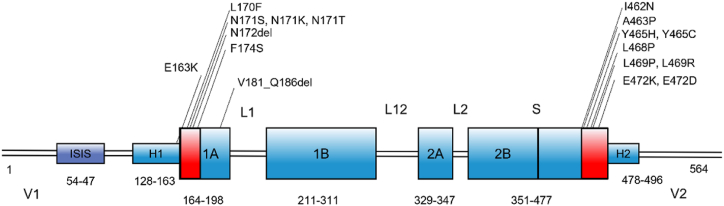
Pachyonychia congenita is an uncommon autosomal dominant skin disorder characterized by hypertrophic nail dystrophy, palmoplantar keratoderma, oral leukokeratosis, and cutaneous cysts. And fissured tongue is rarely reported in patients with pachyonychia congenita. The disease is primarily associated with mutations in five keratin genes, namely KRT6A, KRT6B, KRT6C, KRT16 or KRT17. Herein we report a 9-year-old Chinese girl who has thickened nails, keratinized plaques, and fissured tongue since birth. To investigate the underlying genetic cause, whole-exome sequencing and Sanger sequencing were performed in this patient and her family members. We identified a candidate variant c.1460-2_1460del (p.S487Lfs*21) in the KRT6A gene (NM_005554.4) by whole-exome sequencing. Sanger sequencing revealed the absence of the mutation in both parents, indicating that it is a de novo variant. Thus, the novel heterozygous frameshift mutation c.1460-2_1460del (p.S487Lfs*21) within exon 9 of KRT6A was identified as the genetic cause of the patient. Our study identified a rare de novo heterozygous frameshift mutation in the KRT6A gene in a patient with pachyonychia congenita presenting fissured tongue. Our findings expand the KRT6A gene mutation spectrum of Pachyonychia congenita, and will contribute to the future genetic counseling and gene therapy for this disease.
Keywords: Fissured tongue; Genodermatosis; KRT6A; Keratin; Pachyonychia congenita.
© 2024 The Authors. Published by Elsevier Ltd.
Conflict of interest statement
The authors declare that they have no known competing financial interests or personal relationships that could have appeared to influence the work reported in this paper.
Figures
References
-
- Jadassohn J., Lewandowsky F. Pachyonychia congenita. Ikonographia dermatologica. 1906;1:29.
-
- Feinstein A., Friedman J., Schewach-Millet M. Pachyonychia congenita. J. Am. Acad. Dermatol. 1988;19(4):705–711. - PubMed
-
- Lucker G.P., Steijlen P.M. Pachyonychia congenita tarda. Clin. Exp. Dermatol. 1995;20(3):226–229. - PubMed
-
- Mouaci-Midoun N., Cambiaghi S., Abimelec P. Pachyonychia congenita tarda. J. Am. Acad. Dermatol. 1996;35(2 Pt 2):334–335. - PubMed
Publication types
LinkOut - more resources
Full Text Sources
Research Materials
Miscellaneous
