


A critical review of current laboratory methods used to evaluate mosquito repellents
- PMID: 38469342
- PMCID: PMC10926509
- DOI: 10.3389/finsc.2024.1320138
A critical review of current laboratory methods used to evaluate mosquito repellents
Abstract
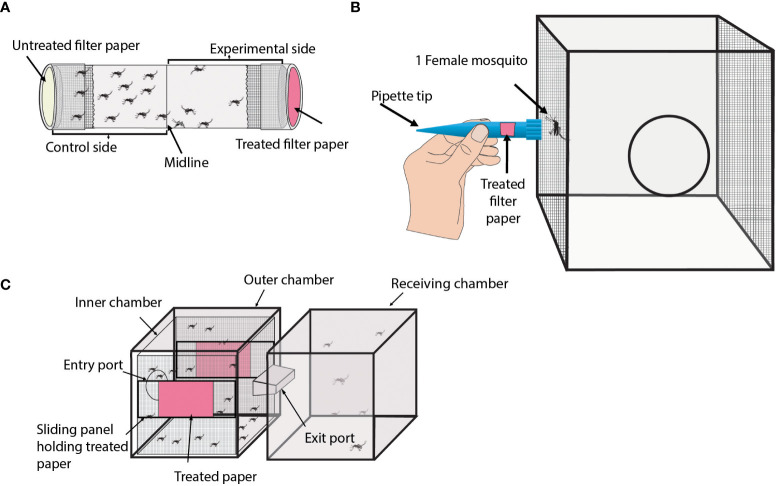
Pathogens transmitted by mosquitoes threaten human health around the globe. The use of effective mosquito repellents can protect individuals from contracting mosquito-borne diseases. Collecting evidence to confirm and quantify the effectiveness of a mosquito repellent is crucial and requires thorough standardized testing. There are multitudes of methods to test repellents that each have their own strengths and weaknesses. Determining which type of test to conduct can be challenging and the collection of currently used and standardized methods has changed over time. Some of these methods can be powerful to rapidly screen numerous putative repellent treatments. Other methods can test mosquito responses to specific treatments and measure either spatial or contact repellency. A subset of these methods uses live animals or human volunteers to test the repellency of treatments. Assays can greatly vary in their affordability and accessibility for researchers and/or may require additional methods to confirm results. Here I present a critical review that covers some of the most frequently used laboratory assays from the last two decades. I discuss the experimental designs and highlight some of the strengths and weaknesses of each type of method covered.
Keywords: contact repellency; laboratory assays; methods review; mosquito attractants; mosquito repellents; repellent efficacy; spatial repellency; standardized methods.
Copyright © 2024 Luker.
Conflict of interest statement
The author declares that the research was conducted in the absence of any commercial or financial relationships that could be construed as a potential conflict of interest.
Figures

References
-
- Garamszegi LZ. Climate change increases the risk of malaria in birds. Global Change Biol (2011) 17(5):1751–9. doi: 10.1111/j.1365-2486.2010.02346.x - DOI
Publication types
Grants and funding
LinkOut - more resources
Full Text Sources
