


Microstructural changes of basal ganglia in migraine with restless legs syndrome: findings from a neuroimaging study
- PMID: 38469422
- PMCID: PMC10899932
- DOI: 10.1007/s41105-022-00376-7
Microstructural changes of basal ganglia in migraine with restless legs syndrome: findings from a neuroimaging study
Abstract
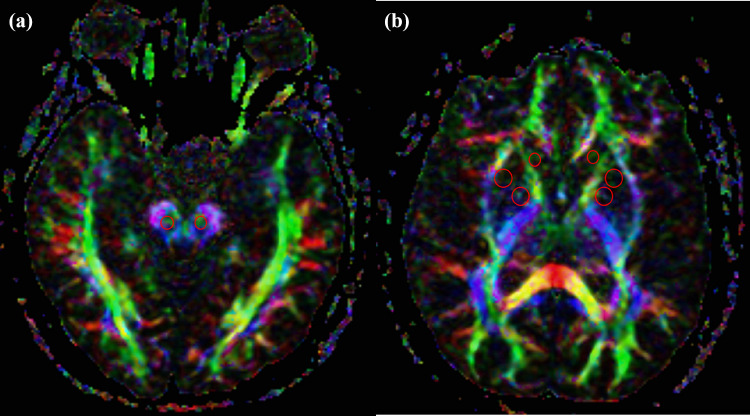
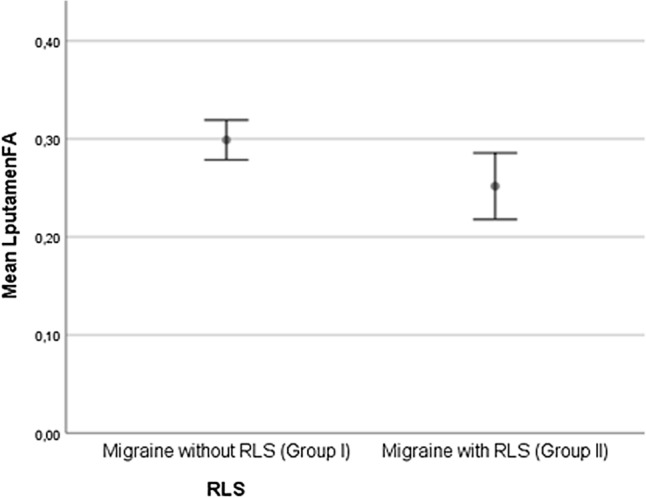
In this study, it is planned to investigate the integrity of the basal ganglia structures in migraineurs with restless legs syndrome (RLS) to explore this relationship. In this study, 58 patients who were diagnosed migraine and 51 healthy controls (HCs) were included. Patients diagnosed with migraine were divided into two groups: Group I (migraine without RLS) and Group II (migraine with RLS). The integrity of basal ganglia was evaluated with region of interest diffusion tensor imaging method which allows us to assess microstructural changes of the tissue. The mean age of the patients was 35.98 ± 7.92 years, and the mean age of the HCs was 33.84 ± 11.06. 84.5% (n = 49) of the patients were female and 15.5% (n = 9) were male. 82.4% (n = 42) of the HCs were female, 17.6% (n = 9) were male. The number of the patients without RLS was 41 (Group I), and the number of the patients with RLS was 17 (Group II). When basal ganglia structures were compared between groups of the patients with and without RLS, the fractional anisotropy (FA) value of the left putamen differed (Group I: 0.30 ± 0.06 vs. Group II: 0.25 ± 0.7, p = 0.01). The significant relationship was found attack frequency and presence of RLS with left putamen FA values according to multiple regression analysis. It was determined in this study that the changes in the microstructure of putamen, one of the basal ganglia structures, may be associated with the presence of RLS in migraineurs.
Keywords: Basal ganglia; Diffusion tensor imaging; Migraine; Restless legs syndrome.
© The Author(s), under exclusive licence to Japanese Society of Sleep Research 2022.
Conflict of interest statement
Conflict of interestThe authors declare that there is no conflict of interest.
Figures
References
-
- Sengul Y, Sengul HS, Bakim B, Yucekaya SK, Yucel S, Akgun M. Sleep disturbances and excessive daytime sleepiness in migraine: a comparison between comorbidities and disability. Sleep Biol Rhythms. 2015;13:76–84. doi: 10.1111/sbr.12087. - DOI
LinkOut - more resources
Full Text Sources