


Metabolic signatures of acute respiratory distress syndrome: COVID versus non-COVID
- PMID: 38469648
- PMCID: PMC11380973
- DOI: 10.1152/ajplung.00266.2023
Metabolic signatures of acute respiratory distress syndrome: COVID versus non-COVID
Abstract
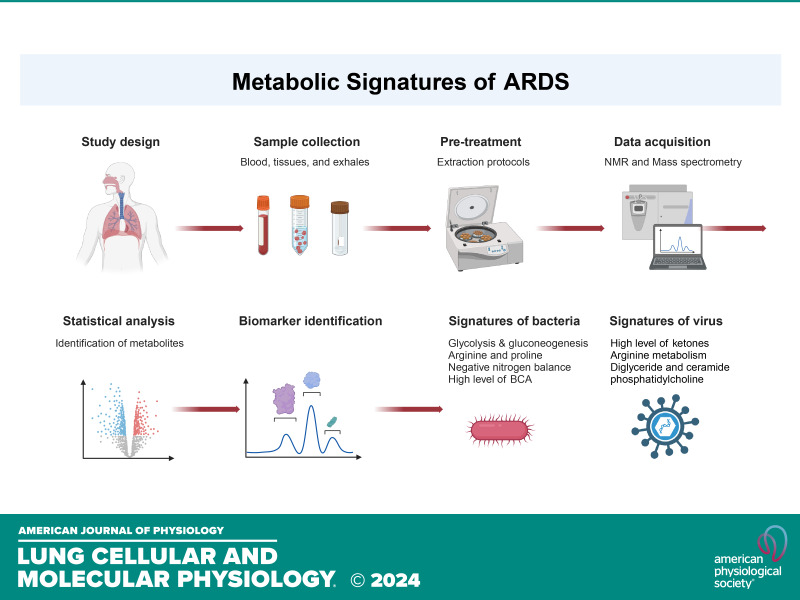
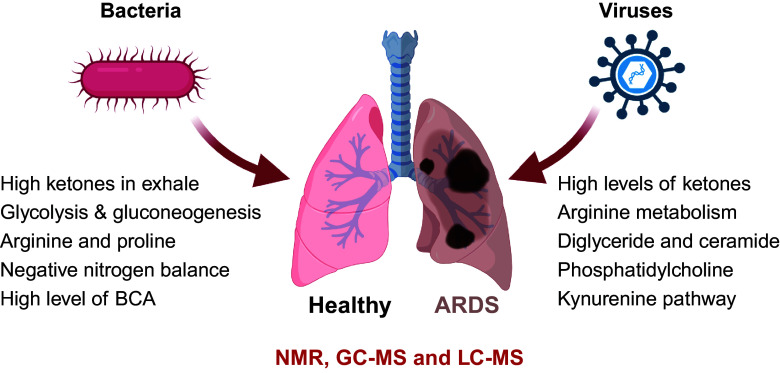
Acute respiratory distress syndrome (ARDS) is a fatal pulmonary disorder characterized by severe hypoxia and inflammation. ARDS is commonly triggered by systemic and pulmonary infections, with bacteria and viruses. Notable pathogens include Pseudomonas aeruginosa, Streptococcus aureus, Enterobacter species, coronaviruses, influenza viruses, and herpesviruses. COVID-19 ARDS represents the latest etiological phenotype of the disease. The pathogenesis of ARDS caused by bacteria and viruses exhibits variations in host immune responses and lung mesenchymal injury. We postulate that the systemic and pulmonary metabolomics profiles of ARDS induced by COVID-19 pathogens may exhibit distinctions compared with those induced by other infectious agents. This review aims to compare metabolic signatures in blood and lung specimens specifically within the context of ARDS. Both prevalent and phenotype-specific metabolomic signatures, including but not limited to glycolysis, ketone body production, lipid oxidation, and dysregulation of the kynurenine pathways, were thoroughly examined in this review. The distinctions in metabolic signatures between COVID-19 and non-COVID ARDS have the potential to reveal new biomarkers, elucidate pathogenic mechanisms, identify druggable targets, and facilitate differential diagnosis in the future.
Keywords: COVID-19; acute respiratory distress syndrome (ARDS); lipidomics; metabolomics.
Conflict of interest statement
No conflicts of interest, financial or otherwise, are declared by the authors.
Figures
References
-
- Singleton KD, Beckey VE, Wischmeyer PE. Glutamine prevents activation of NF-kappaB and stress kinase pathways, attenuates inflammatory cytokine release, and prevents acute respiratory distress syndrome (ARDS) following sepsis. Shock 24: 583–589, 2005. doi: 10.1097/01.shk.0000185795.96964.71. - DOI - PubMed
-
- Sharma NS, Lal CV, Li J-D, Lou XY, Viera L, Abdallah T, King RW, Sethi J, Kanagarajah P, Restrepo-Jaramillo R, Sales-Conniff A, Wei S, Jackson PL, Blalock JE, Gaggar A, Xu X. The neutrophil chemoattractant peptide proline-glycine-proline is associated with acute respiratory distress syndrome. Am J Physiol Lung Cell Mol Physiol 315: L653–L661, 2018. doi: 10.1152/ajplung.00308.2017. - DOI - PMC - PubMed
Publication types
MeSH terms
Substances
Grants and funding
LinkOut - more resources
Full Text Sources
Medical
