


Sex Differences in Stress Susceptibility as a Key Mechanism Underlying Depression Risk
- PMID: 38470558
- PMCID: PMC10978685
- DOI: 10.1007/s11920-024-01490-8
Sex Differences in Stress Susceptibility as a Key Mechanism Underlying Depression Risk
Abstract
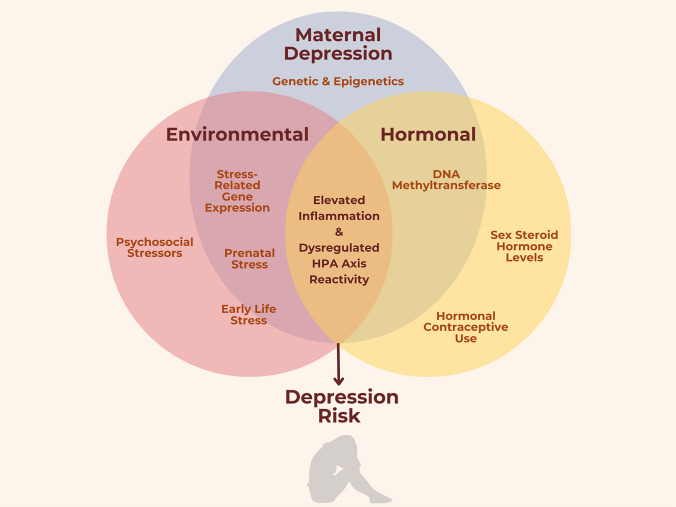
Purpose of review: Although females are at relatively greater risk for a variety of disorders, including depression, the biological mechanisms underlying this striking health disparity remain unclear. To address this issue, we highlight sex differences in stress susceptibility as a key mechanism potentially driving this effect and describe the interacting inflammatory, hormonal, epigenomic, and social-environmental mechanisms involved.
Recent findings: Using the Social Signal Transduction Theory of Depression as a theoretical framework, women's elevated risk for depression may stem from a tight link between life stress, inflammation, and depression in women. Further, research finds hormonal contraceptive use alters cortisol and inflammatory reactivity to acute stress in ways that may increase depression risk in females. Finally, beyond established epigenetic mechanisms, mothers may transfer risk for depression to their female offspring through stressful family environments, which influence stress generation and stress-related gene expression. Together, these findings provide initial, biologically plausible clues that may help explain the relatively greater risk for depression in females vs. males. Looking forward, much more research is needed to address the longstanding underrepresentation of females in biomedical research on the biology of stress and depression.
Keywords: Depression; Intergenerational; Mechanisms; Sex differences; Stress susceptibility; Women’s health.
© 2024. The Author(s).
Conflict of interest statement
The authors declare no conflicts of interest with respect to this work.
Figures
References
-
- Burani K, Brush CJ, Shields GS, Klein DN, Nelson B, Slavich GM, Hajcak G. Cumulative lifetime acute stressor exposure interacts with reward responsiveness to predict longitudinal increases in depression severity in adolescence. Psychol Med. 2023;53:4507–4516. doi: 10.1017/S0033291722001386. - DOI - PMC - PubMed
-
- Centers for Disease Control and Prevention (CDC). Youth risk behavior survey data summary & trends report. 2023;2011–21.
Publication types
MeSH terms
Grants and funding
LinkOut - more resources
Full Text Sources
Medical
Research Materials
