


Transcranial Magnetic Stimulation to Treat Neuropathic Pain: A Bibliometric Analysis
- PMID: 38470666
- PMCID: PMC10930707
- DOI: 10.3390/healthcare12050555
Transcranial Magnetic Stimulation to Treat Neuropathic Pain: A Bibliometric Analysis
Abstract
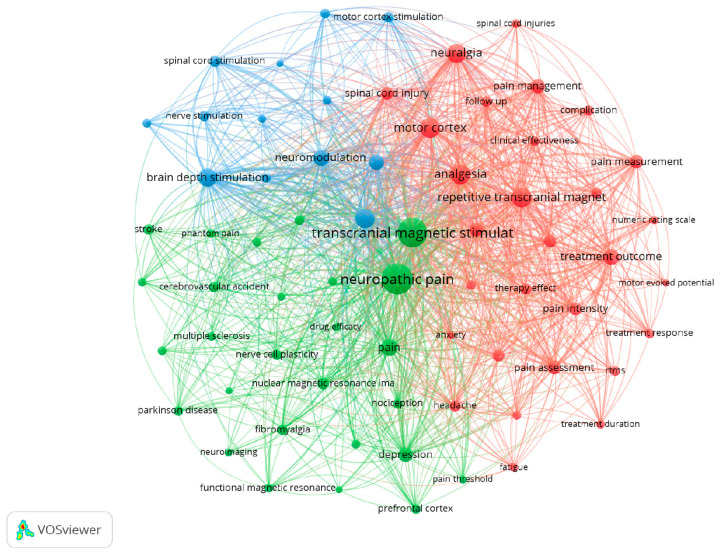
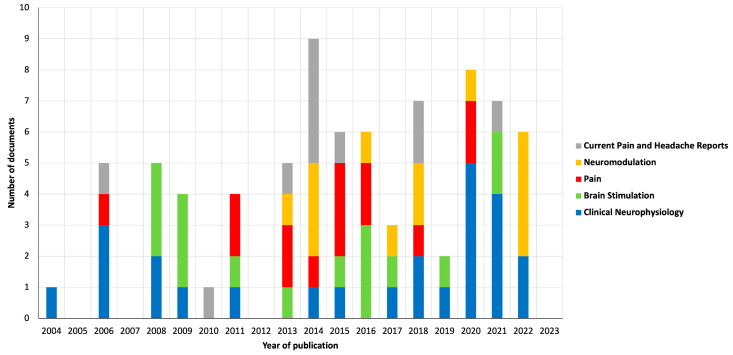
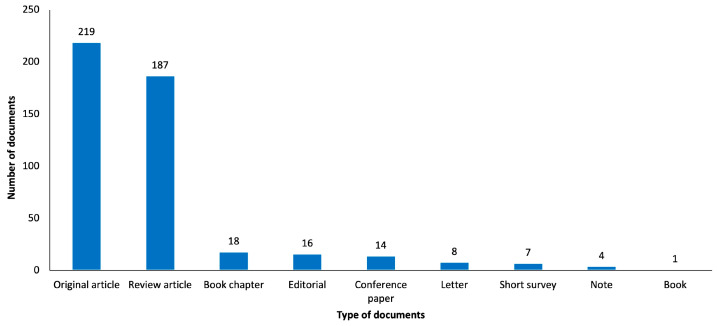
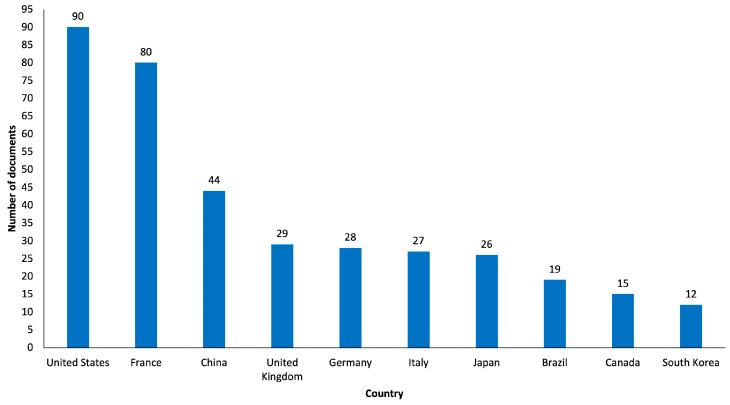
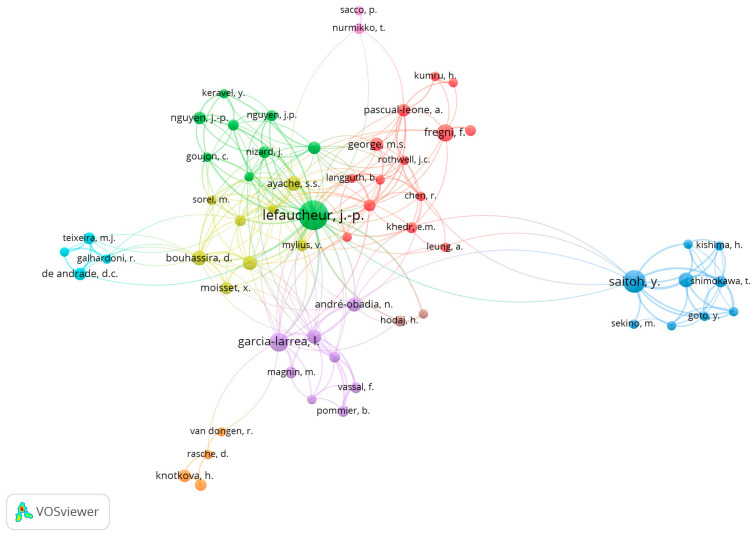
Neuropathic pain is caused by a lesion or disease of the somatosensory system and is one of the most incapacitating pain types, representing a significant non-met medical need. Due to the increase in research in the field and since innovative therapeutic strategies are required, namely in intractable neuropathic pain, neurostimulation has been used. Within this approach, transcranial magnetic stimulation (TMS) that uses a transient magnetic field to produce electrical currents over the cortex emerges as a popular method in the literature. Since this is an area in expansion and due to the putative role of TMS, we performed a bibliometric analysis in Scopus with the primary objective of identifying the scientific production related to the use of TMS to manage neuropathic pain. The research had no restrictions, and the analysis focused on the characteristics of the literature retrieved, scientific collaboration and main research topics from inception to 6 July 2023. A total of 474 articles were collected. A biggest co-occurrence between the terms "neuropathic pain" and "transcranial magnetic stimulation" was obtained. The journal "Clinical Neurophysiology" leads the Top 5 most productive sources. The United States is the most productive country, with 50% of US documents being "review articles", followed by France, with 56% of French documents being "original articles". Lefaucheur, JP and Saitoh, Y are the two most influential authors. The most frequent type of document was "original article". Most of the studies (34%) that identified the neuropathic pain type focused on traumatic neuropathic pain, although a large proportion (38%) did not report the neuropathic pain type. This study allows us to provide a general overview of the field of TMS application for neuropathic pain and is useful for establishing future directions of research in this field.
Keywords: bibliometric analysis; neuropathic pain; pain; transcranial magnetic stimulation; treatment.
Conflict of interest statement
The authors declare no conflicts of interest.
Figures
References
-
- Treede R.D., Jensen T.S., Campbell J.N., Cruccu G., Dostrovsky J.O., Griffin J.W., Hansson P., Hughes R., Nurmikko T., Serra J. Neuropathic pain: Redefinition and a grading system for clinical and research purposes. Neurology. 2008;70:1630–1635. doi: 10.1212/01.wnl.0000282763.29778.59. - DOI - PubMed
-
- Finnerup N.B., Haroutounian S., Kamerman P., Baron R., Bennett D.L., Bouhassira D., Cruccu G., Freeman R., Hansson P., Nurmikko T., et al. Neuropathic pain: An updated grading system for research and clinical practice. Pain. 2016;157:1599–1606. doi: 10.1097/j.pain.0000000000000492. - DOI - PMC - PubMed
-
- Treede R.-D., Rief W., Barke A., Aziz Q., Bennett M.I., Benoliel R., Cohen M., Evers S., Finnerup N.B., First M.B., et al. Chronic pain as a symptom or a disease: The IASP Classification of Chronic Pain for the International Classification of Diseases (ICD-11) Pain. 2019;160:19–27. doi: 10.1097/j.pain.0000000000001384. - DOI - PubMed
Publication types
Grants and funding
LinkOut - more resources
Full Text Sources
Miscellaneous
