


Constructed wetland as a green remediation technology for the treatment of wastewater from underground coal gasification process
- PMID: 38470886
- PMCID: PMC10931533
- DOI: 10.1371/journal.pone.0300485
Constructed wetland as a green remediation technology for the treatment of wastewater from underground coal gasification process
Abstract
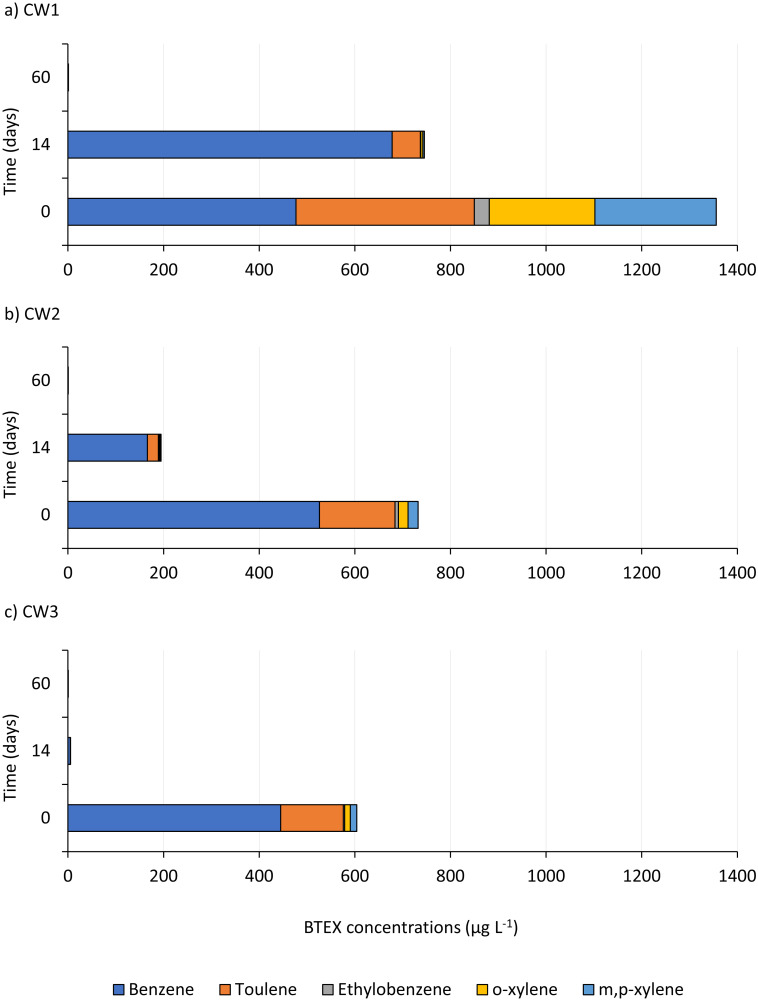
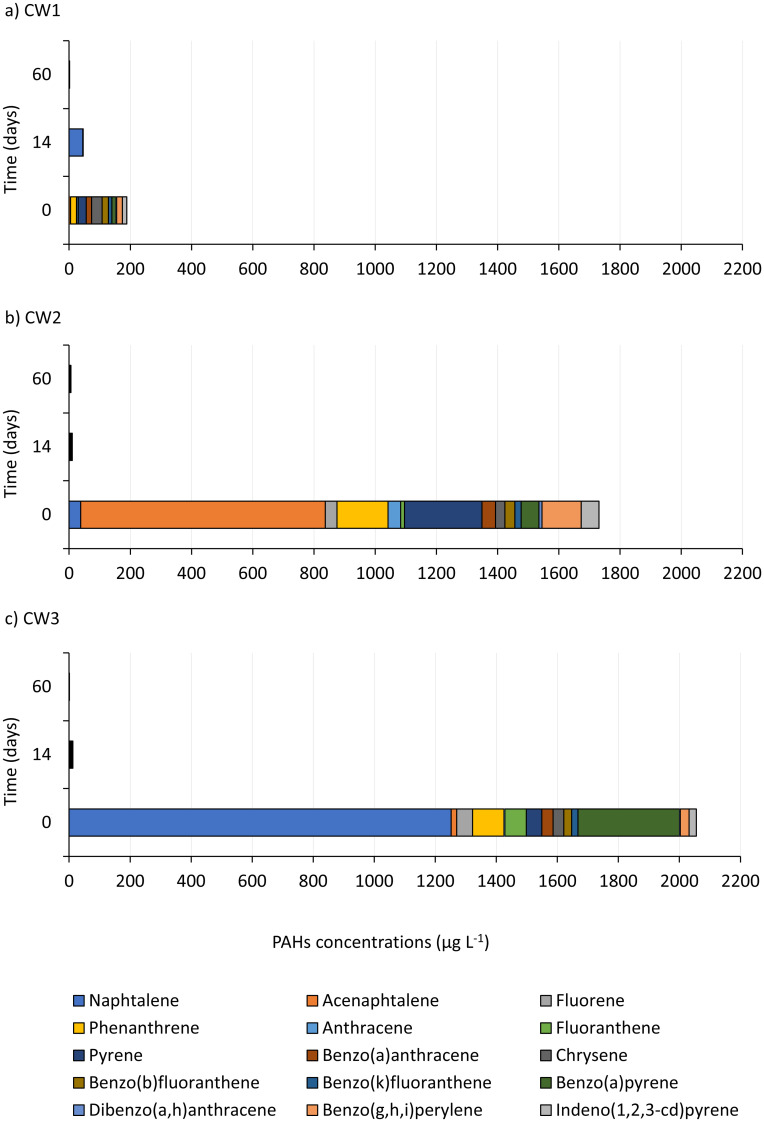
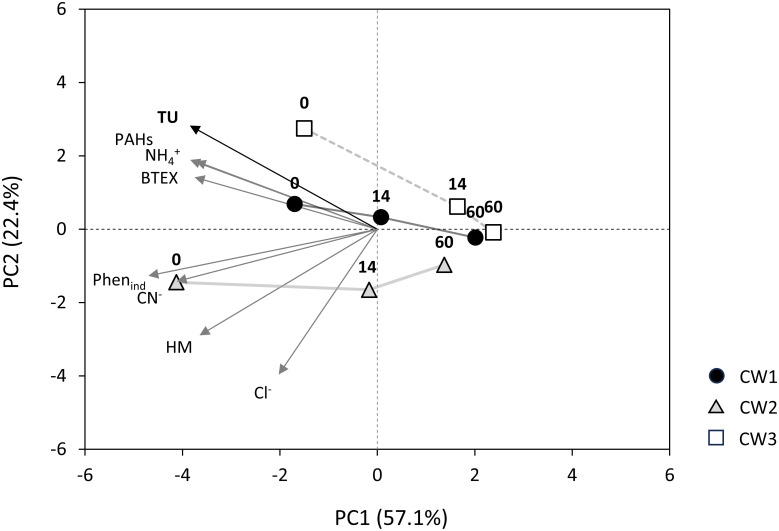
The wastewater from underground coal gasification (UCG) process has extremely complex composition and high concentrations of toxic and refractory compounds including phenolics, aliphatic and aromatic hydrocarbons, ammonia, cyanides, hazardous metals and metalloids. So, the development of biological processes for treating UCG wastewater poses a serious challenge in the sustainable coal industry. The aim of the study was to develop an innovative and efficient wetland construction technology suitable for a treatment of UCG wastewater using available and low-cost media. During the bioremediation process the toxicity of the raw wastewater decreased significantly between 74%-99%. The toxicity units (TU) ranged from values corresponding to very high acute toxic for raw wastewater to non-toxic for effluents from wetland columns after 60 days of the experiment. The toxicity results correlated with the decrease of some organic and inorganic compounds such as phenols, aromatic hydrocarbons, cyanides, metals and ammonia observed during the bioremediation process. The removal percentage of organic compounds like BTEX, PAHs and phenol was around 99% just after 14 days of treatment. A similar removal rate was indicated for cyanide and metals (Zn, Cr, Cd and Pb). Concluded, in order to effectively assess remediation technologies, it is desirable to consider combination of physicochemical parameters with ecotoxicity measurements. The present findings show that wetland remediation technology can be used to clean-up the heavily contaminated waters from the UCG process. Wetland technology as a nature-based solution has the potential to turn coal gasification wastewater into usable recycled water. It is economically and environmentally alternative treatment method.
Copyright: © 2024 Jałowiecki et al. This is an open access article distributed under the terms of the Creative Commons Attribution License, which permits unrestricted use, distribution, and reproduction in any medium, provided the original author and source are credited.
Conflict of interest statement
The authors have declared that no competing interests exist.
Figures
References
-
- Pankiewicz-Sperka M, Kapusta K, Basa W, Stolecka K. Characteristics of Water Contaminants from Underground Coal Gasification (UCG) Process—Effect of Coal Properties and Gasification Pressure. Energies. 2021; 14, 6533. doi: 10.3390/en14206533 - DOI
-
- Liu SQ, Li JG Mei M, Dong DL. Groundwater pollution from underground coal gasification. J China Univ Mining Technol. 2007; 17, 467–472. doi: 10.1016/S1006-1266(07)60127-8 - DOI
-
- Kapusta K, Stańczyk K, Wiatowski M, Chećko J. Environmental aspects of a field-scale underground coal gasification trial in a shallow coal seam at the Experimental Mine “Barbara” in Poland. Fuel. 2013; 113, 196–208. doi: 10.1016/j.fuel.2013.05.015 - DOI
-
- Kwiecińska A, Lajnert R, Bigda R. Coke oven wastewater—formation, treatment and utilization methods—A review. Proceedings of ECOpole. 2017; 11. doi: 10.2429/proc.2017.11(1)002 - DOI
MeSH terms
Substances
LinkOut - more resources
Full Text Sources
