


An Apple and Acáchul Berry Snack Rich in Bioaccessible Antioxidants and Folic Acid: A Healthy Alternative for Prenatal Diets
- PMID: 38472805
- PMCID: PMC10931133
- DOI: 10.3390/foods13050692
An Apple and Acáchul Berry Snack Rich in Bioaccessible Antioxidants and Folic Acid: A Healthy Alternative for Prenatal Diets
Abstract
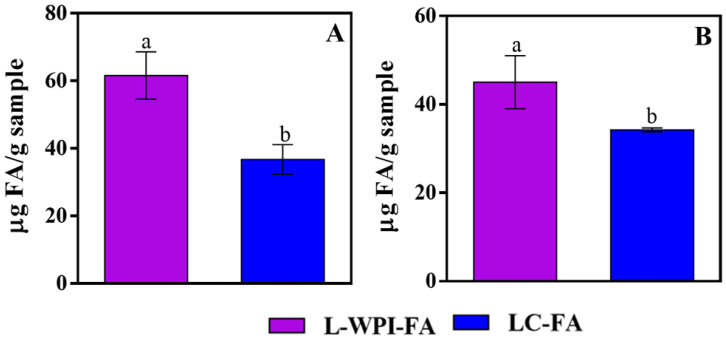
A fruit leather (apple and acáchul berry) oriented toward women of reproductive age was developed. The snack was supplemented with an ingredient composed of folic acid (FA) and whey proteins (WPI) to ensure the required vitamin intake to prevent fetal neural tube defects. In order to generate a low-calorie snack, alternative sweeteners were used (stevia and maltitol). The fruit leather composition was determined. Also, an in vitro digestion process was carried out to evaluate the bioaccessibility of compounds with antioxidant capacity (AC), total polyphenols (TPCs), total monomeric anthocyanins (ACY), and FA. The quantification of FA was conducted by a microbiological method and by HPLC. The leather contained carbohydrates (70%) and antioxidant compounds, mainly from fruits. Bioaccessibility was high for AC (50%) and TPCs (90%), and low for ACY (17%). Regarding FA, bioaccessibility was higher for WPI-FA (50%) than for FA alone (37%), suggesting that WPI effectively protected the vitamin from processing and digestion. Furthermore, the product was shown to be non-cytotoxic in a Caco-2 cell model. The developed snack is an interesting option due to its low energy intake, no added sugar, and high content of bioactive compounds. Also, the supplementation with WPI-FA improved the conservation and bioaccessibility of FA.
Keywords: bioaccessibility; bioactive compounds; folic acid; fruit leather; whey protein isolate.
Conflict of interest statement
The authors declare no conflicts of interest. The funders had no role in the design of the study; in the collection, analyses, or interpretation of data; in the writing of the manuscript; or in the decision to publish the results.
Figures


References
-
- Kancherla V., Botto L., Rowe L., Shlobin N., Caceres A., Arynchyna-Smith A., Zimmerman K., Blount J., Kibruyisfaw Z., Ghotme K., et al. Preventing birth defects, saving lives, and promoting health equity: An urgent call to action for universal mandatory food fortification with folic acid. Lancet Glob. Health. 2022;10:1053–1057. doi: 10.1016/S2214-109X(22)00213-3. - DOI - PubMed
-
- Marchetta C.M., Devine O.J., Crider K.S., Tsang B.L., Cordero A.M., Guo J., Berry R.J., Rosenthal J., Mulinare J., Mersereau P., et al. Assessing the association between natural food folate intake and blood folate concentrations: A systematic review and Bayesian meta-analysis of trials and observational studies. Nutrients. 2015;7:2663–2686. doi: 10.3390/nu7042663. - DOI - PMC - PubMed
-
- World Health Organization Congenital Disorders. 2023. [(accessed on 10 July 2023)]. Available online: https://www.who.int/es/news-room/fact-sheets/detail/birth-defects.
-
- World Health Organization Healthy Diet. 2020. [(accessed on 8 August 2021)]. Available online: https://www.who.int/news-room/fact-sheets/detail/healthy-diet.
Grants and funding
LinkOut - more resources
Full Text Sources
