


Analysis of the AIRE Gene Promoter in Patients Affected by Autoimmune Polyendocrine Syndromes
- PMID: 38473903
- PMCID: PMC10932416
- DOI: 10.3390/ijms25052656
Analysis of the AIRE Gene Promoter in Patients Affected by Autoimmune Polyendocrine Syndromes
Abstract
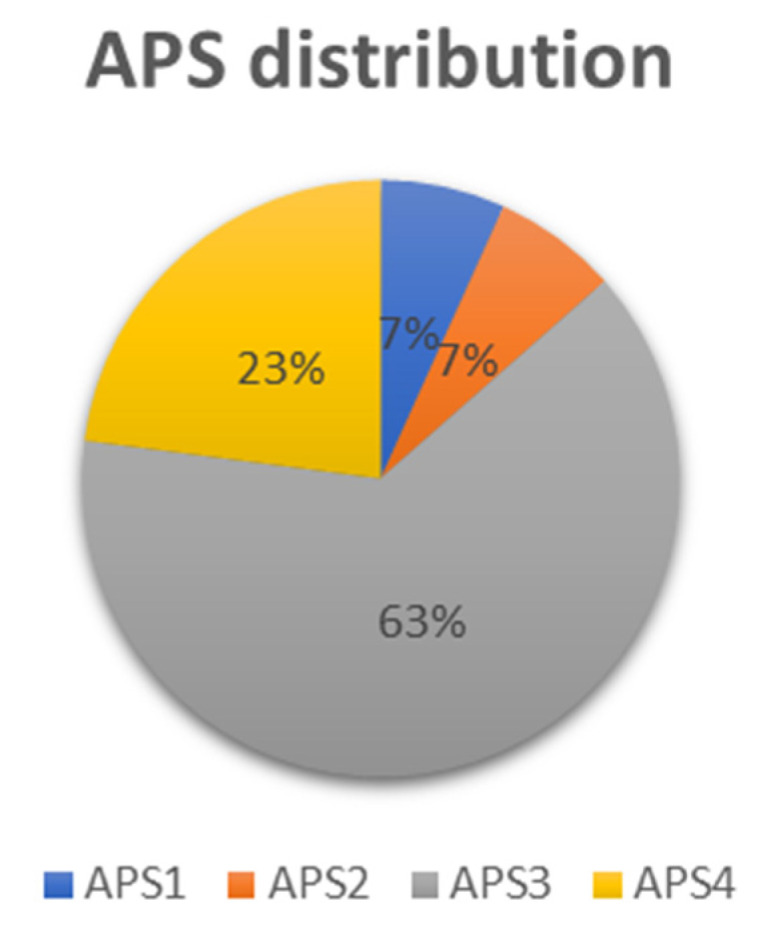
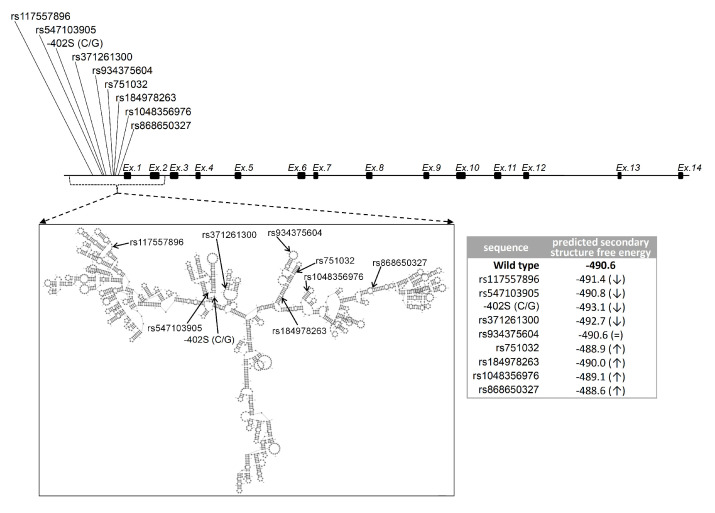
Autoimmune polyglandular syndromes (APS) are classified into four main categories, APS1-APS4. APS1 is caused by AIRE gene loss of function mutations, while the genetic background of the other APS remains to be clarified. Here, we investigated the potential association between AIRE gene promoter Single Nucleotide Polymorphisms (SNPs) and susceptibility to APS. We sequenced the AIRE gene promoter of 74 APS patients, also analyzing their clinical and autoantibody profile, and we further conducted molecular modeling studies on the identified SNPs. Overall, we found 6 SNPs (-230Y, -655R, -261M, -380S, -191M, -402S) of the AIRE promoter in patients' DNA. Interestingly, folding free energy calculations highlighted that all identified SNPs, except for -261M, modify the stability of the nucleic acid structure. A rather similar percentage of APS3 and APS4 patients had polymorphisms in the AIRE promoter. Conversely, there was no association between APS2 and AIRE promoter polymorphisms. Further AIRE promoter SNPs were found in 4 out of 5 patients with APS1 clinical diagnosis that did not harbor AIRE loss of function mutations. We hypothesize that AIRE promoter polymorphisms could contribute to APS predisposition, although this should be validated through genetic screening in larger patient cohorts and in vitro and in vivo functional studies.
Keywords: AIRE; AIRE gene promoter; autoimmune etiopathogenesis; autoimmune polyglandular syndrome; polymorphisms; sequencing.
Conflict of interest statement
The authors declare that the research was conducted in the absence of any commercial or financial relationships that could be construed as potential conflicts of interest.
Figures
References
-
- Rose N., MacKay I.R. The Autoimmune Diseases. 6th ed. Academic Press; Dordrecht, The Netherlands: 2020. 895p
-
- Betterle C., Sabbadin C., Scaroni C., Presotto F. Autoimmune Polyendocrine Syndromes (APS) or Multiple Autoimmune Syndromes (MAS) In: Colao A., Jaffrain-Rea M.L., Beckers A., editors. Polyendocrine Disorders and Endocrine Neoplastic Syndromes. Endocrinology. Springer; Cham, Switzerland: 2019. pp. 1–50. - DOI
MeSH terms
Grants and funding
LinkOut - more resources
Full Text Sources
Molecular Biology Databases
Miscellaneous
