


Aerobic Exercise Improves Radiation Therapy Efficacy in Non-Small Cell Lung Cancer: Preclinical Study Using a Xenograft Mouse Model
- PMID: 38474004
- PMCID: PMC10932461
- DOI: 10.3390/ijms25052757
Aerobic Exercise Improves Radiation Therapy Efficacy in Non-Small Cell Lung Cancer: Preclinical Study Using a Xenograft Mouse Model
Abstract
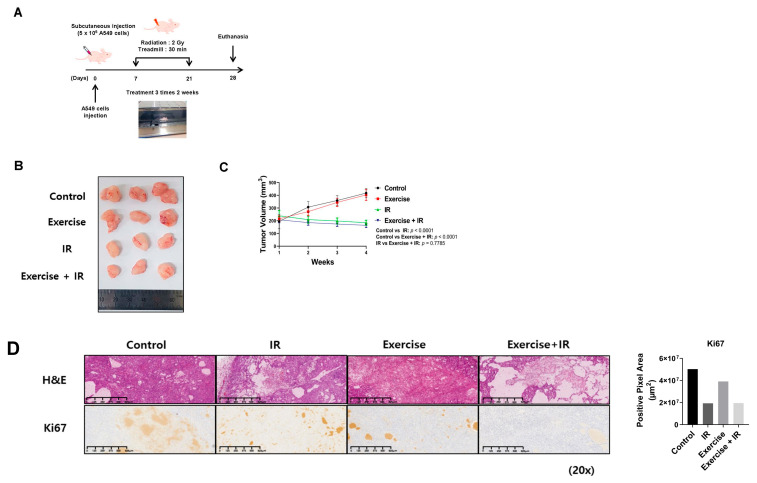
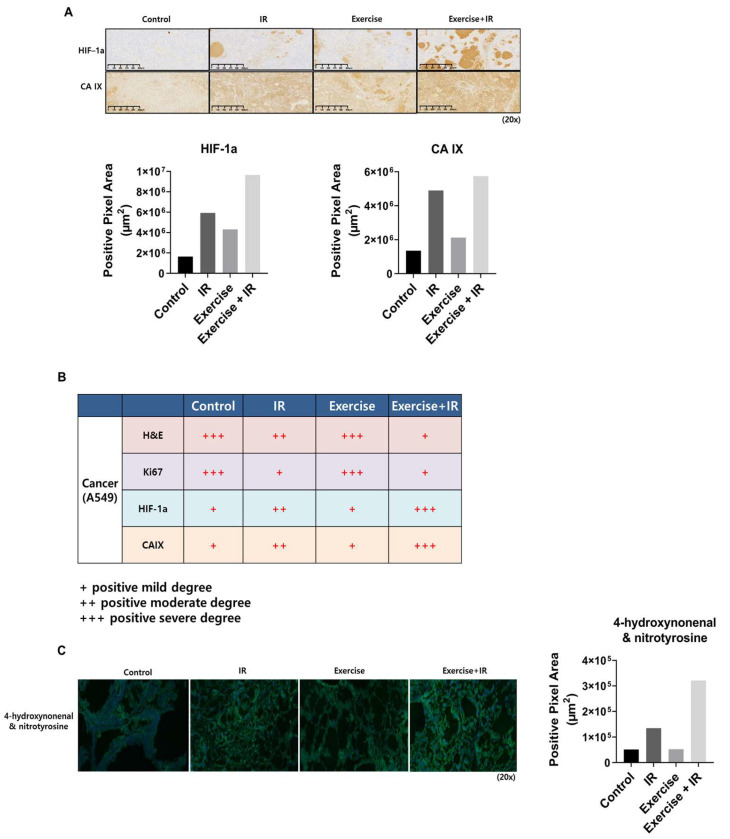
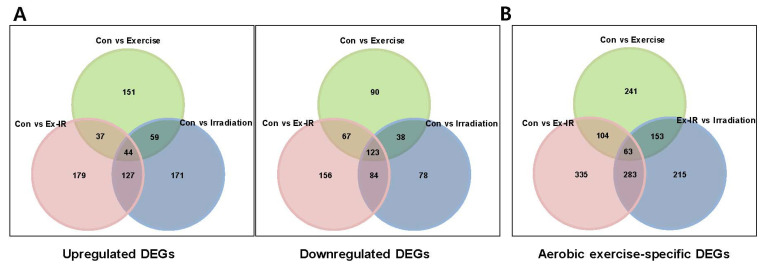
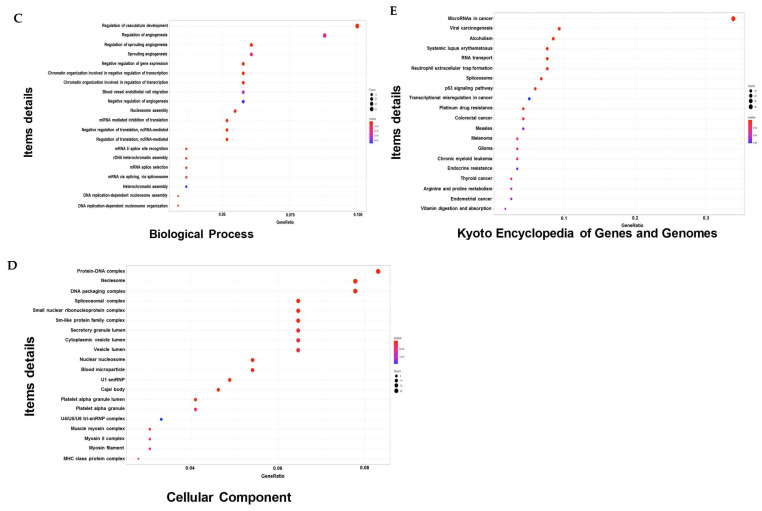
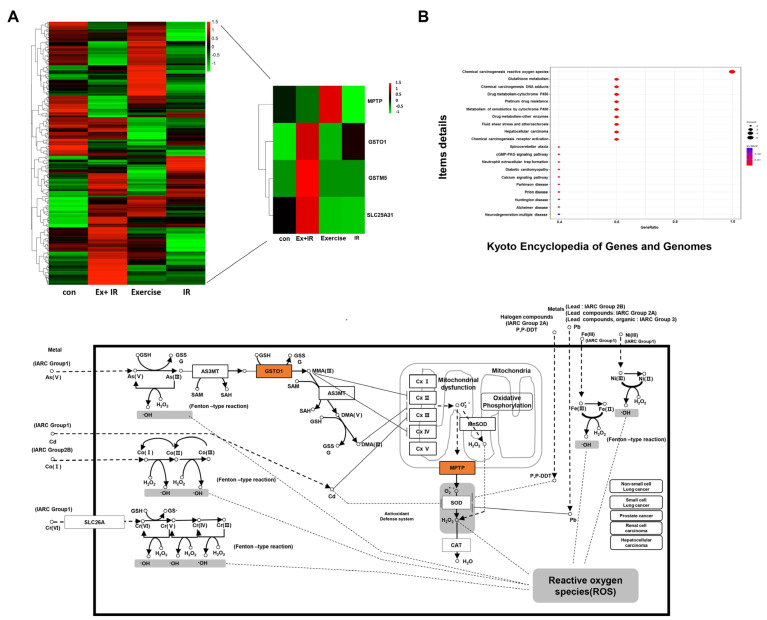
The "oxygen effect" improves radiation efficacy; thus, tumor cell oxygen concentration is a crucial factor for improving lung cancer treatment. In the current study, we aimed to identify aerobic exercise-induced changes in oxygen concentrations in non-small cell lung cancer (NSCLC) cells. To this end, an NSCLC xenograft mouse model was established using human A549 cells. Animals were subsequently subjected to aerobic exercise and radiation three times per week for 2 weeks. Aerobic exercise was performed at a speed of 8.0 m/m for 30 min, and the tumor was irradiated with 2 Gy of 6 MV X-rays (total radiation dose 12 Gy). Combined aerobic exercise and radiation reduced NSCLC cell growth. In addition, the positive effect of aerobic exercise on radiation efficacy through oxygenation of tumor cells was confirmed based on hypoxia-inducible factor-1 and carbonic anhydrase IX expression. Finally, whole-transcriptome analysis revealed the key factors that induce oxygenation in NSCLC cells when aerobic exercise was combined with radiation. Taken together, these results indicate that aerobic exercise improves the effectiveness of radiation in the treatment of NSCLC. This preclinical study provides a basis for the clinical application of aerobic exercise to patients with NSCLC undergoing radiation therapy.
Keywords: NSCLC; aerobic exercise; lung cancer; oxygenation; radiation therapy.
Conflict of interest statement
The authors declare no conflicts of interest.
Figures
References
MeSH terms
Substances
Grants and funding
LinkOut - more resources
Full Text Sources
Medical
Molecular Biology Databases
