


Identification of Gene-Allele System Conferring Alkali-Tolerance at Seedling Stage in Northeast China Soybean Germplasm
- PMID: 38474209
- PMCID: PMC10931751
- DOI: 10.3390/ijms25052963
Identification of Gene-Allele System Conferring Alkali-Tolerance at Seedling Stage in Northeast China Soybean Germplasm
Abstract
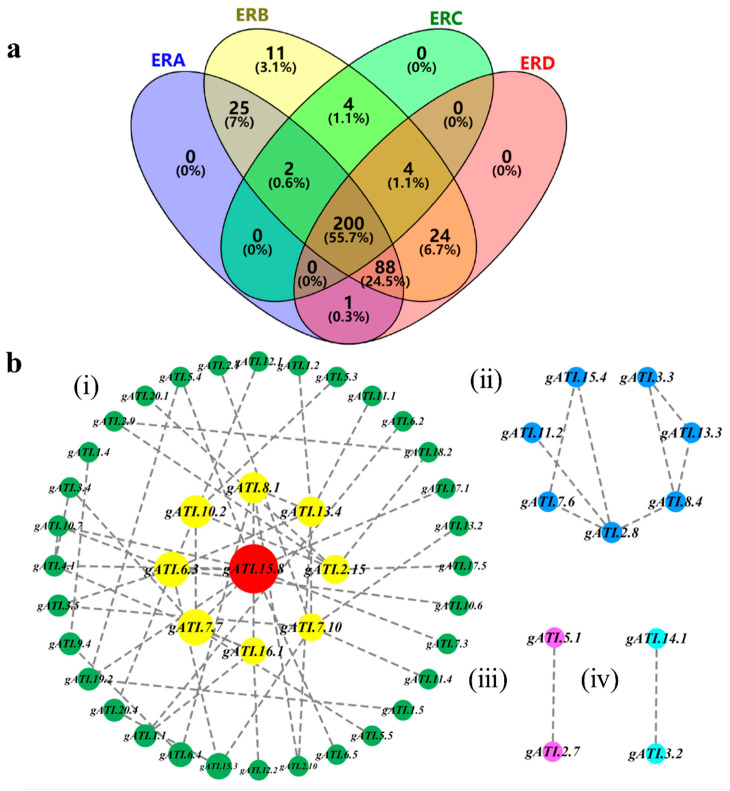
Salinization of cultivated soils may result in either high salt levels or alkaline conditions, both of which stress crops and reduce performance. We sampled genotypes included in the Northeast China soybean germplasm population (NECSGP) to identify possible genes that affect tolerance to alkaline soil conditions. In this study, 361 soybean accessions collected in Northeast China were tested under 220 mM NaHCO3:Na2CO3 = 9:1 (pH = 9.8) to evaluate the alkali-tolerance (ATI) at the seedling stage in Mudanjiang, Heilongjiang, China. The restricted two-stage multi-locus model genome-wide association study (RTM-GWAS) with gene-allele sequences as markers (6503 GASMs) based on simplified genome resequencing (RAD-sequencing) was accomplished. From this analysis, 132 main effect candidate genes with 359 alleles and 35 Gene × Environment genes with 103 alleles were identified, explaining 90.93% and 2.80% of the seedling alkali-tolerance phenotypic variation, respectively. Genetic variability of ATI in NECSGP was observed primarily within subpopulations, especially in ecoregion B, from which 80% of ATI-tolerant accessions were screened out. The biological functions of 132 candidate genes were classified into eight functional categories (defense response, substance transport, regulation, metabolism-related, substance synthesis, biological process, plant development, and unknown function). From the ATI gene-allele system, six key genes-alleles were identified as starting points for further study on understanding the ATI gene network.
Keywords: Northeast China soybean germplasm population (NECSGP); alkali tolerance; gene function; gene–allele matrix; gene–allele sequence marker (GASM); optimal cross design; restricted two-stage multilocus genome-wide association study (RTM-GWAS); soybean (Glycine max (L.) Merr.).
Conflict of interest statement
The authors declare no conflicts of interest.
Figures

References
-
- Vavilov N.I., Vavylov M.I., Dorofeev V.F. Origin and Geography of Cultivated Plants. Cambridge University Press; Cambridge, UK: 1992.
-
- Liu X., He J., Wang Y., Xing G., Li Y., Yang S., Zhao T., Gai J. Geographic differentiation and phylogeographic relationships among world soybean populations. Crop J. 2020;8:260–272. doi: 10.1016/j.cj.2019.09.010. - DOI
-
- Gizlice Z., Carter T., Jr., Burton J. Genetic base for North American public soybean cultivars released between 1947 and 1988. Crop Sci. 1994;34:1143–1151. doi: 10.2135/cropsci1994.0011183X003400050001x. - DOI
-
- Pitman M.G., Läuchli A. Salinity: Environment-Plants-Molecules. Springer; Dordrecht, The Netherlands: 2002. Global impact of salinity and agricultural ecosystems; pp. 3–20.
MeSH terms
Substances
Grants and funding
LinkOut - more resources
Full Text Sources
