. 2024 Feb 21;13(5):584.
doi: 10.3390/plants13050584.

Differentially Expressed Genes Related to Isoflavone Biosynthesis in a Soybean Mutant Revealed by a Comparative Transcriptomic Analysis

Affiliations

Differentially Expressed Genes Related to Isoflavone Biosynthesis in a Soybean Mutant Revealed by a Comparative Transcriptomic Analysis

Jung Min Kim et al. Plants (Basel). .

Abstract

Soybean [Glycine max (L.) Merr.] isoflavones, which are secondary metabolites with various functions, are included in food, cosmetics, and medicine. However, the molecular mechanisms regulating the glycosylation and malonylation of isoflavone glycoconjugates remain unclear. In this study, we conducted an RNA-seq analysis to compare soybean genotypes with different isoflavone contents, including Danbaek and Hwanggeum (low-isoflavone cultivars) as well as DB-088 (high-isoflavone mutant). The transcriptome analysis yielded over 278 million clean reads, representing 39,156 transcripts. The analysis of differentially expressed genes (DEGs) detected 2654 up-regulated and 1805 down-regulated genes between the low- and high-isoflavone genotypes. The putative functions of these 4459 DEGs were annotated on the basis of GO and KEGG pathway enrichment analyses. These DEGs were further analyzed to compare the expression patterns of the genes involved in the biosynthesis of secondary metabolites and the genes encoding transcription factors. The examination of the relative expression levels of 70 isoflavone biosynthetic genes revealed the HID, IFS, UGT, and MAT expression levels were significantly up/down-regulated depending on the genotype and seed developmental stage. These expression patterns were confirmed by quantitative real-time PCR. Moreover, a gene co-expression analysis detected potential protein-protein interactions, suggestive of common functions. The study findings provide valuable insights into the structural genes responsible for isoflavone biosynthesis and accumulation in soybean seeds.

Keywords: Kyoto Encyclopedia of Genes and Genomes; RNA-seq; differentially expressed genes; gene ontology; isoflavone; soybean.


Conflict of interest statement

The authors declare no conflicts of interest.

Figures
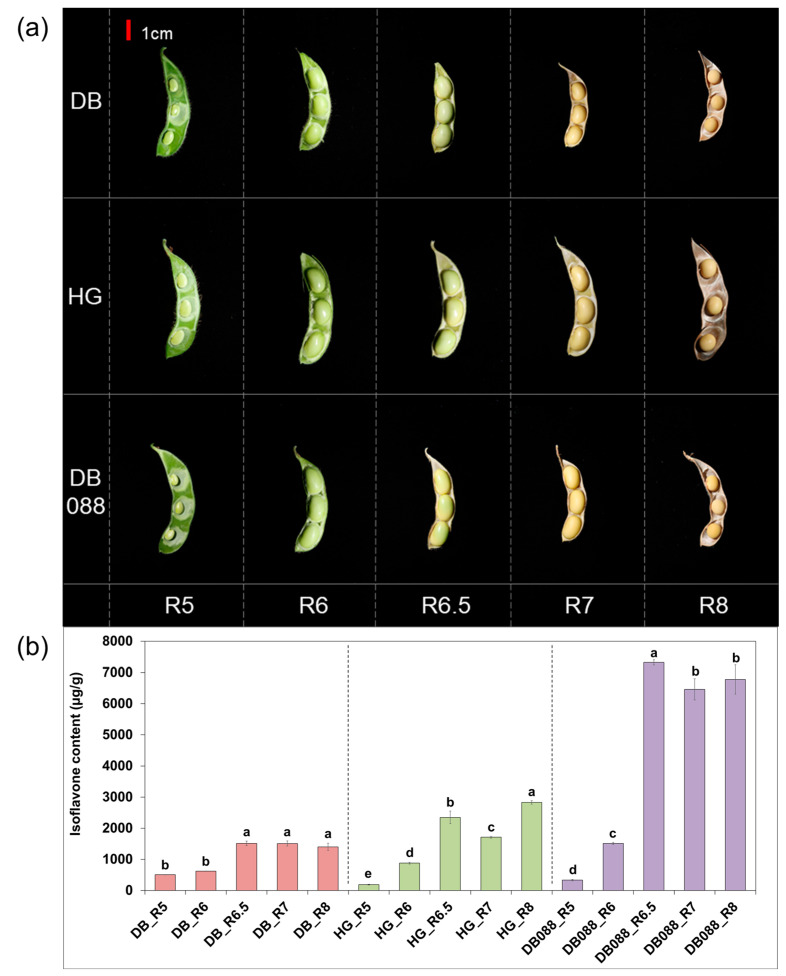
Figure 1
Figure 1
Total isoflavone content in different soybean seed developmental stages. DB, Danbaek; HG, Hwanggeum. (a) Representative soybean seed developmental stages. R5: 25 days after flowering (DAF), R6: 45 DAF, R6.5: 55 DAF, R7: 65 DAF, and R8: 80 DAF. (b) Total isoflavone content across seed developmental stages. Lowercase letters above the bars indicate significant differences between stages at the 5% level according to Fisher’s LSD test (n = 3).
Figure 2
Figure 2
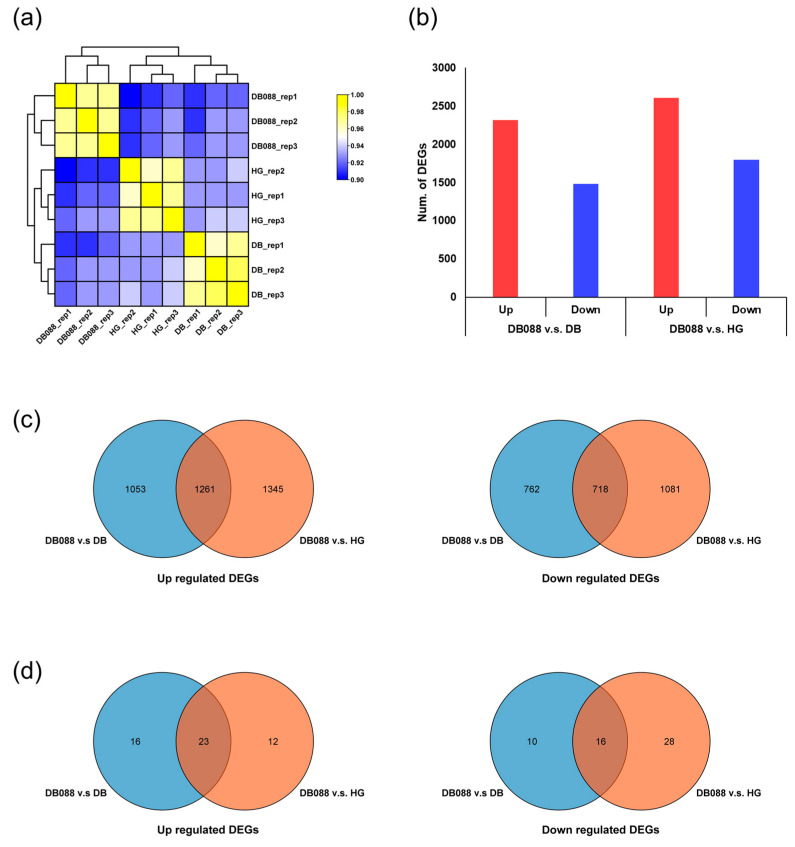
Comparative analysis of gene expression profiles and differential expression. (a) Hierarchical clustering illustrating the relationships between samples on the basis of Pearson correlation coefficients. (b) Comparison of the number of DEGs between DB-088 and Danbaek/Hwanggeum. (c) Venn diagram presenting the up/down-regulated DEGs among the DEGs revealed by the comparisons between DB-088 and Danbaek/Hwanggeum. (d) Venn diagram presenting the up/down-regulated isoflavone biosynthetic DEGs revealed by the comparisons between DB-088 and Danbaek/Hwanggeum.
Figure 3
Figure 3
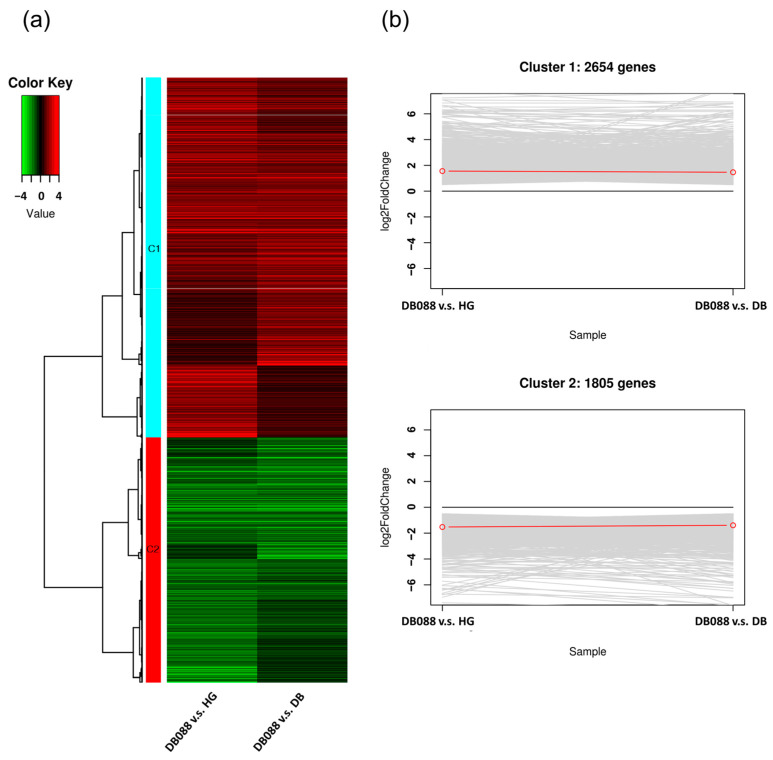
Cluster analysis of common DEGs in Hwanggeum and Danbaek revealed by the comparison with DB-088. (a) Heatmap illustrating the expression patterns of the common DEGs in Hwanggeum and Danbaek. C1, cluster 1 representing up-regulated DEGs; C2, cluster 2 representing down-regulated DEGs. (b) Line plots depicting the cluster patterns in the heatmap.
Figure 4
Figure 4
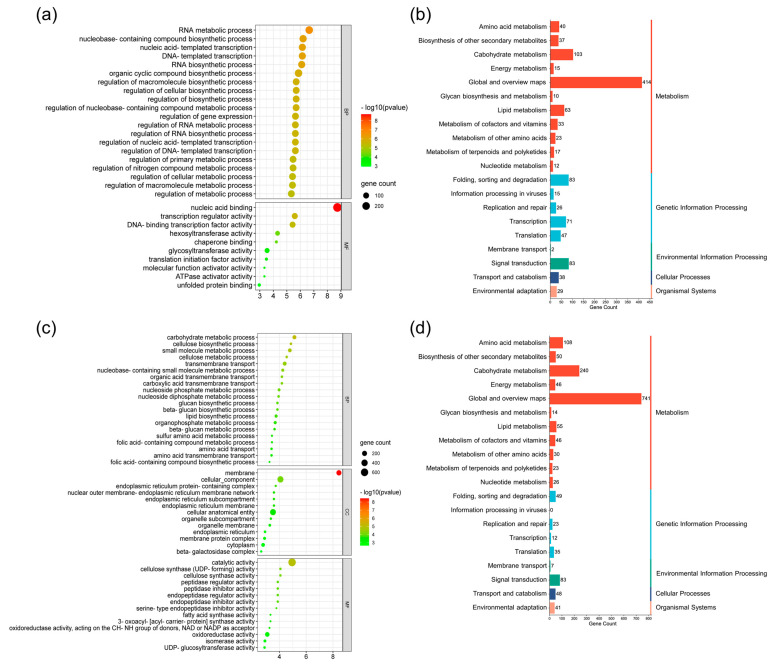
GO and KEGG enrichment analyses of the common DEGs in Hwanggeum and Danbaek revealed by the comparison with DB-088. (a,b) Enriched GO terms and KEGG categories among the up-regulated DEGs, respectively. (c,d) Enriched GO terms and KEGG categories among the down-regulated DEGs, respectively.
Figure 5
Figure 5
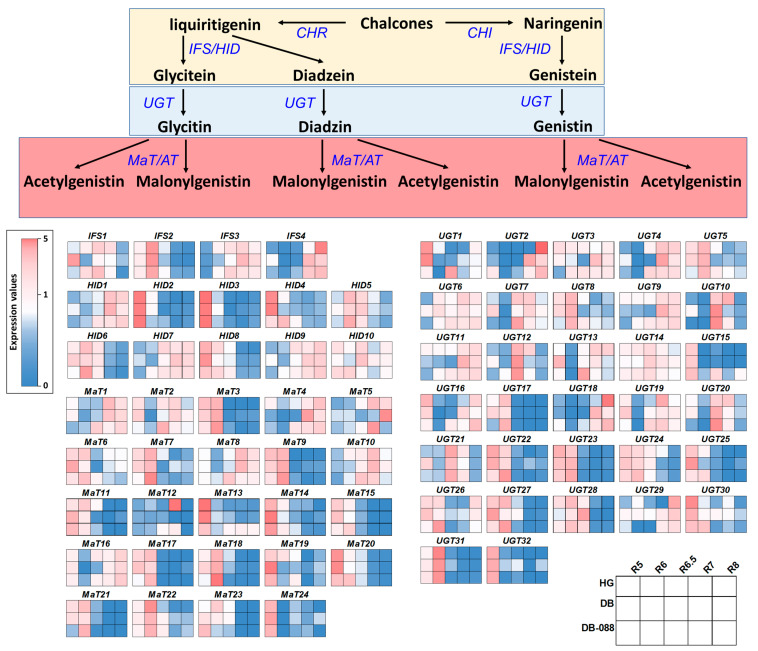
Expression patterns of the downstream genes in the isoflavone biosynthetic pathway among various seed developmental stages on the basis of RNA-seq data and the results of earlier research. The heatmap displays the relative expression levels of the downstream genes in the isoflavone biosynthetic pathway. The expression data were normalized against the expression of the internal reference gene F-box.
Figure 6
Figure 6
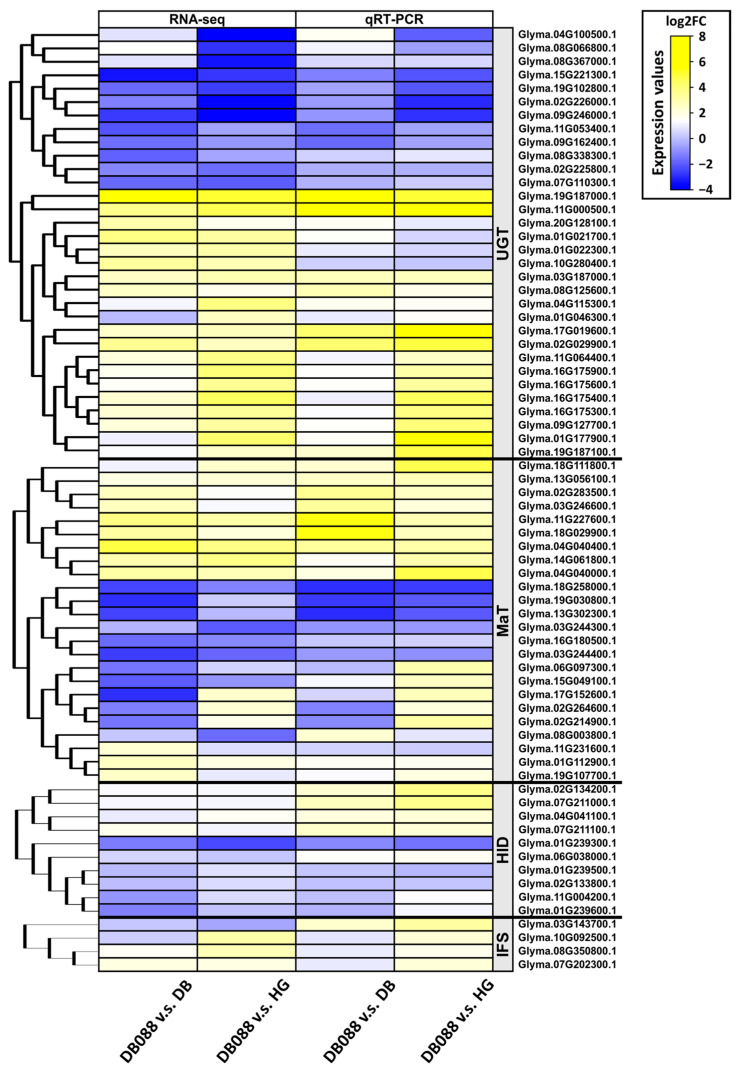
Validation of the relative expression patterns of the downstream genes in the isoflavone biosynthetic pathway in the R6.5 stage (DB-088 vs. Hwanggeum/Danbaek) on the basis of a qRT-PCR analysis. The heatmap illustrates the relative expression levels of the downstream genes in the isoflavone biosynthetic pathway. The expression data were normalized against the expression of the internal reference gene F-box.
Figure 7
Figure 7
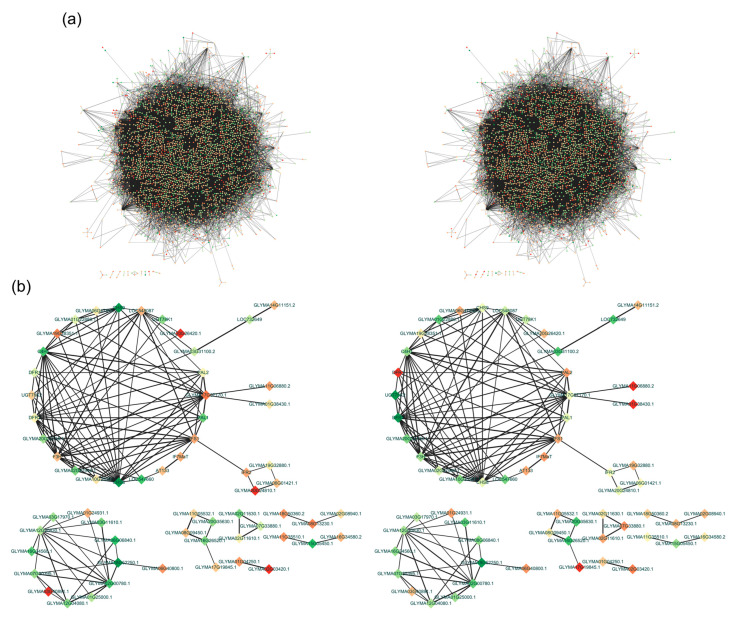
Protein–protein interactions revealed by the analyses of all DEGs and the isoflavone-related DEGs. Edges in the network indicate protein–protein interactions (gray lines). The colored nodes (round circles) reflect gene expression levels. Increases in the thickness and intensity of the lines indicate increases in the confidence scores for the interactions. Up-regulated and down-regulated genes are indicated in red and blue, respectively. (a) Network presenting the interactions detected by the analysis of all DEGs. (b) Network presenting the interactions revealed by the analysis of the DEGs related to isoflavone biosynthesis. The results for Hwanggeum and Danbaek are presented on the left and right, respectively.

Similar articles

Cited by

References

    1. Rochfort S., Panozzo J. Phytochemicals for health, the role of pulses. J. Agric. Food Chem. 2007;55:7981–7994. doi: 10.1021/jf071704w. - DOI - PubMed
    1. Sreevidya V., Srinivasa Rao C., Sullia S., Ladha J.K., Reddy P.M. Metabolic engineering of rice with soybean isoflavone synthase for promoting nodulation gene expression in rhizobia. J. Exp. Bot. 2006;57:1957–1969. doi: 10.1093/jxb/erj143. - DOI - PubMed
    1. Arjmandi B.H., Smith B.J. Soy isoflavones’ osteoprotective role in postmenopausal women: Mechanism of action. J. Nutr. Biochem. 2002;13:130–137. doi: 10.1016/S0955-2863(02)00172-9. - DOI - PubMed
    1. Vitale D.C., Piazza C., Melilli B., Drago F., Salomone S. Isoflavones: Estrogenic activity, biological effect and bioavailability. Eur. J. Drug Metab. Pharmacokinet. 2013;38:15–25. doi: 10.1007/s13318-012-0112-y. - DOI - PubMed
    1. Dixit A., Antony J., Sharma N.K., Tiwari R.K. 12. Soybean constituents and their functional benefits. Res. Signpost. 2011;37:2.

LinkOut - more resources