


Pilot study of the effectiveness of a telehealth group for improving peer relationships for adolescents with neurofibromatosis type 1
- PMID: 38475852
- PMCID: PMC10935956
- DOI: 10.1186/s13023-024-03093-1
Pilot study of the effectiveness of a telehealth group for improving peer relationships for adolescents with neurofibromatosis type 1
Abstract
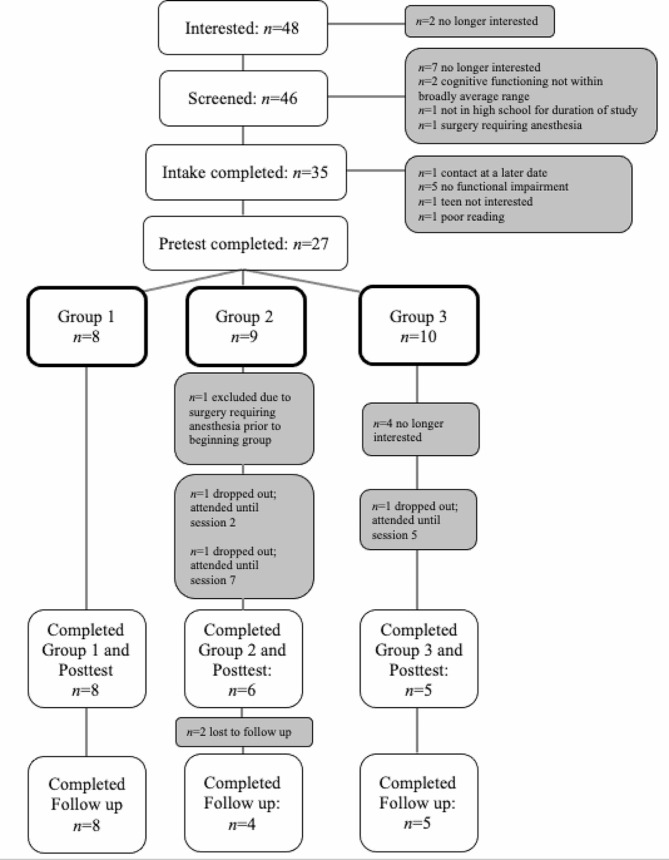
Background: Interventions for social difficulties have not been investigated in the neurofibromatosis type 1 (NF1) population despite observations of elevated rates of social difficulties. In this pilot study, the effectiveness of a 14-week telehealth PEERS® intervention with nineteen adolescents with NF1 (Mage=13.79 years, SD = 1.32) with social skills difficulties was examined. Measures of social outcomes were completed at three timepoints (before, immediately after, and at 14-week follow-up).
Results: Caregiver-reported social-emotional skills, social impairment, caregiver-reported number of adolescent get-togethers, and teen social knowledge showed significant improvement following the intervention.
Conclusions: The PEERS® intervention is promising to support the social and friendship skills of adolescents with NF1 who have social difficulties.
Keywords: NF1; Neurofibromatosis type 1; PEERS®; Social; Telehealth; Virtual.
© 2024. The Author(s).
Conflict of interest statement
The authors declare that they have no competing interests.
Figures
References
-
- Huijbregts SC, Loitfelder M, Rombouts SA, Swaab H, Verbist BM, Arkink EB, et al. Cerebral volumetric abnormalities in neurofibromatosis type 1: associations with parent ratings of social and attention problems, executive dysfunction, and autistic mannerisms. J Neurodev Disord. 2015;7(1):32. doi: 10.1186/s11689-015-9128-3. - DOI - PMC - PubMed
MeSH terms
Grants and funding
LinkOut - more resources
Full Text Sources
Medical
Research Materials
Miscellaneous
