


The impact of tRNA modifications on translation in cancer: identifying novel therapeutic avenues
- PMID: 38476632
- PMCID: PMC10928989
- DOI: 10.1093/narcan/zcae012
The impact of tRNA modifications on translation in cancer: identifying novel therapeutic avenues
Abstract
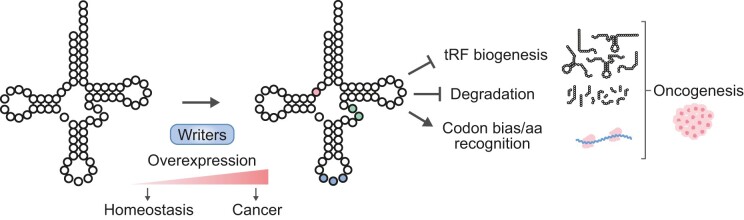
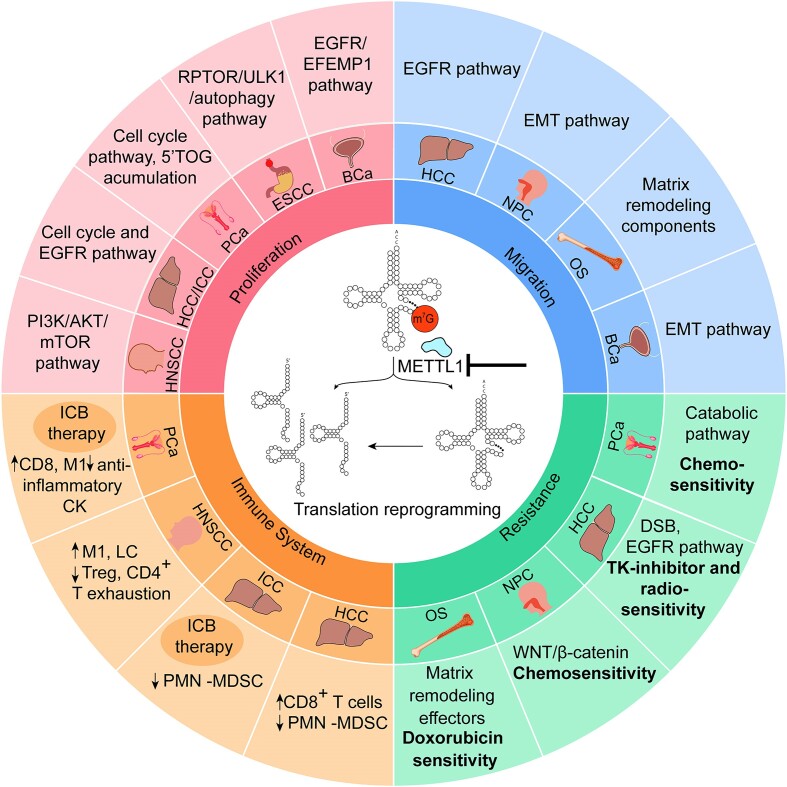
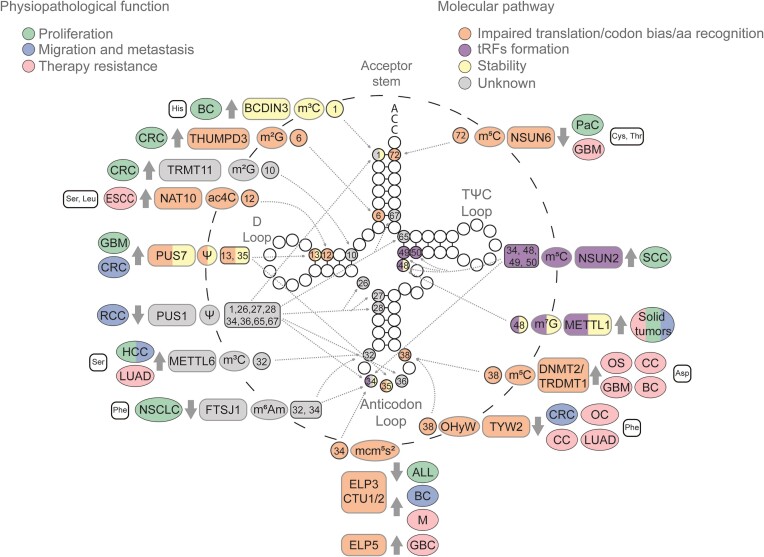
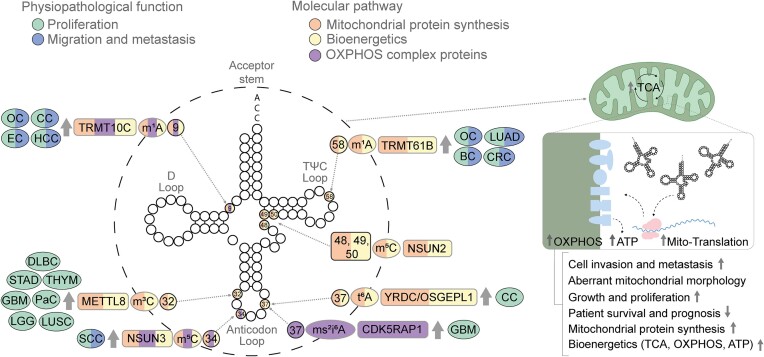
Recent advancements have illuminated the critical role of RNA modifications in post-transcriptional regulation, shaping the landscape of gene expression. This review explores how tRNA modifications emerge as critical players, fine-tuning functionalities that not only maintain the fidelity of protein synthesis but also dictate gene expression and translation profiles. Highlighting their dysregulation as a common denominator in various cancers, we systematically investigate the intersection of both cytosolic and mitochondrial tRNA modifications with cancer biology. These modifications impact key processes such as cell proliferation, tumorigenesis, migration, metastasis, bioenergetics and the modulation of the tumor immune microenvironment. The recurrence of altered tRNA modification patterns across different cancer types underscores their significance in cancer development, proposing them as potential biomarkers and as actionable targets to disrupt tumorigenic processes, offering new avenues for precision medicine in the battle against cancer.
© The Author(s) 2024. Published by Oxford University Press on behalf of NAR Cancer.
Figures
References
-
- Morita M., Gravel S.P., Chénard V., Sikström K., Zheng L., Alain T., Gandin V., Avizonis D., Arguello M., Zakaria C. et al. mTORC1 controls mitochondrial activity and biogenesis through 4E-BP-dependent translational regulation. Cell Metab. 2013; 18:698–711. - PubMed
-
- Holz M.K., Ballif B.A., Gygi S.P., Blenis J. mTOR and S6K1 mediate assembly of the translation preinitiation complex through dynamic protein interchange and ordered phosphorylation events. Cell. 2005; 123:569–580. - PubMed
Publication types
MeSH terms
Substances
LinkOut - more resources
Full Text Sources
Medical
